Gulu I At exactly 6pm, the pain began creeping through Prossy’s body [not her real name]; she had felt it before the tightening chest, the stabbing bones, the frightening sensation that the air around her was slowly disappearing.
But this time, she was alone in a stranger’s house in Gulu City, where she had gone to work as a housemaid after years of abandonment and uncertainty.
By 11pm, she could barely breathe with no one to help but rather smelling death in her caregiver’s home.
“They bought me painkillers, but the pain did not go, and my chest felt like it was closing,” she recalls quietly.
For many Ugandans, sickle cell disease is a medical condition buried in hospital records and blood test results but for families across Northern Uganda, especially in Acholi and Lango sub-regions, it has become a relentless cycle of pain, poverty, stigma and broken homes.
Uganda remains among the five countries globally with the highest burden of sickle cell disease, according to the Ministry of Health. The government estimates that about 20,000 babies are born with sickle cell disease every year, while between 6,000 and 9,000 die before their fifth birthday from preventable complications.
At just seven years old, Prossy’s life had already begun falling apart when her family breaks apart with her mother leaving her and her siblings.
“My father was polygamous; he would leave home for a long time and come back after many months and when my mother left us, my father was not there,” she says.
She and her younger sister, then only four years old, were left to survive on their own in Atiak sub-county in Amuru district.
Today, Prossy lives with her aunt, who struggles to care for her through repeated sickle cell crises and her story mirrors the lives of hundreds of children arriving weekly at Gulu Regional Referral Hospital exhausted, anemic and often misunderstood.
A disease hidden in families
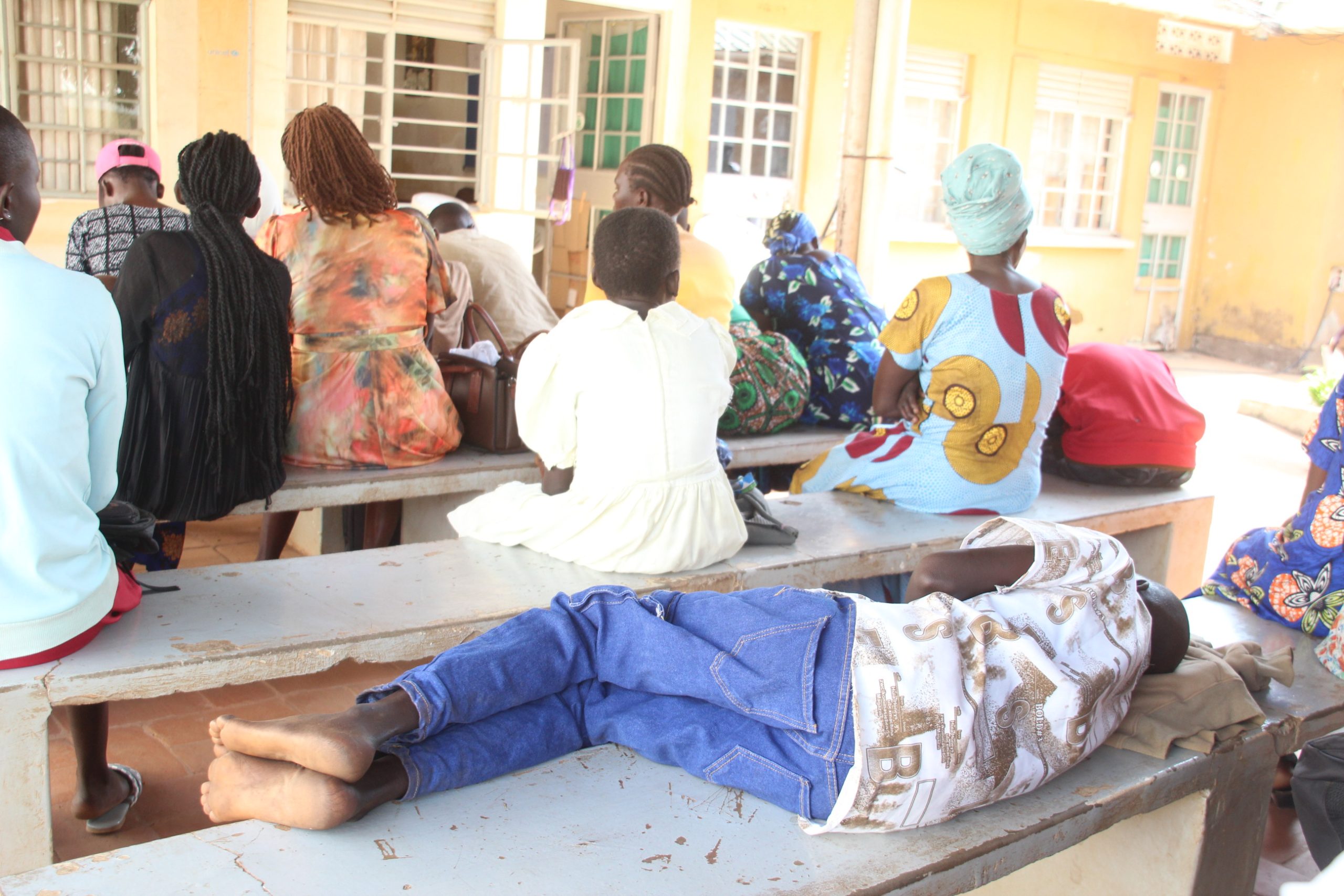
Every Thursday, dozens of children line up at the sickle cell clinic at Gulu Regional Referral Hospital.
Some arrive from nearby villages while others travel for hours from districts like Pader and Kitgum. Many come weak, feverish and malnourished.
According to Dr. Sharon Achen, a pediatric specialist at the hospital, the burden is growing.
“On average, we receive about 40 to 60 children every clinic day and those are only the ones who manage to come,” she explains.
Sickle cell disease is an inherited blood disorder passed from both parents to a child and if both parents carry the sickle cell trait, there is a high chance their child will develop the disease.
The illness distorts red blood cells into crescent or “sickle” shapes, making them fragile and prone to blocking blood flow. The result is severe pain, chronic anemia, organ damage and recurrent infections.
“These children begin showing symptoms around six to nine months and some come with swollen hands and feet, repeated fevers or severe anemia,” Dr. Achen says.
However, many families do not recognize the warning signs and in some communities, swollen limbs and enlarged stomachs are linked to witchcraft or curses rather than disease.
“We still receive children who have cuts on their stomachs and chests because traditional healers were trying to treat them,” Dr. Achen says.
Adding that “parents waste valuable time before seeking medical care because the consequences can be devastating.”
Additionally, Dr Achen revealed that some children arrive at hospital after suffering strokes while others die before ever being diagnosed.
Health experts say the crisis is likely bigger than official statistics show because many children in rural communities are never tested and according to the Ministry of Health, regions such as Acholi, Lango and Buganda are among the hardest hit.
In Africa, the majority of children with the most severe form of Sickle Cell Disease die before the age of 5 years, usually from an infection or severe blood loss.
Additionally, in countries such as Cameroon, Republic of Congo, Gabon, Ghana, and Nigeria, the Sickle Cell Trait prevalence is between 20% to 30% while in some parts of Uganda, it is high as 25% with the prevalence most highest in the Mid-Northern, North-East, Mid-East and East-Central regions of Uganda and Sickle Cell Disease prevalence as high as 2-2.7% in parts of Mid-East, Central and East Central regions.
According to a 3-year nation-wide survey conducted between 2015 and 2018, the findings revealed a high prevalence of sickle cell trait and sickle cell disease in Uganda with a crude birth-rate of over 240,000 sickle cell trait births and over 17,000 sickle cell disease births occurring annually in Uganda.
The cost of staying alive
For caregivers, sickle cell disease is not only emotionally draining, and it is financially crippling.
In Omoro district, Rose Ochola has become both mother and nurse to a boy abandoned by his biological mother when he was just eight months old.
Ochola disclosed to this publication that before finding out that it was sickle cell disease, she first, thought that the child had tuberculosis.

“I went to Lacor Hospital for tests but they found no signs of TB and later, doctors confirmed that the child had sickle cell disease,” she says.
Alhough, the child was diagnosed at the hospital, Ochola revealed to this publication that the diagnosis came with a price tag she could barely afford.
“I had to borrow Shs40,000 just for the test and now I have debts of over Shs400,000 because of transport and hospital bills,” Ochola says.
According to her, travelling to Gulu for treatment costs her shs45,000 for one way, a money she often does not have and sometimes, she says with visible exhaustion, hopelessness creeps in.
“There are moments I feel like letting the child die but then I feel sorry for him,” she confesses softly.
Adding that, “when the boy is admitted, she can spend between two weeks and three months at the hospital and the hospital has become part of my home,” she says.
Her struggle exposes one of the most painful realities of Uganda’s sickle cell response despite the disease’s growing prevalence, diagnosis and treatment remain inaccessible for many rural families.
At Gulu Regional Referral Hospital, screening tests are available but confirmatory tests are often sent to Kampala, while some families are forced to seek private testing services outside government facilities.
“Accessing confirmatory testing is still difficult,” Dr. Achen admits.
The pressure is also visible in referral hospitals across Northern Uganda and at Lira Regional Referral Hospital alone, officials say the facility is currently managing about 1,500 sickle cell patients, with nearly 70 percent already enrolled on hydroxyurea treatment.
When families break apart
Beyond the physical pain, sickle cell disease is silently tearing families apart.
Dr. Achen says the diagnosis often triggers blame, violence and abandonment especially against mothers.
“The blame game starts immediately and most times the fathers disappear, and the mothers carry the burden alone,” she explains.
Therefore, that burden is visible in Prossy’s life and it is also visible in Ochola’s exhaustion including in the crowded pediatric wards where grandmothers and aunties increasingly replace absent parents.
In addition, religious leaders in Northern Uganda say fear and ignorance continue to fuel the crisis.
Pastor Peter King Mwaka says many couples avoid testing before marriage because they fear the results could destroy their relationships.
“People are willing to test but they are afraid. If one person is a carrier and another is not, some relationships break,” he says.
Churches are now slowly incorporating sickle cell screening into premarital counselling alongside HIV testing.
“We tell couples to know their blood status before marriage and that is the only way to reduce future suffering,” Pastor Mwaka says.
Former Catholic priest and Member of Parliament- Laroo-Pece Division Rev. Fr. Charles Onen believes families themselves are failing to prepare young people for responsible relationships.
“Parents no longer spend time guiding their children while children are left with strangers, maids and teachers and discussions about marriage, health and blood testing are neglected,” he says.
Uganda’s new push for prevention
Faced with rising cases, Uganda has begun rolling out more aggressive interventions.
In February 2026, the Ministry of Health officially launched mandatory nationwide newborn screening for sickle cell disease, a major policy shift aimed at early diagnosis and treatment.
The initiative means babies born in health facilities will now be tested at birth and linked to care before severe complications emerge.
“When diagnosed early, these children can live normal and productive lives,” Dr. Achen says.
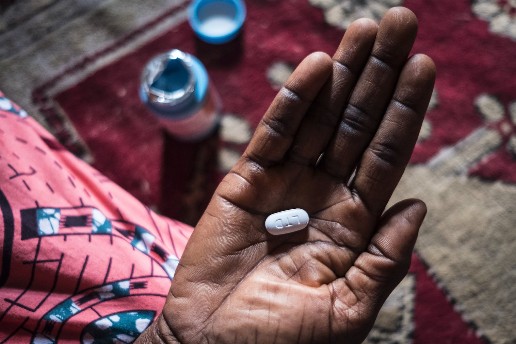
At Gulu Regional Referral Hospital, children enrolled in care receive malaria prevention medicine, folic acid supplements and, for eligible patients, hydroxyurea a drug that significantly reduces painful crises and hospital admissions.
“As long as they adhere to treatment, recurrent anemia and hospital visits reduce greatly,” she explains.
The Ministry of Health has also launched a national scale-up programme for sickle cell prevention and management, including plans to expand testing, improve data collection and strengthen follow-up care.
Meanwhile in Lango sub-region, the government recently distributed 200,000 doses of hydroxyurea to support treatment.
At the same time, authorities are increasingly advocating for premarital screening to help couples understand their sickle cell status before having children.
Government officials say sickle cell disease contributes to nearly 20 percent of under-five mortality in Uganda.
Communities becoming part of the solution
Churches are using sermons and counseling sessions to encourage testing before marriage while health workers are conducting sensitization campaigns in schools and villages and caregivers are forming informal support systems around hospitals and clinics.
“Religious leaders, teachers, cultural leaders, parents all of us have a responsibility and this disease affects entire families and communities,” she says.
The message she constantly repeats to parents is simple but powerful:
“Sickle cell is not a death sentence.”
Children living with the disease can go to school, grow into adulthood and achieve their dreams if they receive proper care and support.
However, changing that reality requires confronting the silence surrounding the disease.
For too long, many families have hidden sickle cell out of shame, fear or misinformation and for girls like Prossy, that silence nearly became fatal.
Now, as evening falls over Atiak, she continues fighting a disease she never chose one painful breath at a time.
Yet in hospital clinics, churches and community meetings across Northern Uganda, a quiet movement is growing: one built on testing, awareness and the belief that children born with sickle cell deserve not abandonment, but a future.
Globally, over 7.7 million people live with Sickle Cell Disease and approximately 80% of all global cases occur in sub-Saharan Africa where up to 25% of the population carries the sickle cell trait and without proactive interventions and early screening and the disease presents a stark mortality rate.