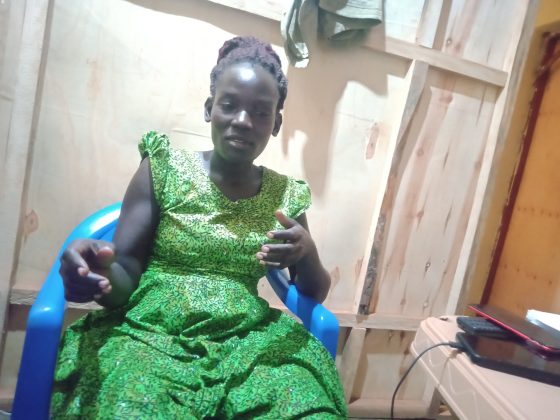
Lamwo I When Sarah Atim experienced her first menstrual period at the age of 13, she was prepared. Unlike many girls who encounter menstruation with fear and confusion, Sarah had already learned about it from teachers and older students in her boarding school.
“I used to see some of the big girls with pads and wondered what they were for,” Sarah recalls. “Whenever I asked, they explained that menstruation was a normal part of growing up and that every girl would experience it,” she adds.
Now 28 years old, Sarah believes the menstrual health education she received helped her understand her body, make informed decisions, and avoid many of the fears that affect young girls when menstruation begins.
Her story reflects what experts increasingly describe as a critical link between menstrual education, dignity, and protection from sexual and gender-based violence. Yet, for many girls in primary schools across Northern Uganda, the experience is very different.
Fear, confusion and silence
At Padibe Primary School in Lamwo district, 13-year-old Grace, a Primary Seven pupil, remembers the shock of experiencing her first period.
“I thought I was sick because I saw blood on my clothes,” she says. “I was afraid to tell anyone because I did not know what was happening.”
Another pupil, a 12-year-old in Primary Six, says some girls avoid attending school during menstruation. “When you stain your uniform, other pupils may laugh at you. Some girls decide to stay home.”
A Primary Five pupil of Child Care Primary school in Padibe town council, Akello, says she wishes more information were provided before menstruation starts.
“We need teachers and parents to explain these things earlier because many girls get scared,” she emphasised
For some girls, the fear is not menstruation itself but the embarrassment and stigma that often accompany it.
The role of schools
According to Abalo Christine, a senior woman teacher in Lamwo district, menstrual education remains one of the most important tools for protecting girls.
“When girls understand menstruation before it begins, they are more confident and less vulnerable,” she explains. “We teach them about hygiene, body changes, and reproductive health so they can make informed choices.”
Abalo notes that schools also play a critical role in preventing misinformation. “Many girls receive inaccurate information from friends or peers. Schools help provide correct information and a safe environment where questions can be asked openly,” she noted.
She believes that boys should also be included in menstrual education to reduce stigma and teasing.
Support begins at home
Parents also have an important role. Sarah’s mother, Margaret Atim, 48, says many parents struggle to discuss menstruation openly because they were never taught how to have such conversations.
“In our generation, menstruation was treated as a secret,” she says. “Today, we need to speak openly with our daughters and prepare them before their first period.” She adds that parental support helps girls feel safe and confident. “When a girl understands that menstruation is normal, she is less likely to feel ashamed.”
Health implications
According to Nurse Christine Lamunu, a reproductive health practitioner in Lamwo district, lack of menstrual education can expose girls to greater risks.
“When girls are not informed about menstruation and reproductive health, they may become vulnerable to exploitation, misinformation, early pregnancy, and sexually transmitted infections,” she says.
She explains that menstruation should be viewed not only as a health issue but also as a matter of dignity and rights. “Girls need access to information, sanitary products, clean water, and supportive environments to manage menstruation safely.”
Menstrual discrimination and gender-based violence
Gender experts warn that menstrual discrimination can increase vulnerability to violence. According to Angee Immaculate, a human right defender and child protection officer working with cultural institutions in northern Uganda, stigma surrounding menstruation often reinforces harmful gender norms.
“When girls are made to feel ashamed of their bodies, it affects their confidence and ability to seek help when facing abuse,” she says.
She notes that school absenteeism caused by menstrual challenges can increase risks of child marriage, exploitation, and other forms of gender-based violence. “Keeping girls in school and ensuring they have menstrual dignity is also a protection issue.”
A call for dignified menstruation
Sarah believes her experience demonstrates what is possible when girls are informed and supported. “The teachers always told us that menstruation was normal and that every woman goes through it,” she says.
For her, menstrual education was more than learning about periods. It was learning about confidence, health, responsibility, and self-protection.
As communities continue to address sexual and gender-based violence, experts argue that menstrual discrimination must not be ignored.
Providing girls with accurate information, supportive families, inclusive schools, and access to menstrual health resources can help create environments where every girl grows up with dignity, confidence, and freedom from fear.
Sarah’s story serves as a reminder that when girls are prepared, menstruation becomes not a source of shame but a source of empowerment.
Discover more from tndNews, Uganda
Subscribe to get the latest posts sent to your email.