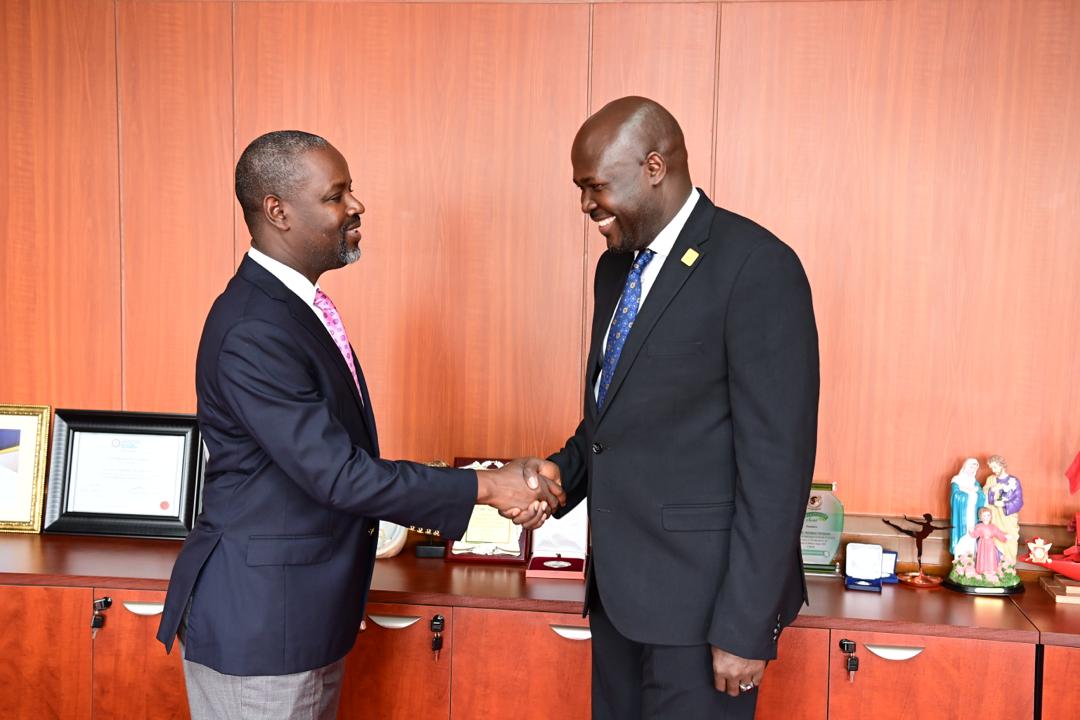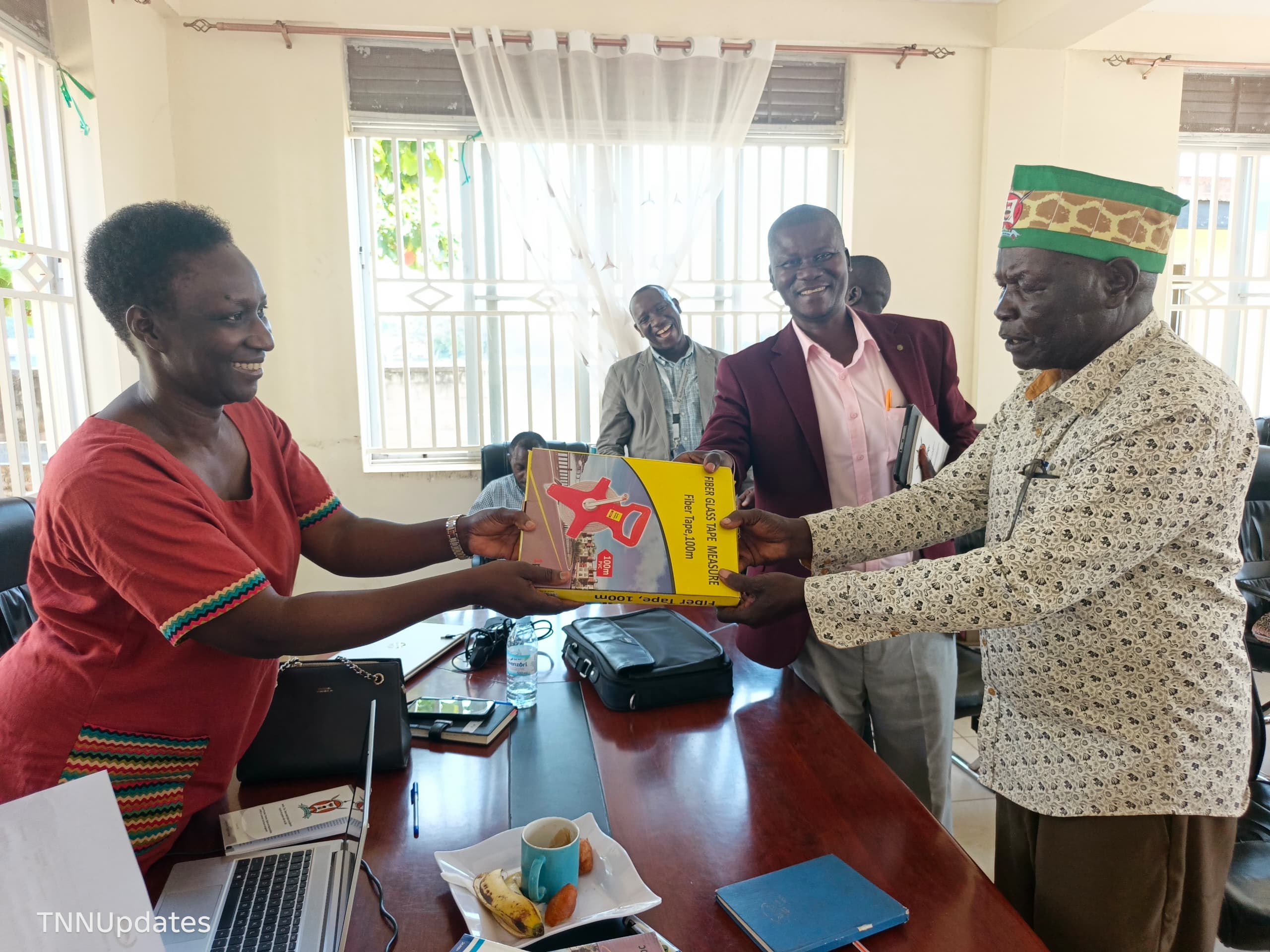
The Land and Equity Movement in Uganda (LEMU) has formally re-engaged the Kumam Cultural Heritage Institution in a renewed effort to strengthen the protection and governance of customary land.
Strong focus will be on mediation, documentation of indigenous land rules, and safeguarding the rights of vulnerable groups, especially widows and orphans.
The re-engagement was announced in Soroti by Dr Theresa Auma Eliu, the Executive Director of LEMU, during a high-level meeting that brought together leaders of the Kumam Cultural Heritage, civil society actors, and partners working on land justice in the Teso sub-region.
Dr Eliu described the engagement as a continuation of a long-standing relationship that dates back to 2008, when LEMU first worked with the Kumam Elders Forum to document customary land governance rules.
 “Today, I am here in Soroti very happy to announce and to restate our re-engagement with the Kumam people to work on the issue of protecting customary land. This is not something new,” Dr Eilu said.
“From around 2008, LEMU worked with the Kumam Elders Forum to do many things, but the most important was the documentation of customary land rules.”
From the Elders’ Forum to a fully-fledged Cultural Institution
The LEMU ED explained that while LEMU’s earlier engagement with the Kumam community was fruitful, the institutional landscape has since evolved. The establishment of the Kumam Cultural Heritage as a structured and recognised cultural institution has created new opportunities for deeper, more systematic collaboration.
“Now that we have Kumam Cultural Heritage in place, there are some changes that have happened at the institutional level,” she noted. “We are re-engaging to work together with the cultural institution, and we have agreed on many things we need to do, including revising the rules for how land is managed within Kumam territories.”
Among the priority areas agreed upon are the review and updating of documented customary land rules, collaboration with other stakeholders, and deliberate action to protect the land rights of widows and other vulnerable community members who are often victims of land grabbing and dispossession.
Customary land as a living program, not a project
Dr Eliu emphasised that LEMU’s renewed engagement should not be viewed as a short-term intervention but rather as a long-term program responding to persistent land challenges.
“This is not a project; it is a program,” she stressed. “Land problems have been here and are here to stay. If we say it is a project of one year, what happens after one year? For as long as we can get resources and support, we will continue to work.”
She further explained that the customary land rules documented by the Kumam people carry legal legitimacy under Ugandan law. Citing the 1995 Constitution of Uganda, Dr Theresa noted that customary land tenure is recognised as one of the lawful land tenure systems in the country.
The Land Act, she added, goes further to state that customary land shall be managed according to rules that are socially acceptable to the given community.
“In this case, the given people are the Kumam,” she explained. “They have documented their rules which are socially acceptable to them. Any lawyer who questions the legal weight of these documents should understand that the owners of the land are acting within the law.”
She argued that similar documentation can be done by other communities across the country, such as the Acholi, reinforcing the idea that customary land governance is both lawful and community-driven.
Mediation as the first line of justice
A key pillar of LEMU’s approach, according to Dr Eliu, is mediation. She acknowledged the growing frustration among clan leaders, who often face abuse, threats, and marginalisation when handling land disputes.
“We have just been in a meeting with the Minister of Lands, and clan leaders are saying this work is very difficult and sometimes life-threatening,” she revealed. “They are ignored, abused, and even government leaders or wealthy individuals tell them, ‘Who are you?’”
LEMU strongly advocates for mediation before litigation, arguing that dialogue offers a more inclusive and less destructive path to justice.
“When you meditate, there is no winner and no loser; everyone can be a winner,” Dr Eliu said. “In court, there is always a winner and a loser. If we can talk, why do we begin boxing each other?”
She acknowledged that customary law and state law do not always align, but emphasised that Ugandan law allows for mediation and recognises customary norms as a legitimate starting point for resolving disputes.

Kumam leaders welcome the partnership
Ekilu Peter, the Deputy Prime Minister, spoke on behalf of the Heritage, and described land as a deeply sensitive issue across all communities and welcomed LEMU’s technical support.
“Land is a big issue in every tribe,” Ekilu said. “LEMU is trying to teach us how to help our people resolve land problems amicably, and the best way is to resolve them at the lowest level.”
He noted that the meeting had already produced clear action points, including reviewing the Kumam land governance book and conducting extensive trainisensitisationization for clan leaders, known locally as Wegi Bukui, across all levels of the cultural structure.
“With LEMU, we have agreed that our leaders will be trained so that they can manage land issues in their clans well,” he said, expressing optimism that the partnership will promote peaceful land management throughout Kumam territories.
Redeem International brings an enforcement perspective
The meeting also drew participation from Moses Elilu, Program Manager at Redeem International, who highlighted the importance of law enforcement as a complement to mediation.
“Redeem International believes that law enforcement creates deterrence,” Elilu said. “We work with government partners to ensure perpetrators of land grabbing are held accountable, especially when it comes to widows and orphans.”
He explained that while mediation is valuable, it often fails due to a lack of technical capacity, trust deficits, or conflicts of interest among mediators.
Redeem International therefore sees the partnership with LEMU and Kumam Cultural Heritage as an opportunity to establish clear referral pathways for cases where mediation breaks down.
“This partnership is fuel for us to move,” Elilu said. “Together, we can protect the most vulnerable and create safety and prosperity in line with government priorities.”
Rewriting the Kumam PPRR Book
Robert Ewangu, a founder member of the Kumam Cultural Heritage, described the engagement as timely, especially given the increasing land tensions in the region.
“Land issues are very challenging in Teso, especially during the rainy season when boundary disputes increase,” Ewangu said. He welcomed LEMU’s return after a period of reduced engagement and outlined the institution’s expectations.
“We want them to help train clan leaders, develop a clan directorate, and guide us in rewriting the Kumam PPRR book,” he explained.
The PPRR book—covering Principles, Responsibilities, and Rights—serves as the foundation for governing customary land tenure among the Kumam.
Discover more from tndNews, Uganda
Subscribe to get the latest posts sent to your email.