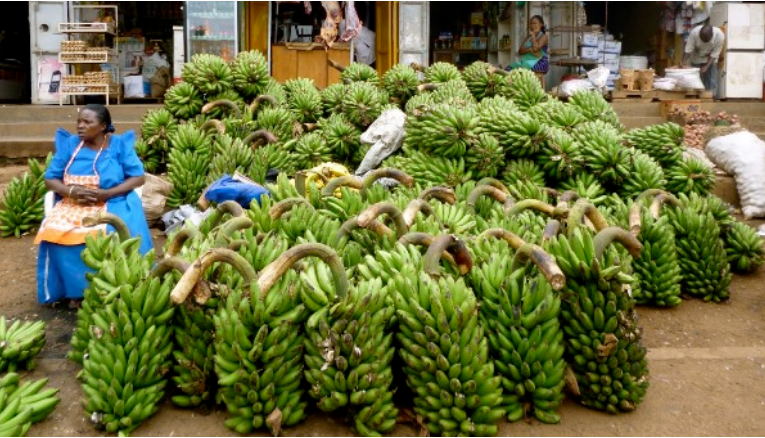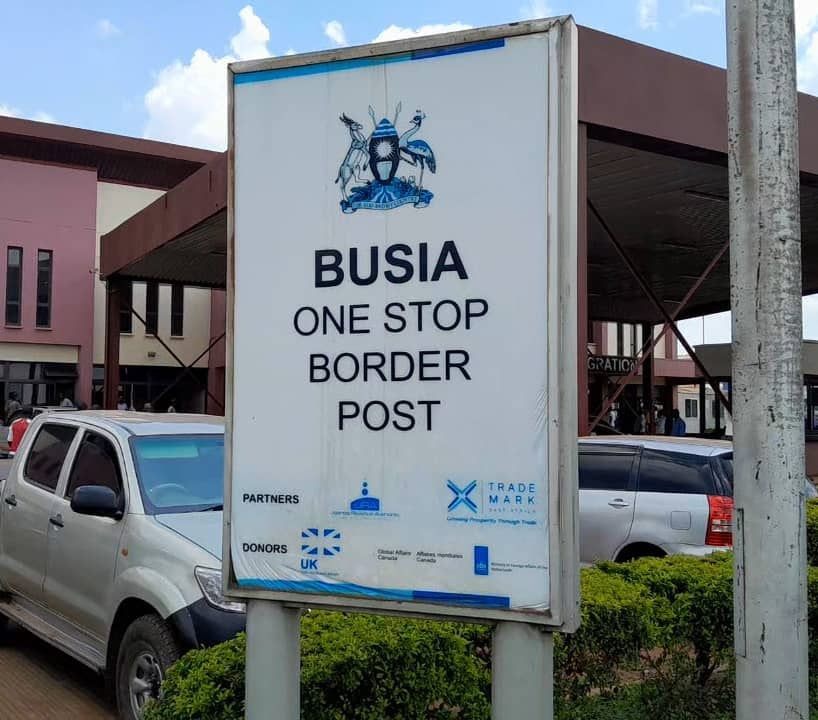
Busia, Uganda | At dawn in Busia, women balance sacks of tomatoes, silver fish, cassava flour and second-hand clothes on their heads or strap them onto motorcycles idling at the edge of town.
By mid-morning, they will have crossed into Kenya or returned to Uganda, hoping to earn enough to feed their children, pay school fees and restock.
For many, the border is not just a line dividing two states. It is a daily negotiation with power and with discretion.
“In Busia, I learnt about COMESA benefits from our trade information desk officer and also from the customs officials and the other traders,” says Mathilde Zofo Badro, a cross-border trader.
She refers to the Common Market for Eastern and Southern Africa (COMESA), a 21-member regional bloc designed to ease trade through simplified tariffs and harmonized customs procedures.
On paper, small-scale traders moving goods across the Uganda–Kenya border are entitled to simplified trade regimes, lower tariffs on approved goods and formal receipts for any payments made.
In practice, traders say much depends on the officer encountered and the route taken.

The price of a shortcut
At the official crossing point, traders queue for clearance from the Uganda Revenue Authority (URA) and their Kenyan counterparts. Goods are inspected, declarations made and, if compliant, receipts issued.
“When you pass on a formal route, they will give you the receipts and you pay the fines, if there are fines, and you are given a receipt,” Badro explains.
But Busia’s border is porous. Dirt footpaths snake through bushes and homesteads known locally as panya routes shortcuts used to avoid long queues, multiple taxes or complicated paperwork.
“When you pass what they call panya routes or shortcuts, you will have to pay the local tax and even pay a bribe because you will not be allowed to pass with your goods without paying,” she says.
These payments are informal and undocumented. Traders report paying as little as 20 Kenyan shillings for small consignments or as much as 2,000 depending on the load. No receipts are issued.
For women operating on margins sometimes below 10 percent per consignment, such payments can erase a day’s earnings.
“And if you do not pay, they harass you. They pull you, they drag you and sometimes they can even push you down. So you pay unwillingly and it becomes part of your profit,” Badro says.
Informal trade along the Uganda–Kenya border accounts for a significant share of small-scale agricultural and household commodity flows. Grains, vegetables, second-hand clothes, fish and household goods move daily in quantities that translate into millions of shillings circulating outside official customs systems.
At the formal crossing, clearance through URA and the Kenya Revenue Authority ensures inspection, documentation and received payments through bureaucracy; the process offers predictability and legal protection.
The persistence of panya routes reflects long queues, inconsistent enforcement of small-consignment exemptions, and limited awareness of simplified trade regimes and the high opportunity cost of time for traders operating on thin margins.
From an economic standpoint, informal payments ranging from KSh 20 to KSh 2,000 function as unofficial transit fees and for traders earning less than 10 percent profit per trip, even an unreceipted payment of KSh 100–300 can wipe out net earnings.
“Over weeks and months, this informal taxation reduces household income stability and reinforces cycles of vulnerability,” one analyst notes.
A trader who asked to be identified only as Aisha, and who trades tomatoes and silver fish three times a week, describes the system bluntly.
“If you pass the bush side, they just look at your load and tell you how much, maybe 50 shillings for a small basin; 300 or 500 if it is bigger. You do not argue because if you delay, they threaten to pour your goods down. So you just remove the money and go,” she said.

When goods bypass documentation, national statistics underreport cross-border volumes, affecting revenue projections and policy design for small-scale traders.
The presence of coercion and forced payments signals more than tax evasion; it reveals a breakdown of regulatory protection. When formal compliance is perceived as slow or inconsistently applied, informal routes become a cost-minimizing strategy despite legal risk.
In Busia, the “price of a shortcut” is not only financial and it represents lost state revenue, compromised trader safety and entrenched informal power structures.
Confiscation and coercion
Customs officials are legally empowered to confiscate goods suspected of tax evasion or containing prohibited items. Under the East African Community Customs Management Act, confiscated goods must be documented, the trader informed of the reason and any fines or duties formally assessed.
“You make sure you identify which officer has confiscated your goods and they will tell you the reason. If you are to pay fines, you pay and you are given a receipt,” Badro says.
Traders, however, say the line between lawful enforcement and coercion is often blurred.
“Some officers ask for bribes and when they ask, they send other people, not them directly. They will send a boy,” she says.
In addition, the intermediary approaches with a warning: cooperate or your goods will be left behind and for traders supporting families, the threat is immediate.
“Children must eat, school fees you must pay, rent you must pay and so you find yourself succumbing,” Badro explains.
Losing an entire consignment can mean forfeiting capital, defaulting on informal loans and losing customers.
“Sometimes you even fail to pay because it is more than your capital. It is better to leave it there,” she says.

An official from the Kenya Revenue Authority, speaking on condition of anonymity, says officers are guided by the East African Community Customs Management Act and internal procedures.
“Customs officers are legally mandated to intercept goods suspected of tax evasion, under-declaration or importation of prohibited items,” the official says.
Adding that, “any applicable penalties must be formally assessed, and all payments received through official systems; any demand for money without a receipt constitutes misconduct and criminal violation.”
He acknowledges power imbalances at border points, particularly for small-scale women traders with limited capital, and says there are procedures for storage and later resolution where duties cannot be paid immediately.
When gender becomes a liability
While both men and women report harassment, women describe a distinct pattern of sexual exploitation and gender-based humiliation.
“What affects women differently from men is sexual harassment and we have physical harassment like bad touches, language and gestures,” Babu says.
She says some officials and even fellow traders minimize women’s authority over their goods.
“When you are a woman, they think the products are not yours. Some think cross-border trade is not for a woman,” she told tndNews, Uganda.
Harassment may be verbal vulgar language delivered in unfamiliar dialects or non-verbal, including suggestive gestures, prolonged staring and unwanted proximity.
A 32-year-old trader who requested anonymity says abuse often goes beyond routine enforcement.
“What men face is mostly shouting or being delayed. For us women, it becomes personal. They comment on your body, come very close and sometimes touch you ‘by mistake.’ You know it is not a mistake,” the trader said.
Adding that, “You think about your children, rent, school fees, and the loan you took. They use that desperation against you; we endure because we must survive. But it leaves you feeling small,” she says.
A regional gender and trade governance specialist describes sexual exploitation in informal trade corridors as a structural vulnerability.
“Women operating in informal cross-border trade often lack formal documentation, carry perishable goods and work outside structured systems. That combination creates leverage points for abuse,” the expert says.
In many border economies, trade remains socially coded as male; hence, when women assert ownership over commercial goods, their economic agency is questioned, emboldening harassment. When threats are delivered in unfamiliar languages, traders are isolated and unable to challenge or document them.
The expert argues that reform must integrate gender-sensitive safeguards, confidential reporting channels, and deployment of female officers at inspection points and clear codes of conduct.
Busia attracts traders from multiple districts, many with limited formal education who struggle with complex customs documentation. Constant staff turnover compounds confusion.
“The officers who harass traders are also ignorant because they are new. They keep changing officers. Those who understand businesswomen are transferred,” one trader says.
Multiple taxes, exchange rate fluctuations, transport costs, traffic congestion and repeated scanning of goods add to frustrations. Traders report that even after goods pass through scanners, officers sometimes reopen them, causing delays and spoilage.
At Busia, the promise of regional integration under the Common Market for Eastern and Southern Africa is tested not in policy documents but in the daily crossings of women carrying tomatoes, fish, produce and second-hand clothes across a fragile line between two states.
Though, the Simplified Trade Regime was designed to formalize and protect small-digitised low-valueg goods up to USD 2000, this discretion at the border continues to convert opportunity into vulnerability.
Therefore, this gap between policy and practice fuels illegal fees, underreported trade and sexual exploitation compared to better structured STR posts in Zambia-Malawi corridors; Busia shows weaker enforcement consistency and trader awareness.
To curb this, there is need for COMESA-led monitoring of STR compliance, mandatory gender-sensitive border units, digitised low-value clearance receipts, strengthened Trade Information Desks and an independent cross-border complaints mechanism to curb discretion and protect women traders.
For the women who rise before dawn each day, the border remains both a lifeline and a place where survival depends not only on the price of tomatoes or fish, but on the unpredictable cost of crossing.
Discover more from tndNews, Uganda
Subscribe to get the latest posts sent to your email.