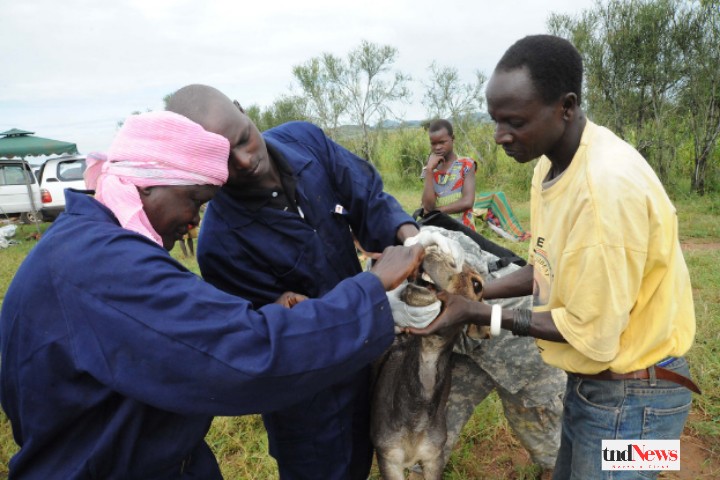
Lamwo | The Lamwo district veterinary department has launched a mass vaccination campaign targeting livestock in a renewed effort to control the outbreak of foot-and-mouth disease (FMD).
The government of Uganda, through the Ministry of Agriculture, Animal Industry and Fisheries (MAAIF), delivered 40,000 doses of the FMD vaccine to the district for the 2024/2025 financial year.
Speaking in an interview with tndNews, Dr. Stanely Avudraga, the District Veterinary Officer (DVO) of Lamwo, confirmed that the vaccination campaign is ongoing and urged all livestock farmers to bring their animals for vaccination, which is being offered free of charge.
“Farming is the backbone of our community, and animals, especially cattle play a central role in land preparation and livelihood support,” Dr. Avudraga explained.
“This vaccine is essential in protecting our herds from FMD, which has previously caused significant losses in the district.”
In the first phase of vaccination conducted in May 2024, the district supported by the International Rescue Committee (IRC), a development partner active in the refugee-hosting sub-counties successfully vaccinated 15,000 head of cattle.
Dr. Avudraga revealed that so far, 17,000 animals have been vaccinated in the current exercise, and the district still has over 20,000 doses available.
“This year, our target is to vaccinate between 20,000 and 30,000 head of cattle across all sub-counties, including those in the refugee-hosting areas,” he added.
Farmers’ voices
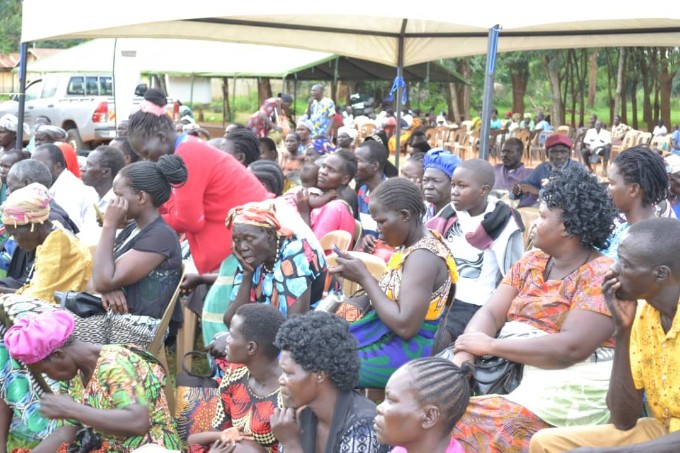
Local farmers have welcomed the vaccination campaign with enthusiasm, calling it a lifeline for their livelihoods.
Nyero Bosco, a farmer from Paloga Sub- County, praised the government for the timely intervention: “Our bulls are our tractors. If they fall sick or die, we cannot till the land or earn money. I am happy that the government is thinking about us poor farmers.”
Another farmer, Ajok Scovia from Padibe East, said: “Last year, many animals died from strange diseases. This free vaccination is a big relief. I have already taken all my cows for the injection.”
Okello Richard, a youth farmer from Madi Opei, urged fellow farmers to heed the veterinary team’s call. “We should not wait for disease to strike before acting. This vaccination is for our own good, and it is free. Let us support it,” he noted.
Background: farming and livestock in Lamwo district
Lamwo District, located in the northern region of Uganda along the border with South Sudan, is predominantly an agricultural area. The district is characterized by vast grasslands and open grazing areas suitable for livestock keeping.
Communities in Lamwo engage in mixed farming, with cattle, goats, and sheep forming a critical component of household livelihoods.
Cattle in particular are culturally and economically important. They are used not only for milk, meat, and income, but also for ploughing gardens earning them the nickname “the poor man’s tractor.”
This makes the health of animals central to agricultural productivity and food security in the region.
Due to its proximity to international borders and mobile pastoral practices, Lamwo is also vulnerable to transboundary animal diseases, including foot-and-mouth disease.
Periodic vaccinations, supported by both the central government and development partners, are therefore critical in controlling disease outbreaks and maintaining livestock health.
Animal vaccination exercises are usually accompanied by other livestock support activities, including deworming, spraying against ticks, and farmer sensitization on best animal husbandry practices.
These integrated efforts are aimed at boosting productivity, preventing zoonotic diseases, and sustaining the agricultural economy of the district.
A call to action
Dr. Avudraga further emphasized that vaccination is part of a broader animal health strategy in Lamwo, which includes disease surveillance, community sensitization, and routine animal care.
“The future of livestock farming in Lamwo depends on how seriously we take preventive animal health. I call upon all leaders, LC1 chairpersons, and farmers to mobilize their communities to participate actively in this exercise,” he concluded.
The district veterinary department is working closely with sub-county veterinary assistants and local leaders to ensure all areas are covered before the vaccine stock runs out.
Uganda is actively working to control Foot and Mouth Disease (FMD) through a national vaccination program, particularly in areas affected by outbreaks.
The country is receiving vaccine shipments from Egypt and utilizing a risk-based strategic plan to target high-risk areas.
Uganda’s susceptible livestock population requires approximately 44 million doses annually, necessitating a bi-annual vaccination program.
Discover more from tndNews, Uganda
Subscribe to get the latest posts sent to your email.