Kitgum | In accordance with the Land Act, the High Court in Kitgum plans to implement conventional dispute resolution procedures for resolving land-related issues in an effort to blend traditional customs with contemporary mediation techniques.
This Act recognizes the important role of traditional authorities in resolving land disputes under the customary tenure system.
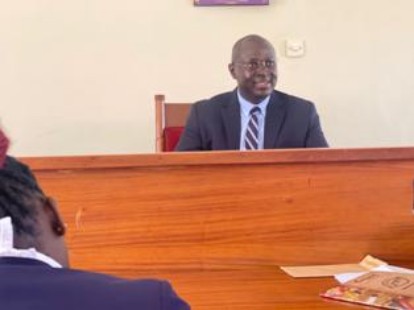
Justice Phillip Willebrord Mwaka, Resident Judge of the Kitgum High Court, made the announcement on March 19, 2025, during an Anti-Corruption Baraza. The Judicial Service Commission in Kitgum Municipality organized the event, which took place at the Kitgum Public Primary School playground.
Justice Mwaka explained that the Land Act, which was passed in 1998, recognizes the importance of customary tenure and includes mediation as an alternative dispute resolution option.
Sections 88 and 89 of the Land Act address customary dispute settlement and mediation, recognizing traditional authorities’ role in resolving land disputes.
“The Land Act aims to integrate traditional dispute resolution mechanisms with modern mediation strategies, rather than conflict with existing customary systems,” Justice Mwaka stated.
He added that the 1995 Constitution established Land Tribunals and Local Council Courts to handle land matters, and the Land Act further provides for the creation of tribunals at the district level.
Justice Mwaka also emphasized the significant role that traditional authorities play in handling land disputes in Kitgum Magistrate Area, which includes the districts of Kitgum, Lamwo, Pader, Agago, and Karenga.
He pointed out that land disputes affect not only individuals but also institutions, including schools, administration offices, and health centers across the district.
James Ochola, speaker of Lamwo district council, echoed this sentiment, calling the inclusion of traditional leaders in land dispute resolution “the best solution” to the ongoing land wrangles that are affecting many communities in the region.
Barnabas Langoya, Lamwo district education officer (DEO), noted that land disputes in Acholi have been negatively impacting education, particularly with regards to school land. He welcomed the integration of traditional dispute resolution as a potential solution to the land issues affecting schools.
Ventorino Otto, chairperson of the Kitgum and Lamwo NGO Forum (KINGFO), expressed regret over the land conflicts in the region, stressing the need for collective action to address the matter.
Otto noted that many people have been deprived of access to education and properties due to these disputes.
Rwot Arop Pacire, a traditional leader, explained that the primary land disputes they handle involve family members, relatives, clan members, and landowners who have purchased land from clans.
These disputes often concern land boundaries or ownership, with some arising from the prolonged displacement caused by the war.
He added that local leaders typically handle about three land disputes per week, with over ten cases per month. He noted that following the return from displacement, land-related cases have surged in the communities.
As of March 19, 2025, the Kitgum Magistrate Court Circuit had a total of 1,003 cases, with 303 of them involving land disputes. Of these, only 143 had been resolved. Other case categories included 524 criminal cases, 125 civil cases, 24 family matters, and 14 commercial cases.
Effectiveness of land dispute resolution
Land dispute resolution in Uganda operates through two parallel systems: the customary system (also known as Alternative Dispute Resolution, or ADR) and the statutory system, governed by formal written laws.
Ideally, these systems should work in tandem. However, in post-conflict northern Uganda, many people initially refer land disputes to the customary system before resorting to the statutory mechanisms.
The customary system works in collaboration with other land administration structures, including Area Land Committees at the parish level, the District Land Board at the district level, and the Uganda Land Commission at the national level.
It also cooperates with government structures such as Local Councils (LCs I-V), the Police Land Desk, the Resident District Commissioner (RDC), and other departments like Community Development.
Under Section 88 of the Land Act, traditional authorities are empowered to resolve disputes related to customary tenure. The law states that nothing in this section should prevent or limit the ability of traditional authorities to determine disputes or act as mediators between disputing parties.
In Acholi, land management and dispute resolution are primarily handled by traditional clan structures, such as the Kaka (clan), Dogola (family), and Won Pacu (household head).
The Rwodi (cultural chiefs), including Rwodi Kweri (committee of chiefs), Rwot Kaka (clan heads), and Rwodi Moo, play a vital role in land management and dispute resolution. These leaders are respected custodians of traditional knowledge regarding land boundaries, rights, and ownership in their communities.
The role of traditional leaders is to mediate disputes and promote reconciliation, often through signed agreements. Rwodi Kweri typically handles cases between individuals, while Rwodi Moo deals with cases involving entire communities or clans.
The customary system’s primary goal is to restore social harmony and peace to the community through mediation, settlement, reconciliation, and negotiation.
By Vincent Kaguta
Discover more from tndNews, Uganda
Subscribe to get the latest posts sent to your email.