Uganda’s own experience illustrates this point. On the eve of independence in 1962, no party won an outright majority that election.
Oyam – January 11, 2022: Last week, Felix Adupa Ongwech, who heads a pressure group of NRM leaning Parliamentary elections losers dropped a bombshell.
The group, calling itself “Transformers Cadres Association”, immediately hogged the headlines. They proposed that Uganda should revert to the Westminster Parliamentary system of government.
But the Ugandan opposition often caught like a deer in the headlights, went bonkers.
“Members of Parliament should be the ones to elect the president”, went the banner headlines. No one paused to reflect that this is a very ubiquitous form of government.
I am a strong advocate for the Westminster model.
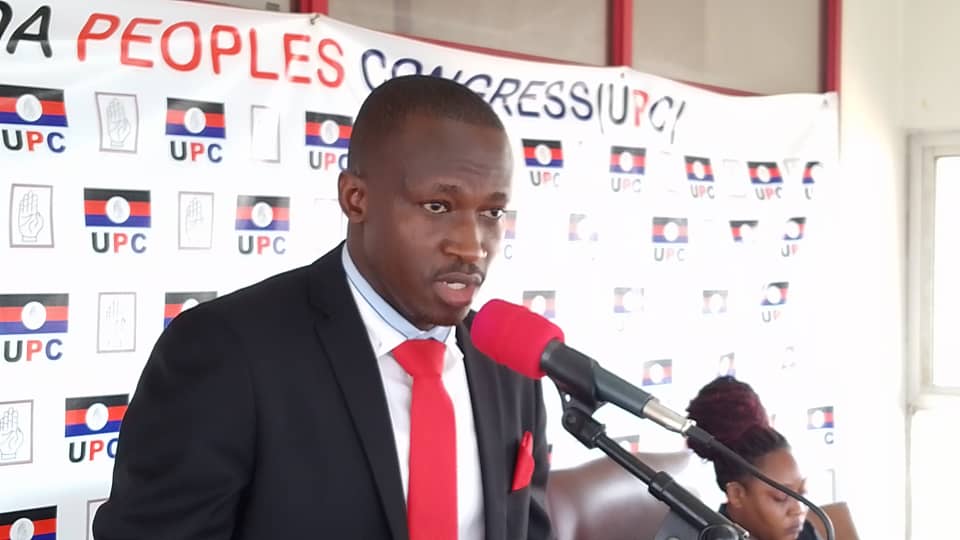
In October 2019, my friend, Andrew Omara, the Personal Assistant to UPC President, Jimmy Akena, invited me for the annual Milton Obote Memorial Lecture. The keynote speaker was Prof. Peter Anyang’ Nyong’o, Kisumu County Governor, and former President of Makerere University Students’ Guild.
UPC has habitually invited notable Kenyan public intellectuals to headline this annual event. In a previous lecture, Prof PLO Lumumba, the bombastic lawyer and Tik-Tok star, made a stirring speech and brought the house down with his praise of Milton Obote’s alleged accomplishments.
Prof Anyang’ Nyong’o, has written a book titled: “Presidential or Parliamentary Democracy in Kenya? Choices to be made”.
In his address, he attacked the US styled presidential system of government. He castigated Milton Obote for his dictatorial tendencies, which included invoking the emergency and detention without trial act, and the banning of other political parties, which made Uganda a de facto one-party state in 1969.
In his book, Prof. Anyang’ Nyong’o makes persuasive arguments for the Westminster Parliamentary System. He cites coalition building, in instances when no party wins an outright majority, as one of the strong selling points for the parliamentary system.
Uganda’s own experience illustrates this point. On the eve of independence in 1962, no party won an outright majority that election.
Milton Obote, however, struck a coalition deal between his Uganda People’s Congress (UPC), and Kabaka Mutesa’s Kabaka Yekka (KY), to form a government and take the country to independence from Britain, with Buganda in it. This demonstrated the versatility of the Westminster model.
ALSO READ:
- Op-ed: The foolery of NRM cadres on the proposed Constitutional amendment
- Names of 19 people hurt in Lira Fuso lorry fatal road crash
- Interview: Equity Bank moves to back West Nile tea farmers with affordable loans
- 7 traders die in Lira-Abako fatal road crash on Monday
A more recent experience in practising parliamentary democracy is the state of Israel. During their last re-elections, both the ruling Likud party and the opposition Labour party failed to win enough seats to form a government on their own.
This has opened the way for a possible alliance with Arab parties in the Knesset, something that has been, until now, unthinkable for either Labour or Likud.
This underscores the assertion that parliamentary democracy provides the space to reach out across political and ideological divides, and reach accommodations and compromises among political rivals. This is anathema to the first-past-the-post, winner-takes-all, adversarial presidential system.
The Westminster parliamentary system is also suited for diverse nations like Uganda, to act as a counterbalance against the risk of populous nationality groups dominating the political space because of sheer numbers.
Furthermore, The Westminster model might be a solution to our, sometimes, personalized and highly polarized presidential competition. We might also benefit as a country because politicians will be more responsive to constituents’ needs.
The writer is an NRM party activist from Minakulu in Oyam District.
Discover more from tndNews, Uganda
Subscribe to get the latest posts sent to your email.