Uganda’s commitment to promoting women’s participation in peacebuilding is facing an implementation test, with journalists being challenged to scrutinise government programmes and establish whether women are meaningfully involved in decisions affecting their lives.
The country’s Third National Action Plan (NAP III) on Women, Peace and Security, initially scheduled to run from 2021 to 2025 but extended to 2029, seeks to achieve sustainable peace and security through enhanced participation of women in peace and development.
However, questions remain about whether women’s representation in leadership positions translates into meaningful influence over decisions, particularly at community level, where families and vulnerable populations experience the effects of conflict, violence and insecurity.
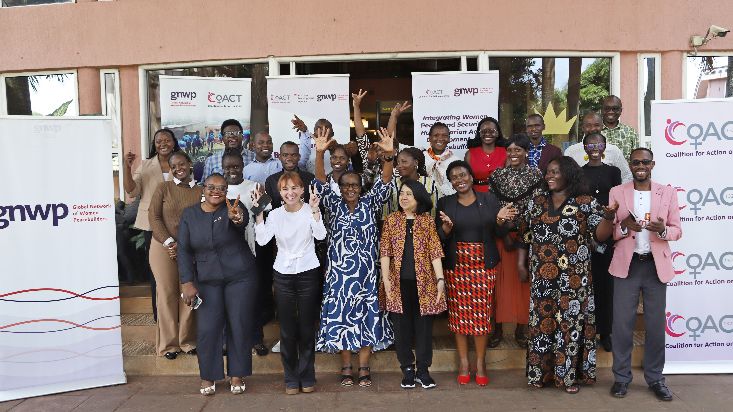
While training journalist at Imperial Golf View Hotel Entebbe on Tuesday, Ruth Besong Abunaw a representative from the Ministry of Gender, Labour and Social Development said the National Action Plan domesticated United Nations Security Council Resolution 1325, adopted in 2000, which recognises women’s critical role in conflict prevention, peacebuilding and post-conflict recovery.
The representative said Uganda’s plan is built around four objectives, including preventing all forms of violence and promoting peace within families, communities and the country.
Other objectives are promoting women’s meaningful participation in leadership and decision-making, strengthening their capacity to prevent and respond to natural and human-made disasters, and improving institutional coordination of the Women, Peace and Security agenda.
“How is this participation? Is it meaningful participation? Are we getting the results by women being there by the numbers? Are women getting the results?” the ministry representative asked, highlighting the distinction between numerical representation and actual influence.
Uganda adopted its first National Action Plan in 2008, followed by a second in 2011. The current plan was initially designed to cover 2021 to 2025 but was extended to 2029 to allow more time for implementation.
The policy framework comes at a time when women and girls continue to face particular vulnerabilities during displacement, conflict, natural disasters and other humanitarian emergencies.
Robinah Rubimbwa, the executive director of the Coalition for Action on 1325 (COACT), said journalists should move beyond conventional reporting and give greater attention to women working to prevent conflicts, provide early warning information and respond to emergencies.
Rubimbwa challenged journalists to integrate Women, Peace and Security issues into their editorial decisions and media coverage, including highlighting women mediators, grassroots peacebuilders and local women’s rights organisations.
She also called for the establishment of a Uganda network of journalists reporting on Women, Peace and Security to strengthen collaboration, information sharing and sustained coverage of the agenda.
She said journalists could use their platforms to influence public debate and encourage media organisations to incorporate gender-sensitive peace reporting into their editorial policies.
The need to connect peacebuilding with economic empowerment and development was also highlighted during the discussions.
Dr Jasmin Nario Galace, Chief Executive officer of Global Network of Women Peacebuilders, presented the Humanitarian-Development-Peace Nexus approach, which combines emergency assistance, long-term development and peacebuilding interventions.
She cited examples of programmes in northern Uganda involving cash-for-work initiatives, livelihood support and community infrastructure development.
According to her presentation, participating communities opened more than eight Kilometres of roads, repaired 412 metres of road infrastructure and constructed 1,196 energy-saving stoves.
She also reported that 841 women received business support, practical skills and training, alongside support for village savings and loan associations.
Dr Jasmin said combining humanitarian assistance with development and peacebuilding could help address immediate needs while reducing tensions between refugees and host communities and creating more sustainable livelihoods.
However, she acknowledged challenges, including donor funding restrictions, institutional competition and concerns that integrating development and peacebuilding into humanitarian programmes could compromise humanitarian neutrality and impartiality.
Oyugi Frank, a journalist with QFM Lira, said women’s issues should not be treated as isolated subjects because they intersect with several development concerns, including agriculture, climate change, health and economic empowerment.
He expressed support for stronger collaboration between journalists and organizations working on women’s rights and peacebuilding.
Also read: Women’s Initiative finds out why teenage marriage rates are high in Acholi
The discussions point to an important responsibility for the media: examining whether commitments under the National Action Plan are translating into tangible improvements in the lives of women, particularly those in rural and conflict-affected communities.
For journalists, this includes investigating women’s access to leadership opportunities, their involvement in local conflict-resolution mechanisms, the effectiveness of government interventions and the resources allocated to implementing the national plan.
Ultimately, the test of Uganda’s Women, Peace and Security agenda will not be the number of policies adopted or women appointed to leadership positions, but whether women have the power, resources and opportunity to shape decisions that determine peace and development in their communities.
Discover more from tndNews, Uganda
Subscribe to get the latest posts sent to your email.