The decision by the Court of Appeal, sitting in Lira on 16 November 2026, to refer the Lango cultural leadership dispute to mediation was an important opportunity to restore peace, unity and respect for the law among the people of Lango.
However, developments following the court session appear to raise questions about whether both sides are ready to engage in genuine dialogue.
Mediation means that both sides sit together, listen to each other and find a solution. It does not mean that one side makes decisions and expects the other to accept them.
The question many people are now asking is simple: If one side has already decided what should happen, what exactly is there to discuss during mediation?
Who are the parties involved in the court case?
It is important to make clear that this dispute involves two different cultural groups.
The Lango Cultural Institution (LCI) side with Eng. Dr. Michael Moses Odongo Okune, Willy Omodo Omodo, Okello Hamza and George Ojwang Opota
The Lango Cultural Foundation (LCF) with Benjamin Okii and Denis Obia Acila as parties.
These are the main individuals whose positions are being discussed in this dispute. The formal court proceedings also include other applicants and parties, including Tom Otim and Vincent Oling.
The disagreement is not simply between individuals. It concerns the leadership, constitution, identity and future of the Lango cultural institution.
How did the conflict start?
Before the emergence of LCI, the Lango Cultural Foundation (LCF), under the leadership of His Highness Yosam Odur Ebii, was the established cultural institution responsible for Lango cultural leadership.
It had an existing constitution whose amendments were due in 2027, a leadership structure, cultural symbols and procedures for handling matters of succession.
The conflict started when a separate group emerged and formed the Lango Cultural Institution (LCI).
According to the LCF account, the LCI suspended the existing LCF constitution and proceeded to organise its own election without following the established constitutional procedures of LCF.
Also read: BIG LOSS: Why Eng. Odongo Okune applied for stay of execution of Oct., 31 orders
The following events are important in understanding how the disagreement developed.
February 2024: Changes in leadership structures
As the LCI side prepared for its election, it suspended Dila Benson, who was then the existing Speaker under the LCF leadership.
Instead, Willy Omodo Omodo was appointed interim Speaker by the LCI group.
The LCI also suspended the existing LCF constitution and appointed its own Electoral Commission to organise the election.
This raised serious questions about the authority to suspend an existing Speaker, appoint another one and establish a separate Electoral Commission while the existing cultural institution still had its leadership structures.
The High Court later addressed the question of the interim Speaker and the Electoral Commission in its judgment.
Election of Odongo Okune
On 1 March 2024, the LCI organised an election at Akii-Bua Stadium in Lira and declared Odongo Okune the new Won Nyaci.
This election was conducted under the LCI arrangement, rather than through the established LCF succession process.
The LCF side challenged the election because it believed that the existing constitution and procedures had not been followed.
After the election: Adoption of LCF cultural symbols and facilities
After the election, the LCI went further and adopted the LCF anthem and totem as part of its cultural identity.
It also took over the LCF conference centre, where cultural meetings had traditionally been conducted.
These actions raised further questions about the ownership, use and control of the cultural identity and property of the existing institution.
The LCF viewed these developments as an attempt to take over an institution that already existed instead of following its constitution and procedures.
It is important to understand that an institution cannot simply become the owner of another institution’s identity and property because it has established a separate leadership.
These matters should also be addressed during mediation.
The government gazettement
On 14 June 2024, the government gazetted Odongo Okune as the cultural leader of Lango following his election.
However, the gazettement did not end the disagreement because the election process was already being challenged in court.
High Court judgment in Lira
On 31 October 2024, the High Court in Lira, presided over by Justice Philip Odoki, delivered its judgment in the leadership dispute. The court declared Odongo Okune’s election null and void.
Also read: Odongo Okune was not duly elected
It also made important orders concerning the Electoral Commission and the interim Speaker.
Among other things, the court:
● Declared Odongo Okune’s election null and void.
● Stopped the disputed Electoral Commission members from acting in that capacity.
● Quashed their actions as members of that commission.
● Found that the defendants had abused due process in organising and conducting the election.
● Declared that the position of interim Speaker held by Omodo Omodo did not exist under the institution’s applicable structure.
● Directed the Minister responsible for cultural institutions to de-gazette Odongo Okune.
● Declared the late Yosam Odur Ebii to be the Paramount Chief of Lango at that time.
These were important findings and orders of the High Court, not merely claims made by the LCF side. However, the judgment was subsequently challenged on appeal.
November 2024 to January 2025: Appeal proceedings
Odongo Okune and other applicants challenged the High Court decision.
On 29 November 2024, the High Court dismissed their application for a stay of execution.
On 29 January 2025, the Court of Appeal granted a stay of execution pending determination of the substantive appeal.
This is why it is important to distinguish the High Court judgment from the subsequent appeal proceedings. The appeal has not been finally determined.
10 November 2025: Death of the late Won Nyaci
The late His Highness Yosam Odur Ebii passed away on 10 November 2025.
He had remained at the centre of the Lango leadership dispute following the High Court judgment.

His death created the need for succession under the LCF constitution.
November 2026: A new LCF leader
Following the death of Apap Yosam, the LCF proceeded with a succession process under its constitution and subsequently installed Benjamin Okii as the new Won Nyaci.
The LCF position is that this succession followed its established constitutional procedures.
This development has further increased the disagreement because both sides now have competing claims to the cultural leadership of Lango.
16 November 2026: Court of Appeal directs mediation
The Court of Appeal, sitting in Lira, directed both sides to enter court-supervised mediation for four months. For clarity, mediation directed by a court of appeal—often called appellate mediation—is a court-ordered settlement process during an appeal.
The appellate court directs the parties to meet with a neutral mediator to try to resolve the dispute, narrow the issues, or otherwise settle the appeal without a full appellate decision.
The court, therefore, gave the parties ANOTHER opportunity to settle their differences peacefully before the substantive appeal proceeds.
Readers should recall that, in his wisdom, the Fountain of Honour, His Excellency President Museveni strongly advised the conflicting parties in Lango cultural leadership to have a dialogue on their issues or go to court. Dialogue was a lost opportunity!
In the recent court of appeal holden at Lira, both sides were required to report to the registrar of the Court of Appeal within ten days to agree on the arrangements.
Also read: Won Nyaci: Court of Appeal issues hearing procedures and directives
This was a golden opportunity for both groups to discuss the issues that have divided the people of Lango for nearly three years.
Does having the majority make an election lawful?
One of the arguments reportedly coming from the LCI side is that they have the majority of clan leaders and are therefore the legitimate cultural institution.
Having majority support is important, but numbers alone cannot replace a constitution.
If an institution has rules governing elections and succession, everyone must follow those rules, regardless of the number of supporters they have.
Otherwise, any group could suspend an existing constitution, appoint its own Electoral Commission, organise an election and later claim legitimacy because it has the majority.
The important question is not only how many people support a leader. It is also whether the process used to elect that leader followed the applicable rules.
As the saying goes, the end does not justify the means.
Should LCF simply join LCI and accept positions?
Following the LCI Council of Owitong meeting on 20 November 2026, reports suggest that the group resolved that there should be no fresh election and no discussion about de-gazetting Eng Michael Odongo Okune.
Instead, according to the Council of Owitong under LCI, the LCF leaders should join the nascent LCI and be given positions therein because they are considered the minority.
If this is the final position of LCI, it raises serious questions about the purpose of mediation. The Resolution by Council of Owitong of LCI has already pre-empted the mediation and it would mean that the Appeal should be fixed and heard on its merits.
The LCF side went to court to challenge the process through which Odongo Okune was elected. The High Court ruled in its favour on the disputed election.
Now, after the Court of Appeal has called for mediation, should the same people simply forget the issues raised in court and accept positions in another institution?
The problem is not about who gets a position or who becomes a minister. It is about the constitution, leadership, succession, cultural identity and respect for the law.
There is nothing wrong with sharing responsibilities. However, giving people positions should not be used as a replacement for addressing the real issues.
You cannot solve a family disagreement by simply giving each person a chair while leaving the problem unresolved.
Has mediation already failed before it begins?
It may be too early to say that mediation has failed because formal mediation has not yet taken place.
However, if the reported LCI resolutions are final conditions that cannot be discussed, then there is a serious problem.
How can the parties discuss the disputed election if one side has already ruled out a fresh election?
How can they discuss the question of gazettement if one side has already decided that its position cannot be questioned?
Also read: Won Nyaci transition: Senior diplomat, Moto Julius Peter advises Owitong
How can they discuss the future of Lango cultural leadership if one side expects the other to abandon the existing court judgement on civil case number 10 of 2024, its time tested organisation with results and simply join?
Mediation must give both sides an equal opportunity to present their concerns.
It should not be a process where one side comes with its final decision and expects the other to surrender.
The LCF side must also be ready to listen and consider reasonable proposals. However, listening and compromising should not mean abandoning the legal and constitutional issues that brought the parties to court.
What should be discussed during mediation?
For mediation to succeed, the following matters should be discussed openly:
The constitution: Was it proper to suspend the existing LCF constitution and organise an election under a separate arrangement?
The election: Was the election of 1 March 2024 conducted according to the applicable laws and procedures?
The speaker: Why was Dila Benson suspended, and under what authority was Omodo Omodo appointed interim Speaker?
The electoral commission: Under what authority was the separate Electoral Commission appointed, and why did the High Court question its actions?
Cultural identity: Why did LCI adopt the LCF anthem, motto and totem after the election? LCI henceforth became a copy cat for all cultural identity and regalia.
The conference centre: What is the proper position regarding the LCF conference centre and its use?
The gazettement: What should happen regarding the recognition of the cultural leader in light of the High Court judgment and the pending appeal?
Unity: How can the two groups work together and restore one respected cultural institution?
These are the real issues. They should not be avoided simply because they are difficult to discuss.
A call for genuine dialogue
The people of Lango have suffered enough from this leadership disagreement.
Instead, Lango has witnessed competing leadership claims, court cases, disagreements over cultural identity and the creation of parallel structures.
Readers should recall that Eng Michael Odongo Okune established and ran a parallel structure in direct competition to Won Nyaci Yosam Odur Ebii for over 10 years.
This was useful. It resulted in unimaginable expansion of Lango clans from 179 to over 200 to date.
The Court of Appeal has now given both sides another opportunity to find peace.
We appeal to the leadership of LCI, LCF, the Council of Owitong, the legal teams and all concerned stakeholders to approach mediation with open minds.
The LCI should be ready to discuss the concerns raised by the LCF. Equally, the LCF should be prepared to listen to reasonable proposals from the other side.
Nobody should enter the mediation room believing that the outcome has already been decided.
The objective should not be to defeat one another but to restore a united Lango cultural institution that respects its constitution, culture and people.
Peace without justice may only postpone a conflict, while justice without reconciliation may leave lasting divisions. Lango needs both.
As the African proverb says, when two elephants fight, it is the grass that suffers.
The ordinary people of Lango are the ones suffering from this prolonged disagreement. They deserve one respected cultural institution, lawful leadership and lasting peace.
Let us not turn mediation into another battlefield.
Mediation should be about finding common ground, not forcing one side to surrender the ground on which it stands.
If one side has already decided that there will be no fresh election, no discussion about gazettement and no reconsideration of the disputed leadership, then what meaningful solution is it prepared to offer?
The people of Lango deserve an honest answer. The time has come to put Lango first, respect the law and restore our cultural unity.
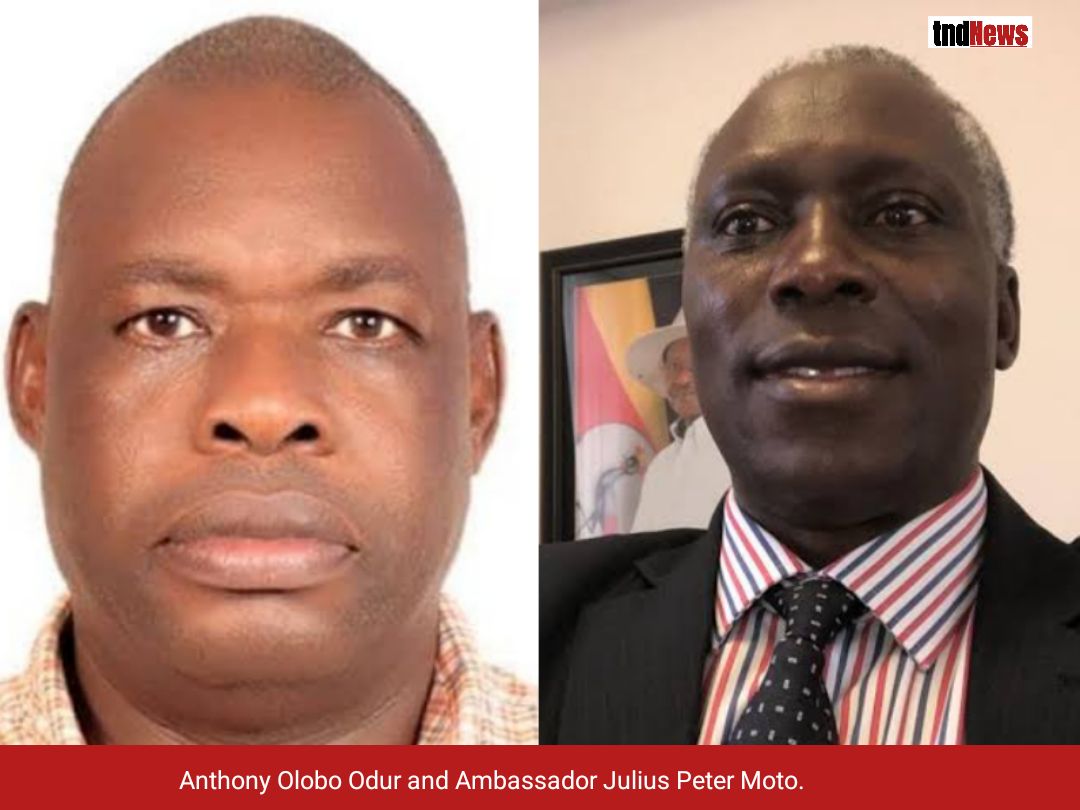
By Anthony Olobo Odur and Ambassador Julius Peter Moto.
Discover more from tndNews, Uganda
Subscribe to get the latest posts sent to your email.