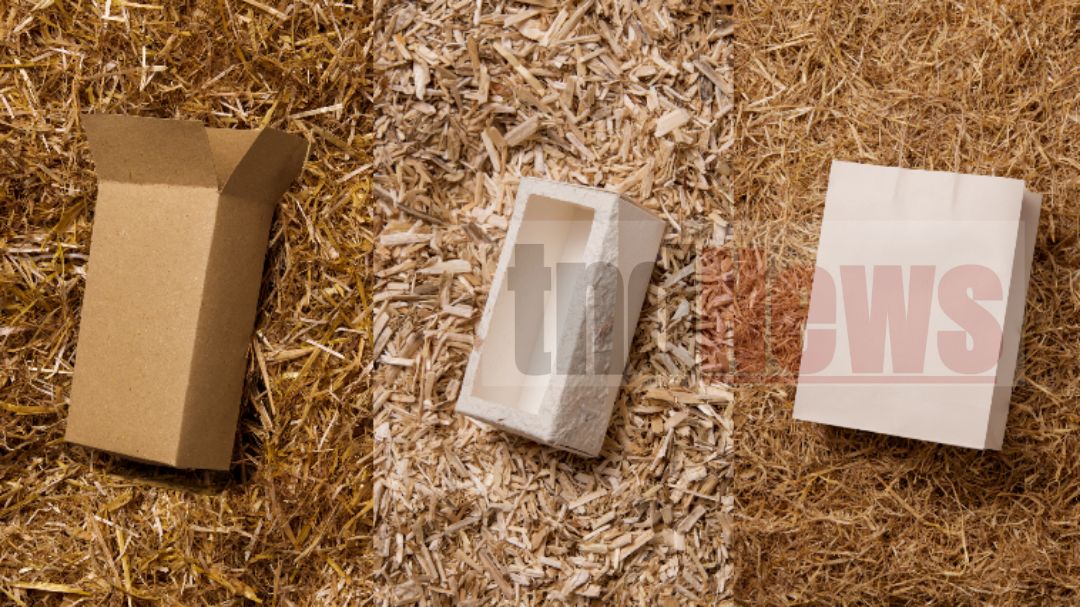
Canopy modelling finds wheat straw and sugarcane bagasse could replace up to 10 per cent of virgin wood pulp in the near term, helping packaging manufacturers manage rising costs, diversify supply chains and reduce emissions.
As businesses accelerate their transition away from plastic packaging, the growing demand for paper-based alternatives is creating a new challenge for the packaging industry: how to meet rising consumption without increasing pressure on forests and exposing manufacturers to unpredictable wood pulp prices.
An emerging alternative could be found not in forests but in agricultural fields, where millions of tonnes of crop residues are generated every year, much of which remains underused or is burned after harvesting.
New economic modelling by environmental organisation Canopy suggests that agricultural waste, particularly wheat straw and sugarcane bagasse, could provide a commercially viable source of fibre for paperboard packaging, allowing manufacturers to reduce their dependence on virgin wood pulp without necessarily increasing production costs.
The findings, published in a report titled Seeing the Field and the Forest on November 9, 2026, challenge the assumption that replacing conventional forest-based fibre requires expensive technological breakthroughs or a complete restructuring of existing paper manufacturing systems.
Instead, the research argues that introducing relatively small quantities of alternative fibre into existing production processes could offer an immediate opportunity for packaging companies to strengthen their supply chains while reducing their environmental footprint.
The modelling indicates that replacing between five and 10 per cent of virgin wood pulp with pulp manufactured from agricultural residues is a practical starting point for paper mills, packaging converters and consumer goods companies.
At a delivered price of approximately US$345 to US$380 per tonne, agricultural-residue pulp could compete economically with the wood pulp it replaces, creating an opportunity for manufacturers to diversify fibre sourcing while maintaining cost competitiveness.
Wood pulp price volatility drives search for alternative packaging materials
The report estimates that wheat straw and sugarcane bagasse pulp could be purchased at a delivered price of US$345–US$380 per air-dry tonne while remaining competitive with the conventional wood pulp they replace.
Under the model’s assumptions, this would allow alternative fibre to account for approximately eight per cent of the most cost-effective fibre composition for high-performance folding boxboard by 2028.
The financial argument is particularly important for manufacturers operating in an increasingly uncertain global commodities market.
Wood pulp prices are influenced by several interconnected factors, including energy costs, availability of timber, transportation expenses, international trade conditions and the geographical concentration of pulp production.
Climate-related disruptions can also affect forest-based supply chains, while geopolitical tensions and changing environmental regulations introduce additional uncertainty for companies that depend heavily on virgin wood fibre.
For packaging producers, these pressures can make production planning difficult, particularly when manufacturers must maintain stable prices for consumer goods brands while managing fluctuations in the cost of essential raw materials.
Canopy’s modelling suggests that agricultural-residue pulp could offer an alternative source of fibre whose commercial value extends beyond the price of the material itself.
By diversifying their supply sources, manufacturers could reduce their exposure to fluctuations in wood markets and improve their ability to respond to disruptions affecting conventional forestry-based inputs.
Kari Stoever, Head of Impact at Canopy, said the proposed transition did not require manufacturers to wait until alternative fibres achieved complete technical equivalence with conventional wood pulp.
“Mills can pay US$345 to 380 a tonne for wheat straw or sugarcane bagasse pulp and still beat the cost of the wood it replaces, with less exposure to swings in wood prices. That’s a price suppliers can meet today. Packaging companies don’t have to wait for the perfect fibre to start reducing their reliance on forests,” Stoever said.
The findings are based on research developed in collaboration with Blue Lotus Strategies and Glynmoran, examining whether alternative fibre could make commercial sense within existing paperboard manufacturing arrangements.
Rather than modelling an entirely new production industry, the researchers examined a potential commercial relationship between a high-volume consumer goods company or packaging converter and an integrated pulp and paperboard mill in China.
China was selected as the manufacturing setting for the analysis, with the researchers examining the economics of introducing agricultural-residue pulp into a demanding packaging product.
The study focuses on high-performance folding boxboard, commonly used in the manufacture of cartons for pharmaceuticals, confectionery, dry foods, cosmetics and personal care products.
This type of packaging presents technical challenges because it must combine attractive printing surfaces with sufficient strength and stiffness to protect products during storage, transportation and retail distribution.
Folding boxboard generally consists of three layers. Its outer surfaces provide the smooth, bright appearance required for printing, while the middle layer contributes thickness, bulk and structural strength.
These requirements mean that manufacturers cannot simply replace all conventional wood fibre with agricultural waste without considering how the alternative material affects the finished product.
According to the report, current technical limitations restrict Next Generation pulp to approximately 10 per cent of the high-performance board’s fibre composition.
At this level, the alternative material is primarily used in the middle layer, where it replaces relatively inexpensive wood pulp without compromising the more demanding requirements of the outer surfaces.
This limitation is important because it establishes the difference between what manufacturers can commercially introduce today and what might become possible as processing technology improves.
Early adoption could unlock wider use by 2030
Although current technical constraints limit the proportion of alternative fibre that can be incorporated into certain paperboard products, Canopy argues that early adoption could help manufacturers build the experience required to expand its use.
The modelling suggests that agricultural-residue pulp could account for around eight per cent of the optimal fibre mix by 2028 under the assessed commercial conditions.
However, improvements in pulp quality, consistency and manufacturing processes could allow it to replace more expensive wood-based inputs in additional layers of paperboard.
This would increase its commercial attractiveness because manufacturers would no longer be restricted to replacing only lower-cost fibre.
The report estimates that when these technical improvements are achieved, the maximum economically supportable price for Next Generation pulp could rise from approximately US$345–US$380 to between US$460 and US$595 per tonne.
Under those conditions, alternative fibre adoption could reach approximately 20 per cent by 2030.
Canopy further projects that its use could exceed 30 per cent after 2032 as manufacturing capabilities develop and more packaging applications become suitable.
These projections are not guaranteed market outcomes. They depend on improvements in processing technology, reliable supplies of suitable agricultural residues, competitive production costs and manufacturers’ ability to maintain the quality standards required by customers.
Nevertheless, the findings provide an indication of how relatively modest changes in fibre sourcing could become a foundation for a broader transformation of the paper packaging industry.
The report also points to differences between packaging grades.
While high-performance folding boxboards have demanding technical requirements, some consumer paperboard products with less restrictive specifications may already accommodate alternative fibre content of up to 30 per cent.
This suggests that manufacturers could identify suitable products for earlier adoption rather than waiting for every packaging category to achieve the same level of technical readiness.
The commercial opportunity could also extend beyond reducing production costs. Brands seeking to demonstrate progress towards environmental commitments may increasingly value packaging materials that reduce dependence on climate-critical forests.
Environmental benefits extend beyond packaging production
Beyond the economic considerations, the research highlights the potential environmental benefits of reducing dependence on virgin forest fibre.
Canopy estimates that replacing old-growth softwood with a combination of managed-forest wood and 10 per cent agricultural residues could reduce lifecycle greenhouse gas emissions by approximately 50 per cent in some applications.
The findings are significant because the growing demand for paper packaging risks transferring some of the environmental pressures associated with plastic production to forests if manufacturers rely predominantly on virgin wood fibre to meet expanding markets.
Although paper packaging is often promoted as an alternative to plastic, its environmental performance depends on how its raw materials are sourced, processed, transported and managed at the end of their useful life.
Increasing the use of agricultural residues could help reduce demand for additional forest fibre while creating commercial uses for materials that might otherwise be discarded or burned.
Canopy estimates that approximately 450 million tonnes of agricultural crop residues are burned globally each year, representing a substantial opportunity to develop alternative uses for agricultural byproducts.
Wheat straw, generated after harvesting wheat, and sugarcane bagasse, the fibrous material remaining after extracting juice from sugarcane, are among the materials being considered for producing alternative pulp.
However, converting agricultural waste into industrial raw materials requires careful management.
Crop residues are not automatically available for industrial use simply because they are left after harvesting. Some are needed to maintain soil organic matter, protect agricultural land against erosion, retain moisture and support nutrient cycling.
Collecting too much residue could therefore undermine soil health and create additional environmental problems.
The commercialisation of agricultural-residue pulp would need to consider these competing demands, ensuring that the materials collected for manufacturing do not compromise agricultural productivity or existing uses such as livestock feed and soil improvement.
Transportation and storage also matter because agricultural residues are often dispersed across farming communities, unlike wood fibre that may be supplied through established forestry and industrial networks.
For the alternative fibre industry to become commercially competitive at scale, manufacturers would need reliable collection systems, appropriate processing facilities and supply arrangements that connect agricultural producers with pulp manufacturers.
Regional supply chains could create new opportunities
The report identifies geographical differences in the availability of agricultural residues, existing manufacturing infrastructure and potential markets as important factors determining where alternative fibre production could expand.
China and India are identified as promising markets because they have large agricultural residue streams, established paper manufacturing industries and experience with non-wood papermaking.
Brazil also presents opportunities because of its extensive sugarcane industry, which generates substantial quantities of bagasse alongside an established pulp and paper manufacturing sector.
In Europe and North America, opportunities are likely to depend on the availability of particular agricultural residues, proximity to existing mills, technological innovation and demand from packaging manufacturers.
Southeast Asia also generates significant quantities of rice straw, sugarcane bagasse and other agricultural residues, creating potential opportunities for alternative fibre production as demand for paper packaging increases.
These regional differences suggest that the transition will not necessarily depend on a single global production model.
Instead, manufacturers could develop supply chains around locally available agricultural resources, potentially reducing dependence on long-distance transportation and concentrated sources of conventional wood pulp.
For African economies, the findings raise questions about whether agricultural byproducts could eventually become valuable industrial inputs rather than remaining underutilised resources.
Countries with substantial agricultural production could explore opportunities to connect farming, biomass processing and paper manufacturing, although the viability of such investments would depend on local feedstock availability, infrastructure, processing technology and market demand.
The Canopy report, however, does not establish the commercial viability of specific African production projects. Its central economic modelling examines a China-based integrated pulp and paperboard mill.
Any attempt to replicate the model elsewhere would require country-specific assessments of agricultural residue availability, collection costs, manufacturing capacity and environmental safeguards.
Manufacturers urged to begin transition now
Canopy is encouraging consumer goods brands, paperboard converters and pulp producers to begin incorporating between five and 10 per cent Next Generation pulp into suitable packaging products while investing in the technical improvements required for wider adoption.
The organisation argues that delaying adoption until alternative fibres achieve complete performance parity with conventional wood pulp could leave manufacturers exposed if wood prices rise or supply chains become more disrupted.
Starting with relatively small quantities would allow manufacturers to test alternative materials, develop supplier relationships and understand how different agricultural fibres perform under existing production conditions.
Further, it could also provide an opportunity to build the commercial infrastructure needed to increase production as demand grows.
However, the report acknowledges that its findings are preliminary and exploratory and its financial model is based on an illustrative commercial arrangement and assumptions about production costs, market risks, fibre quality and operational performance.
Canopy says further validation of technical, economic and environmental considerations will be necessary as the industry develops.
The organisation’s recommendations therefore focus on gradual adoption, continued research and investment in the supply chains required to make alternative fibre more widely available.
The report also considers how emerging environmental policies could influence manufacturers’ decisions, particularly where companies face additional requirements or costs associated with the sourcing and traceability of forest-based materials.
For businesses supplying international markets, the ability to demonstrate responsible sourcing is becoming an increasingly important consideration alongside the price and performance of packaging materials.
Thus, by combining agricultural residues with recycled and responsibly sourced forest fibre, manufacturers could diversify their material inputs while maintaining the performance standards expected by consumer goods companies.
The wider question is whether the packaging industry can turn its growing demand for paper-based products into an opportunity to develop a more diversified and environmentally responsible fibre economy.
As plastic alternatives gain market share, the pressure to secure affordable raw materials is likely to remain an important consideration for manufacturers.
Canopy’s findings suggest that some of the solutions could already exist within agricultural production systems, where crop residues offer an alternative source of industrial fibre.
Therefore, the challenge will be moving beyond economic modelling to establish reliable commercial supply chains, improve processing technologies and ensure that the growing demand for agricultural residues does not create new environmental pressures.
For packaging manufacturers, the proposed five-to-10 per cent transition offers a starting point reducing dependence on virgin wood pulp while testing whether agricultural byproducts can become a competitive component of the next generation of paper packaging.
Discover more from tndNews, Uganda
Subscribe to get the latest posts sent to your email.