For decades, residents in northern Uganda say they have watched the Unyama Bridge deteriorate, leaving communities vulnerable to dangerous flooding, disrupted trade, and potential loss of life.
Now, as El Niño raises concerns about heavier rainfall across the region, local leaders are demanding urgent government intervention before the next major floods cut off their communities.
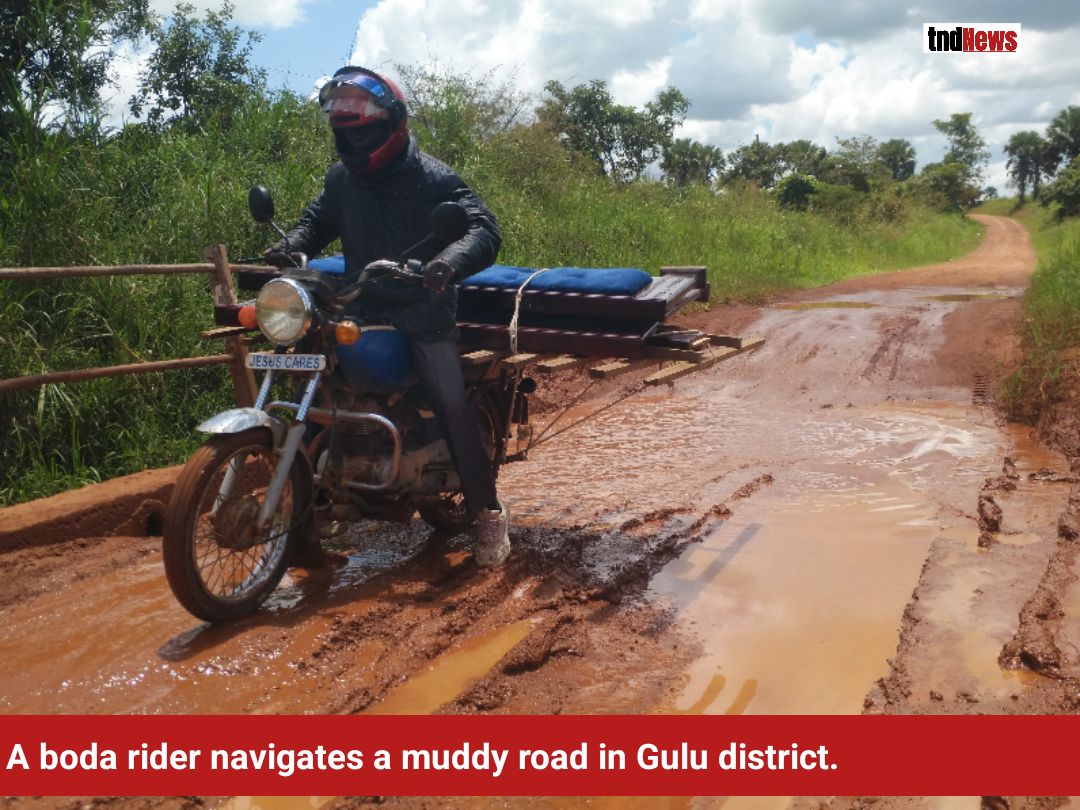
The bridge, located along the Patiko road linking Gulu to Lamwo district and routes towards South Sudan, serves residents, traders, farmers and travellers, but when heavy rains arrive, residents say fast-flowing water and muddy roads make crossing dangerous and can bring movement and business to a standstill.
The warning comes as the World Meteorological Organization (WMO) reports that the current El Niño event is strengthening and could intensify further towards December 2026.
Uganda’s September–December seasonal outlook also anticipates near-normal to above-normal rainfall across much of the country, with northern Uganda among the areas facing increased rainfall risks.
The forecasts do not mean every area will experience flooding. However, for residents who say they have repeatedly endured dangerous conditions at Unyama, the prospect of further heavy rain has renewed calls for a permanent engineering solution, and the WMO’s global climate update and Uganda’s seasonal climate outlook provide the wider meteorological context for the concerns.
A crossing residents say has become a death trap
Julius Oluba, 78, a resident of Bungatira, said he had used the crossing since childhood to transport goods to Gulu, with few practical alternatives when flooding blocks the route.
“When it rains heavily, all roads will be filled up with mud and running water, causing violent breakdown of river banks and cutting off any crossing bridge, blocking all the business,” Oluba said.
He recalled a fatal incident about three years ago in which, according to his account, a person attempting to cross after heavy rain fell and died.
Oluba said the incident deepened community fears, while residents remained frustrated by what they described as a lack of lasting government intervention.
He also questioned the durability of previous repair works, arguing that attention had focused on the bridge’s outer structure while its underlying metal supports remained vulnerable to damage from flowing water and debris.
“The government for long had been renovating only the outer cover of the bridge, leaving the metal rail in a dilapidated state to be washed out by mud running water after it rains,” he said.
Residents are calling for a new engineering assessment that considers current water volumes, the bridge’s structural condition and the needs of heavy trucks and lorries using the route.
The history of the bridge and the claim that the crossing has remained neglected for approximately 60 years could not be independently verified for this report.
Traders count the cost of isolation
The threat extends beyond road safety. At Ajulu Market, traders say the deteriorating road has increased transport costs, reduced customer access and undermined their ability to sell perishable agricultural produce.
Mego Pauline Akena, chairperson of Ajulu Market, said transporting a single box of tomatoes from Gulu City to the market can cost her more than shs30,000 by motorcycle.
“When it rains and catches you along the way, you will be forced to sleep because you can’t move back home, and it has also cut off our customers who always supply us with commodities. Business has gone down,” Akena said.
She said traders dealing in perishable goods were particularly vulnerable because delays and high transport costs could leave them with unsold produce and empty stalls.
Akena added that reduced movement along the route had affected customers from the refugee-hosting communities in Lamwo District who previously travelled to purchase goods.
For small businesses operating with limited capital, the consequences can extend beyond a single day’s sales, and traders may struggle to restock, lose customers and turn to short-term borrowing to keep their businesses running.
Akena appealed for improved road infrastructure and financial support to help local businesses recover and remain operational.
District leaders demand government action
Gulu district LC5 chairperson Justine Obol, commonly referred to as “Simple Man”, criticised the government’s handling of the road and questioned why it had not benefited from the District Road Emergency Programme (DREP), which he said could have supported improvements to the crossing.
Obol described the Patiko road as an important transport route serving communities in northern Uganda, including refugees travelling from Lamwo through Gulu towards Kampala.
“For decades, this road has become a death trap for our citizens in Gulu, yet it is a source of concern for taxpayers and the government. Patiko Road has become a political gain during the general election, becoming a song by the government,” Obol said.
He argued that the road’s condition was undermining access to services and limiting the economic potential of the area, including the historic Fort Patiko, which attracts visitors and could contribute to the local economy.
Obol called on the government to move beyond repeated promises and provide a practical, funded plan for rehabilitation.
His comments reflect a broader concern among residents that rural infrastructure can remain neglected despite its importance to local trade, tourism and access to essential services.
MP threatens community road closure
Aswa County Member of Parliament Okello Patrick Unguti said residents had raised the condition of the Patiko road in Parliament for several months without receiving a satisfactory response.
He warned that the community could mobilise to close the road if the government failed to act.
“We will mobilize the community and officially close the road and give it back as a community road if they do not come to build,” Unguti said.
He criticised what he described as unequal development and said residents were frustrated by the continued absence of a lasting solution.
Unguti also questioned the suggestion that communities should wait for future oil revenues to finance infrastructure improvements.
“What if the oil money did not come? Where is the alternative option?” he asked, adding that the road had not been included in the current financial year’s plans, according to his account.
The MP said he would continue pressing the government to prioritise the road.
The claims concerning budget allocations, parliamentary follow-up and the programme’s eligibility would require confirmation from the relevant government departments and parliamentary records.
Climate warnings raise the stakes
The concerns surrounding Unyama Bridge come at a time when climate preparedness is increasingly important across East Africa.
On 8 October 2026, the WMO reported that El Niño was strengthening and forecast to peak around December, with the potential to disrupt rainfall patterns and increase the risk of floods in some regions and drought in others.
Uganda’s meteorological authorities have separately warned of near-normal to above-normal rainfall during the September–December season, with the potential for flooding, waterlogging and landslides in vulnerable locations.
These regional and national forecasts strengthen the case for preparedness, but they do not establish that Unyama Bridge will necessarily flood or collapse. That risk would need to be assessed through local hydrological studies and a professional inspection of the structure.
For communities already reporting repeated flooding and unsafe crossings, however, the forecasts provide a compelling reason to assess the bridge before conditions deteriorate.
Residents are seeking more than temporary repairs. They want a durable structure designed to accommodate water flows, improve safety and maintain access during heavy rainfall.
A test of infrastructure and preparedness
For Oluba, Akena and local leaders, the issue is immediate: a road that supports livelihoods and connects communities should not become impassable whenever heavy rain arrives.
A lasting solution would require a structural assessment, appropriate bridge design, adequate drainage, transparent procurement and sustained maintenance.
Authorities would also need to consider temporary safety measures and alternative access arrangements while any major works are planned.
The government has yet to be independently confirmed as having announced a specific construction timetable for the crossing in response to the concerns raised in this report.
As Uganda prepares for the remainder of the rainy season, the question facing Gulu district is whether the reported dangers at Unyama Bridge will receive urgent attention before another incident occurs, and for residents, the demand is straightforward: act before the next flood, rather than after another life or livelihood has been lost.
Reporting by Okot Lil Romeo & Okello Jesus Ojara.
Discover more from tndNews, Uganda
Subscribe to get the latest posts sent to your email.