Every morning before sunrise, 32-year-old boda boda rider Bosco Okello joins dozens of riders at the dusty stage near Gulu main Market, hoping for enough passengers to survive another day on the road.
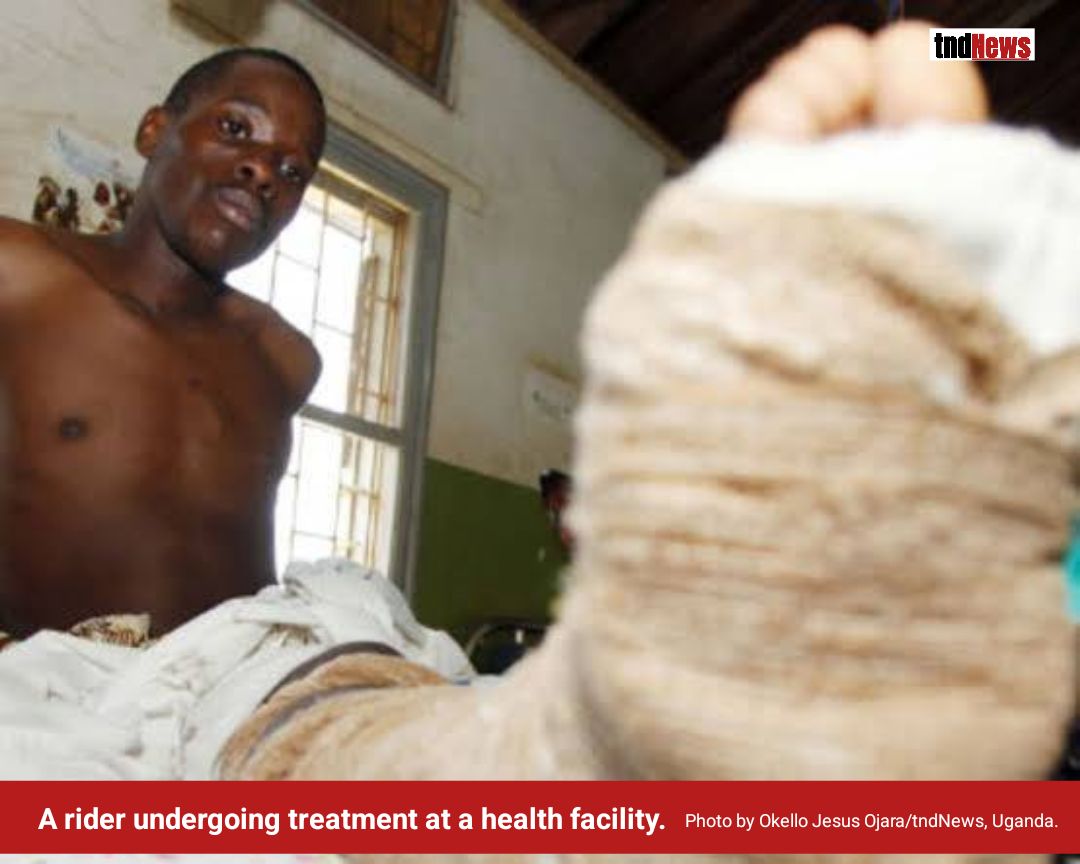
Two years ago, a speeding truck knocked him off his motorcycle along the Gulu -Kampala highway. He fractured his leg, damaged his shoulder, and spent weeks admitted at hospital. Without work, he had no income. Without insurance, he had no protection.
“The hospital wanted money before treatment, and I thought my life was finished but fellow riders from my savings cooperative commonly known as a SACCO mobilised within hours,” Okello recalled, leaning against his motorcycle while waiting for customers.
According to Okello, each rider contributed money from an emergency welfare fund built through small daily payments and the SACCO paid his hospital bills, bought medicine, and supported his family until he recovered.
“That SACCO saved me because insurance companies were nowhere,” he said.
Across Gulu City, informal emergency funds created by boda boda SACCOs have quietly become the main social protection system for thousands of riders navigating one of Uganda’s deadliest occupations.
Riders in constant danger
Boda boda riders form the backbone of urban transport in northern Uganda, ferrying passengers through congested streets, remote villages, and poorly maintained roads and yet the job comes with enormous risk.
According to traffic police officials in Gulu, motorcycle crashes account for a significant share of road accidents recorded annually in the city while over speeding, reckless driving, poor roads, alcohol use, and lack of helmets remain among the leading causes.
“Almost every week we respond to serious boda boda accidents and many riders suffer broken limbs, head injuries, or permanent disability,” said a road safety officer in Gulu who was not authorised to speak publicly.
Traffic officers say many victims are young men in their twenties and thirties often the sole breadwinners for their families while exact annual fatality and injury figures for boda riders specifically are difficult to isolate from broader road traffic data, but police confirm the numbers are substantial.
“We have not conducted a separate tally for boda riders alone, but they form a very large percentage of crash victims in Gulu,” the officer added.
A victim of road crash
“Few are financially protected after accidents and most have no insurance, no savings, and no income while recovering.”
However, at hospitals, the pattern is familiar with health workers at Gulu Regional Referral Hospital disclosing that boda boda crash victims arrive almost daily, with many severe trauma injuries requiring urgent surgery or lengthy treatment.
“We receive multiple motorcycle accident cases every week and the challenge is that many patients cannot afford treatment, though others are free,” said one medical worker at the hospital who spoke on condition of anonymity.
According to the health worker, the most common injuries among riders include fractures (especially legs and arms), head trauma, soft tissue injuries, spinal damage, and in severe cases, permanent disability or death.
Hospital staff say relatives, fellow riders, or SACCO members often organise emergency fundraising drives to clear bills.
“Very few riders have formal insurance and most rely on contributions from friends, family, or SACCO welfare funds to pay for treatment and without that, many would simply go untreated or be discharged before full recovery,” the health worker added.
The rise of informal welfare funds
In Gulu City and neighboring urban districts, the growing crisis has forced many rider groups to create their own protection systems.
At several boda stages in Gulu, riders contribute between shs1,000 and shs2,000 daily into SACCO welfare schemes designed to respond to emergencies.
According to the riders, the funds cover hospital bills, funeral expenses, accident support, and sometimes school fees for children of deceased riders.
“We created the emergency fund because riders were dying helplessly,” explained one SACCO chairperson in Gulu City, who asked not to be named to protect the group’s operations.

According to the SACCO leader, members contribute small amounts daily, and the money is managed through elected committees and mobile money accounts and withdrawals require authorisation from leaders and members.
“When someone gets in an accident, we act immediately and we don’t wait for paperwork like insurance companies,” he said.
The SACCO leader confirmed that funds are used for medical emergencies, hospitalisation, funeral costs, and sometimes to support family members of riders who die on the job.
“So far, dozens of riders have benefited and some have received support worth hundreds of thousands of shillings during medical emergencies,” he said.
On the question of fraud or misuse, the chairperson acknowledged occasional disputes and there have been a few cases where people questioned how money was used, but overall, members trust the system because they see direct results while people contribute because they know tomorrow it could be them.
Asked whether they would partner with insurance companies, the SACCO leader was cautious, noting that, if insurance companies offer affordable products that work for them, maybe, but right now, their systems work and it is fast, trusted and they control it.
Dusty stage where riders wait for customers
For riders, the SACCO fund is not just financial but it is a lifeline and Simon Ojok, a rider within the city described paying into the fund daily.
“I contribute shs1,000 every day and it is small, but when many riders pay, it adds up, and I have personally received money from the SACCO after an accident,” he disclosed.
Adding that, “when I had my accident, the SACCO paid for my treatment and without that money, I would still be in debt or dead.”
He explained what happens when a rider is seriously injured revealing that, immediately, they call the SACCO leaders and money is withdrawn and taken to the hospital while other riders go to visit.
He further disclosed that the family is supported and if the rider dies, the SACCO pays for the funeral and helps the children stay in school.
“Insurance companies ask for too many things, police reports, documents, investigations yet we need money immediately after accidents,” Ojok noted.
He added that most riders earn barely enough for fuel, food, and motorcycle loan repayments, leaving little for premiums.
“We survive day to day. Paying for insurance every month is not realistic for many of us,” he added.
Rider Geoffrey Otema agreed with his colleague and noted that when one of them gets injured, they contribute immediately and no one asks many questions, hence it is the reason why they trust SACCOs more than insurance companies since they help faster, without delays.
Okello, the rider whose life was saved by the SACCO fund, echoed the sentiment noting that the SACCO gives us hope and without it, many riders would die poor and abandoned.
Why riders remain uninsured
Insurance officials acknowledge the deep disconnect between formal products and riders’ realities.
An official from Uganda’s insurance sector, who spoke on condition of anonymity to discuss industry challenges candidly, said boda boda riders are classified as high-risk clients because of frequent accidents and theft cases.
“Motorcycle riders have high exposure to accidents, and claims ratios are very high and that affects pricing premiums which are significantly higher than ordinary motorcycle coverage,” the official explained.

On the question of how many boda riders are insured across Uganda, the official revealed that the number is very low and they do not have exact figures broken down by rider category, but industry data shows penetration among informal transport workers remains minimal.
The official further revealed that key challenges insurers face include verifying claims, preventing fraud (where staged accidents are reported), collecting premiums from daily earners, and managing high loss ratios.
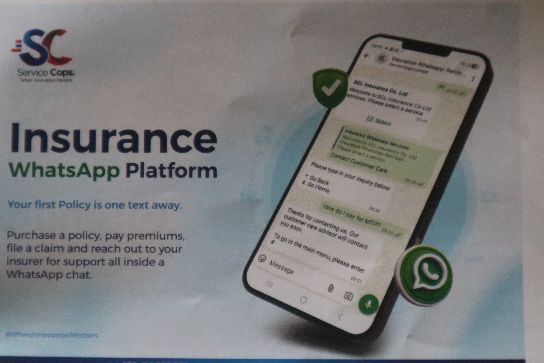
However, the official said discussions around affordable micro-insurance models are ongoing, particularly through partnerships with SACCOs and digital payment systems.
“We know traditional insurance products do not fit many informal workers and we are exploring micro-insurance products with lower premiums, simplified claims processes, and mobile-based distribution and partnerships with SACCOs could be a way to reach riders,” the official said.
When asked if insurers can work with SACCOs, the answer was affirmative, noting that SACCOs already have trust and organised membership and if they can design products that SACCOs can bundle or administer, we could reach thousands of riders who currently have no coverage.
Financial experts say the growth of informal rider welfare funds exposes broader failures in Uganda’s social protection and insurance systems.
Statistics indicate that millions of informal workers including market vendors, boda riders, and casual laborers operate without medical insurance, workers’ compensation, or income protection.
Analysts argue that conventional insurance models were designed mainly for salaried workers with predictable incomes, leaving informal earners excluded.
“Insurance has not adapted fast enough to the realities of Uganda’s informal economy,” said a Kampala-based financial inclusion researcher who studies alternative risk management mechanisms.
Informal funds and the path forward
The Insurance Regulatory Authority of Uganda has in recent years promoted micro-insurance products aimed at low-income earners, but penetration remains low.
A financial regulator, speaking on condition of anonymity to discuss policy direction, said SACCO-based protection models could offer a pathway toward formalising coverage for vulnerable workers.
“These welfare funds show there is demand for protection, and the question is how to regulate and strengthen them safely,” the regulator said.
On the legality of informal rider welfare funds, the regulator explained that informal savings and welfare groups are not illegal per se, but they operate outside formal regulatory oversight and it means there is no guarantee of solvency or proper governance and they can be vulnerable to mismanagement or collapse.
Asked why the insurance industry has failed to serve informal workers, the regulator said that the private insurance market responds to profitable segments.
“Informal workers were not seen as viable but micro-insurance regulations are now opening the door and we are encouraging insurers to develop products for this segment,” she revealed.
On the question of gig-worker insurance policies, the regulator confirmed discussions are underway and there is growing interest in flexible, pay-as-you-go insurance models that align with how informal workers earn. We are studying models from other markets.
“Formalising SACCO welfare funds into regulated micro-insurance schemes is a possibility and it would require clear governance rules, reserve requirements, and oversight but it could provide stronger protection for riders while maintaining the community trust that makes these funds work,” she disclosed.
At the Pece Stage in Pece-Laroo Division, Gulu City, riders described SACCO solidarity as faster and more reliable than insurance.
“When one of us gets injured, we contribute immediately and no one asks many questions,” said rider Geoffrey Otema.
As evening approached, motorcycles lined the roadside while riders waited for passengers under the fading northern Uganda sun.
For Okello, who still walks with a slight limp from his accident, the emergency fund represents more than money.
“It gives us hope and without it, many riders would die poor and abandoned,” he said quietly.
However, as boda boda accidents continue rising across Uganda, experts say informal solidarity alone may not be enough and unless affordable insurance systems reach workers like Okello through micro-insurance, SACCO partnerships, or regulatory reforms, thousands of riders will continue balancing their lives between dangerous roads and fragile community safety nets.
Discover more from tndNews, Uganda
Subscribe to get the latest posts sent to your email.