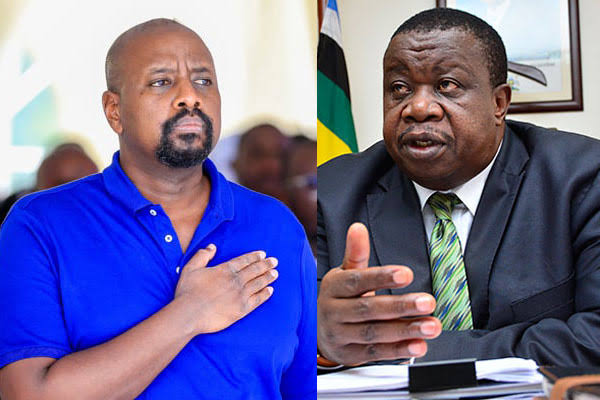
A heated political debate has emerged over the future of retired Major General Kahinda Otafiire in Uganda’s Cabinet, following claims that members of the Patriotic League of Uganda (PLU) are pushing for his removal and the appointment of Dr Elioda Tumwesigye in his place. An opinion article published by Uganda Radio Network has criticised journalist Andrew Mwenda over his reported comments on the dispute.
The article, published on October 14, 2026, argues that political disagreements should be resolved through open debate and constitutional procedures rather than threats or intimidation. Its author warns that allegations of a coordinated effort to remove Otafiire raise serious questions about the relationship between political influence, military power and civilian leadership.
The writer also takes issue with Mwenda’s reported defence of General Muhoozi Kainerugaba and his political ambitions. According to the article, Mwenda’s position represents a departure from his earlier public advocacy for accountability and freedom of expression. These are the author’s interpretations of Mwenda’s conduct, rather than independently established conclusions.
A central criticism concerns Mwenda’s reported dismissal of certain threatening messages and allegations of military abuses as jokes or potentially AI-generated material. The writer argues that such explanations risk trivialising serious concerns about the treatment of citizens and the use of security agencies against political opponents. The specific claims and evidence surrounding individual incidents require independent verification.
The article cites cases involving opposition figures and activists, including Eddie Mutwe, Mathew Bagonza and Sam Mugumya, to illustrate its concerns about alleged detention, mistreatment and military involvement in civilian affairs. It also references the cases of Dr Kizza Besigye, Erias Lukwago, Miria Matembe and other political figures as examples of what the author describes as a wider pattern of pressure on dissenting voices.
Turning to the Constitution, the writer argues that Uganda’s political future must remain grounded in the sovereignty of its citizens and the principle that the military should remain subordinate to civilian authority. The article invokes Articles 1 and 208 of the 1995 Constitution while insisting that disagreements over Otafiire’s performance should be addressed through evidence and lawful procedures.
SAY GOODBYE TO PROSTATE PROBLEMS WITH PROSTATRELAX CAPSULES 🌿 — 100% NATURAL SUPPORT | COMMON SIGNS & SYMPTOMS: ✓ Frequent urination, especially at night ✓ Difficulty starting urination ✓ Weak urine flow ✓ Urine leakage after urination ✓ Incomplete bladder emptying ✓ Lower back, hip or groin pain ✓ Lower bedroom performance ✓ Prostate enlargement ✓ Low sperm count | 📞 CALL/WHATSAPP DR ZAHARA: 0773581170
The author further argues that although the President has constitutional powers to appoint and dismiss ministers, political pressure groups should not be allowed to dictate Cabinet decisions through intimidation. The comparison with previous political disputes, including those involving former Prime Minister Amama Mbabazi, is used to warn against what the writer sees as the dangers of politically motivated purges. In conclusion, the writer calls on political actors to leave Otafiire alone unless they have substantive concerns about his record that can be debated openly. The article’s central message is that public appointments should be guided by constitutional processes and accountability, not fear or the influence of armed institutions. Mwenda’s full response to the specific criticisms was not included in the supplied article.
Discover more from tndNews, Uganda
Subscribe to get the latest posts sent to your email.