The National Water and Sewerage Corporation (NWSC), Lira area, is set to commission the second phase of the Kachung Water Treatment Plant expansion next month.
The plant will generate an additional 2.5 million litres of water per day to the area’s production capacity.
This latest development is part of NWSC’s ongoing efforts to improve water production, strengthen the water supply system, and address the growing demand for safe and reliable water in Lira City and the surrounding service areas.
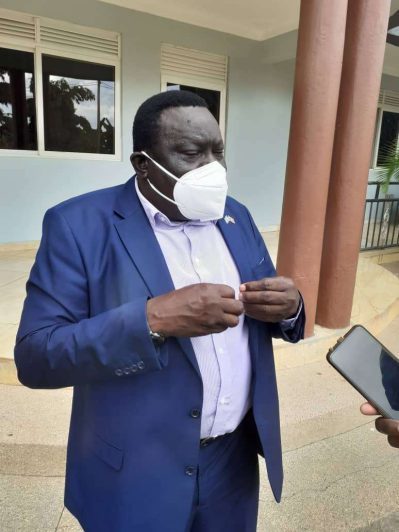
Speaking on Wednesday, 25 November 2026, at the Lira City Council Boardroom, NWSC Lira Area Manager, Eng. Gerazio Tukahirwa, said the corporation was undertaking major investments in water production, pumping infrastructure, and the distribution network to stabilise supply and meet the increasing demand.
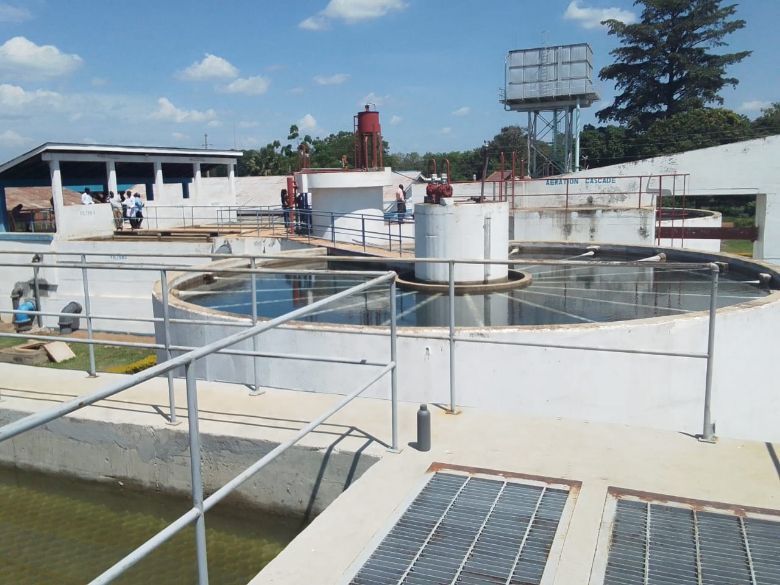
Eng. Tukahirwa made the remarks after leading a delegation of stakeholders from Lira City on a field visit to various water and sewerage facilities, including the Kachung Water Treatment Plant, to appreciate the ongoing interventions and their expected impact on water supply.
He explained that the NWSC Lira Area currently produces more than 10 million litres of water per day. Upon completion and commissioning of the second-phase treatment facilities, production is expected to increase to approximately 13 million litres per day.

“Our commitment is to ensure that water is available to all our customers, not just a few. We look at water for all, but not water for a few,” Eng. Tukahirwa said.
Phase one: Increasing production to 10 million litres per day
Eng. Tukahirwa explained that in 2021, the Lira water supply system was producing approximately 6.5 million litres of water per day against an estimated demand of 7.7 million litres, resulting in water rationing in some areas.
To address the shortage, NWSC implemented the first phase of the water supply improvement programme, which was completed in 2022. The project increased water production capacity from approximately 6.5 million litres to 10 million litres per day.
The first phase involved upgrading the lake intake, installing and upgrading pumps at the pumping stations, rehabilitating Filter No. 4 at the Kachung Water Treatment Plant, and upgrading generators and transformers at the pumping stations.
The works also included improvements to pipework within the pumping stations to accommodate the increased pumping capacity and support the hydraulic requirements of the upgraded system.
In addition, approximately 18 kilometres of the water distribution network were upgraded under the project.
Phase two: Expanding treatment and pumping capacity
Despite the successful completion of Phase One, water demand continued to rise following the elevation of Lira Municipality to City status.
Eng. Tukahirwa noted that the population of Lira City had increased significantly, with the population having approximately tripled following the city’s elevation and expansion. Consequently, water demand exceeded the production capacity of 10 million litres per day.
To address this growing demand, NWSC commenced implementation of the second phase of the improvement programme in 2023.
The second phase includes the construction of additional treatment facilities at the Kachung Water Treatment Plant, with a treatment capacity of approximately 2.5 million litres per day. The new facilities comprise coagulation and flocculation units, two clarifiers, and three rapid sand filters.
The project also includes the installation of two additional pumps, one at the Kachung Water Treatment Plant and another at the Agwatta Booster Station.
These pumps are intended to increase the volume of water pumped through the system and improve supply to areas experiencing persistent shortages, particularly those located at higher elevations.
Ireda water supply project
The second-phase further involved interventions being complemented by the Ireda Water Supply Project, which includes the rehabilitation and reconstruction of two elevated steel water tanks with capacities of 450,000 litres and 250,000 litres, respectively.
The project also involves the construction of a booster station with a pumping capacity of 200,000 litres per hour, together with two pumps, a pump house, a generator house, a chain-link fence, and an attendant’s house.
Other works include power extension and the installation of a transformer to support the station’s operations.
According to Eng. Tukahirwa, the Ireda project is substantially complete, with the construction of the 250,000-litre elevated tank remaining outstanding.
The remaining works are expected to commence soon, with commissioning of the Ireda facilities planned alongside the second-phase Kachung Water Treatment Plant project.
Once completed, the combined interventions are expected to strengthen water distribution and improve supply reliability across Lira City and the surrounding service areas.
Permanent water supply project at tendering stage
Eng. Tukahirwa further revealed that NWSC has designed a permanent water supply project for Lira, which is currently at the tendering stage.
The proposed project is expected to provide a long-term solution to the area’s water supply challenges through major investments in water abstraction, treatment, transmission, storage, and distribution infrastructure.
The planned components include a new water intake, a new water treatment plant at Kachung, a DN700 transmission pipeline, new reservoirs, and a mother reservoir at Ngetta Rock.
The project will also involve upgrading approximately 80 kilometres of the existing water distribution network to improve water transmission and distribution across the service area.
NWSC Lira Area currently serves approximately 124,800 consumers under Lira Branch, reflecting the growing demand for safe and reliable water services.
City leaders commend NWSC’s efforts
Lira City Resident City Commissioner, Lawrence Egole, commended NWSC for its continued efforts to address water supply challenges in the city.
He acknowledged that some challenges remained but expressed optimism that the installation of additional pumping equipment would help improve water supply.
Egole said the delegation had observed the limitations of the existing pumping equipment at Kachung, noting that the current pump had relatively low capacity compared to the growing demand.
He also highlighted the government’s planned investment in a major water supply project benefiting four cities, with Lira among the beneficiaries.
“Our visit follows numerous complaints from the local community about water crises in the city. I encourage water users to be patient whenever there are temporary water interruptions, as the process of installing additional equipment has commenced,” he said.
The Speaker of Lira City Council, Patrick Okwir, who led a team of councillors during the visit, called upon stakeholders to remain engaged in addressing the city’s water supply challenges.
He emphasised the importance of understanding the technical causes of water shortages and encouraged local leaders and stakeholders to openly share information with councillors so that concerns could be presented to the NWSC technical team for appropriate action.
Okwir noted that the committee had been established to oversee water distribution and address concerns relating to water supply, adding that some of the challenges required technical interventions beyond the capacity of the Lira City technical team.
Meanwhile, Charles Opio Olol, the councillor representing Lira City East Division, said the committee was committed to ensuring that water was distributed across the city, particularly during the dry season.
He noted that some newly incorporated areas of the city continued to experience water supply challenges and called for support through the provision of water storage tanks to improve access to water.

The ongoing investments by NWSC, together with the planned permanent water supply project, are expected to significantly improve water production and distribution, strengthen supply reliability, and support the continued growth of Lira City and its surrounding communities.
Discover more from tndNews, Uganda
Subscribe to get the latest posts sent to your email.