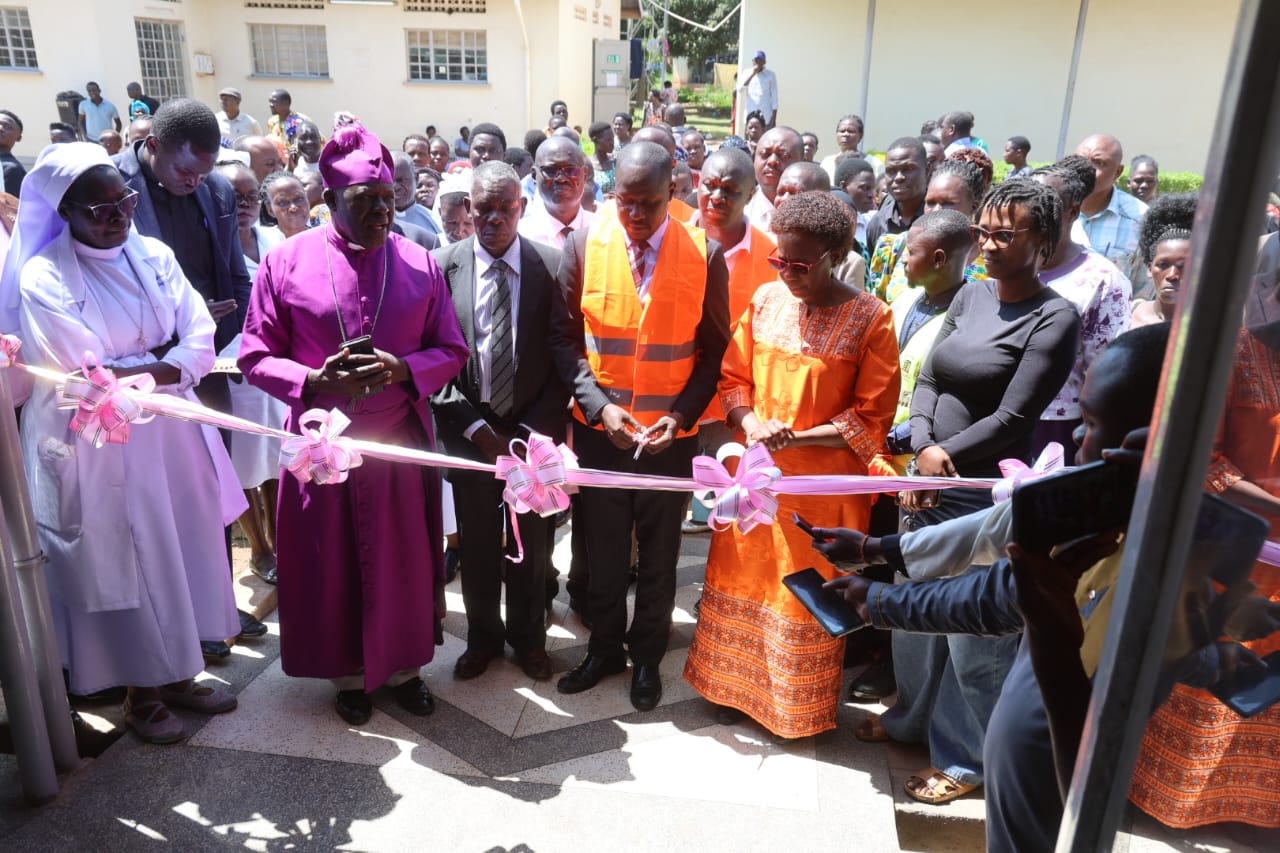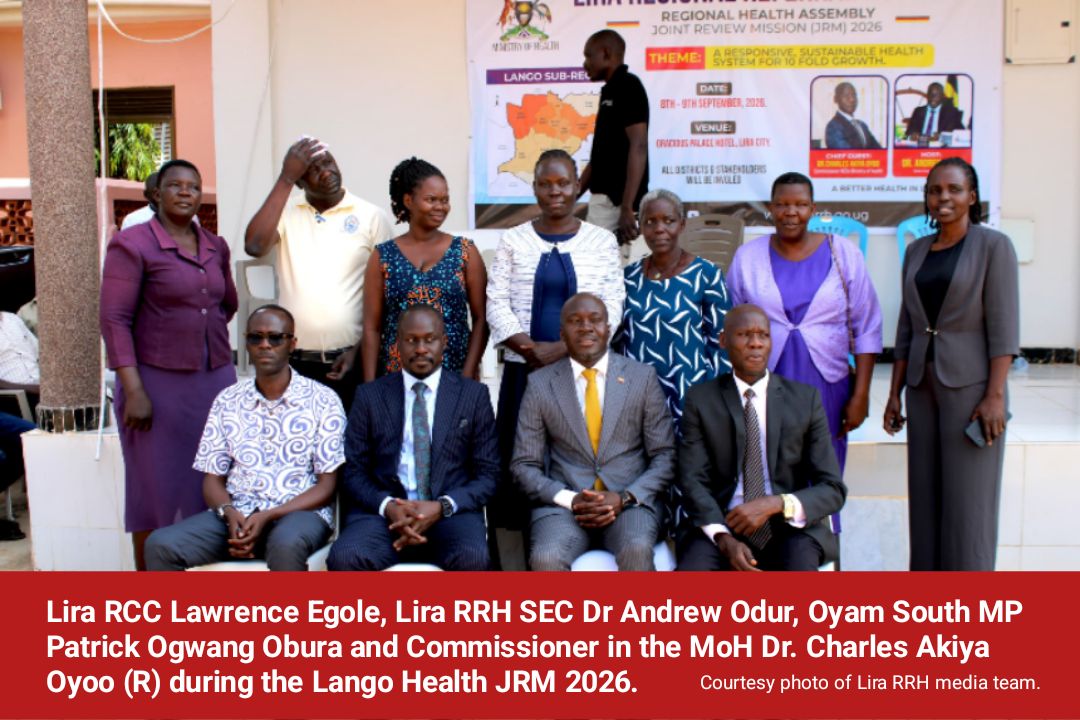
Participants at the two-day Regional Health Assembly – Joint Review Mission (JRM) 2026, organised by the Ministry of Health in partnership with Lira Regional Referral Hospital, have noted successes, challenges, and opportunities to improve the health sector in the Lango sub-region.

Dr Andrew Odur, Senior Executive Consultant at Lira Regional Referral Hospital, and host of the assembly, said on Tuesday that the referral currently has 21 specialists, with 15 more expected to be recruited in the current financial year.
He urged stakeholders and patients to start by consulting Lira before they go to Kumi (hospital) for specialised medical care.
The SEC revealed that the ultrasound scan machines have helped curb maternal and neonatal mortality rates during childbirth across Lango.
Also read: International oncology experts meet in Kenya to address regional cancer needs
On sickle cell disease, highly prevalent in the Lango sub-region, Dr Odur has called for a new approach to dealing with it by attaching a clan to every child.
“…when we attach a child to every clan, we will run an analysis to know the hit maps: which clan is taking the lion’s share of this, and then we start going backwards and see.”
Changing lifestyles and the trend of disease burden is changing for our region, Dr Odur said. “As the health sector, we need to be aware of this, but also our preparedness for emerging diseases. Some diseases were eradicated in the past; they are even coming back in some regions.”
Ceaser Obada, the Assistant Resident District Commissioner (ARDC) for Kwania, strongly commended the Ministry of Health for bringing together all stakeholders through JRM.
Obada noted that this approach would help resolve various operational challenges, emphasising that there is an urgent need to address the lack of ultrasound scan machines for pregnant women in most hospitals.
The RDC of Amolatar, Francis Rwotlonyo, requested the Ministry of Health and the management of Lira Regional Referral Hospital to provide adequate support to Amolatar district.
He said that due to the influx of different people coming for the fishing business, Amolatar faces a high risk of communicable diseases like HIV/AIDS, as well as waterlogged conditions that have caused malaria rates to skyrocket.
The LC5 chairperson of Apac and chairperson of all LC5 chairpersons in Lango, Ambrose Agech, expressed his gratitude to JRM. Agech urged the government to elevate the status of certain health facilities located in remote areas so that citizens do not have to travel long distances for healthcare.
Long distances and inadequate personnel, including technical issues with the electronic (e-system), often delay access to medical services in Apac.
The Chairperson of the Lango Parliamentary Group and MP, Oyam South, Patrick Ogwang Obura, strongly urged health workers in government hospitals to treat citizens’ lives with care.
“Absenteeism at health facilities. People (health workers) are not there, yet patients are there. I pray that this meeting will give us a better approach to tackling the challenge of absenteeism,” Ogwang said.
The LPG chairperson said he’s aware that most of the health facilities are understaffed. “And this is where we, the MPs, come in – if we are made aware in time where there is that gap, we are able to squeeze in and ensure that public service does the needful.”
Obura, who is a member of the budget committee, says if stakeholders agree to some of the issues, it’s easy to “slot in some of the sensitive areas into the budget to ensure that we (Lango) achieve.”
On ambulances, he asked the ministry to allocate specific budgets for fueling. “I lobbied for an ambulance, but it’s as if I committed a crime: I am now footing the bill for fuel as an MP – and that is happening across.”
On rising cases of cancer, MP Obura asked that a deep research into why cancer cases are heavily rising at this time be conducted.
“The MPs are worried about cancer,” he said, noting that the disease has wasted funds and taken the lives of many people both in Lango and Uganda at large.
The Commissioner for Non-Communicable Diseases, Dr Charles Akiya Oyoo, conveyed a communication and presented 10 thematic areas and some directives on behalf of the Director General of Health Services, Dr Charles Olaro.
These include strengthening continuous quality improvement across the region, with the Ministry of Health remaining firmly committed to ensuring that every Ugandan seeks safe, effective, timely and equitable healthcare.
“He notes that in the recent performance review and client feedback we received at the centre, concerns have been raised about prolonged waiting times. Critical medicine stockouts, inconsistent adherence to clinical guidelines.”
To address the above challenge, the Ministry has directed all healthcare facilities, districts, regions and implementing partners to strengthen thematic, data-driven continuous quality improvement processes with immediate effect.

The regional leadership are directed to champion and monitor continuous service improvement, and close the gaps based on root cause analysis.
Another directive is that, moving forward, every facility is required to maintain multi-cadre improvement teams, and leaders must institutionalise quarterly self-assessment.
Ensuring adequate supervision of health workers, monitoring the supplies sent to hospitals, strengthening Community Health Extension Workers (CHEWs), and resolving their payment issues have also been raised.
Dr Oyoo also responded to various questions raised during the meeting, while acknowledging that the JRM is to take stock of what happened in the last year and see whether we are able to deliver what we promised at that time.
This year’s JRM theme is “A Responsible, Sustainable Health System for 10-fold Growth.”
Reporting by Sarah Ejang and Milton Emmy Akwam.
Discover more from tndNews, Uganda
Subscribe to get the latest posts sent to your email.