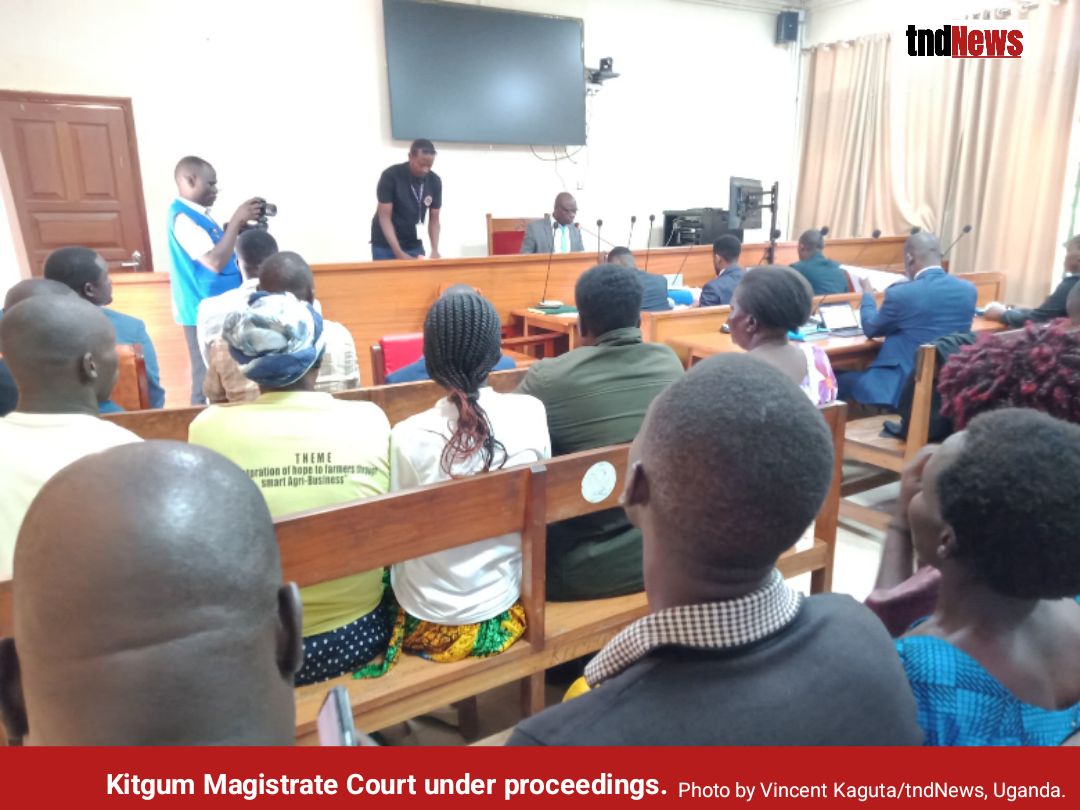
Kitgum Magistrates Court has dismissed an application seeking an order compelling the Electoral Commission (EC) to produce the voters’ register used during the January 15, 2026 parliamentary elections in Kitgum Municipality.
The ruling was delivered by Ekirita Robert, Assistant Registrar of Kitgum Magistrates Court, on behalf of the High Court judge of Kitgum, Kwizera Amos, following an application by Atim Beatrice Anywar, who had sought discovery and production of the voters’ register for inspection.
Anywar, also State Minister for Water and Environment, argued that the register was necessary to establish allegations raised in the main election petition, including claims that deceased persons participated in the election, multiple voting, impersonation, ballot stuffing, bogus scanning and the recording of people who had relocated as having voted.
The applicant also sought a certified copy of the voters’ register showing voters who cast their ballots and those who did not.
The application was opposed by the Electoral Commission, represented in the proceedings by Atim Betty Owot, among the respondent-side officials.
The applicant argued that the Electoral Commission was in possession and custody of the voters’ register and had failed to provide a certified copy despite repeated requests.
She maintained that production of the register would shed light on the allegations contained in the election petition and assist the court to determine the dispute fairly.
However, the Electoral Commission opposed the application, arguing that the applicant was aware of the electoral processes and the legal requirements governing voter verification and display of the National Voters’ Register.
The Commission told court that the National Voters’ Register had been displayed from April 17 to May 8, 2025, after which members of the public were given an additional 11 days, from May 9 to May 19, 2025, to scrutinise the register and raise objections concerning proposed corrections, inclusions and deletions.
The respondent argued that the applicant had participated in the electoral process but had not demonstrated that any complaint raised during the statutory voter verification process remained unresolved.
The application was consequently described as a fishing expedition, with the respondent arguing that the applicant was seeking access to electoral materials without first laying a sufficient evidential foundation for the allegations.
In his analysis, Assistant Registrar Ekirita Robert Mwanda, reading the statement of the high court judge, said the purpose of discovery is to facilitate the fair and expeditious determination of the real issues between parties by ascertaining the truth, narrowing the issues and preventing surprise.
However, he emphasised that discovery should not be used to enable a party to conduct a speculative search for evidence upon which to develop or sustain a case.
The court said a party seeking discovery must establish that the documents exist, are relevant to the matters in issue, are in the possession, custody or power of the party against whom discovery is sought, and that their production is necessary for the fair disposal of the proceedings.
The court acknowledged that the voters’ register is relevant in determining an election petition but held that relevance alone does not automatically entitle a party to discovery.
The applicant was required to identify the specific entries in the register she wanted to interrogate and explain how those entries would assist in resolving specific issues already properly raised in the petition.
On the allegation that deceased persons voted, the court found that the evidence presented did not sufficiently identify the alleged deceased voters, the corresponding polling stations or establish that the persons were deceased at the time of the election.
The court held that a mere assertion that deceased persons voted was insufficient to establish the factual foundation necessary for an order of discovery.
The court also referred to Section 101 and 103 of the Evidence Act, under which the burden of proving a fact lies on the person who asserts it. The court noted that where the applicant alleges that particular deceased persons participated in an election, there must be an evidential link connecting those persons to the casting of ballots.
That link, the court found, was missing.
The court also considered the allegations of multiple voting, impersonation, ballot stuffing, bogus scanning and the recording of persons who had relocated as having voted.
It found that the allegations were made in general terms without sufficiently identifying particular voters, polling stations or specific entries in the voters’ register.
The court further considered the applicant’s supporting affidavit, particularly paragraphs 16 and 17, in which the applicant relied on information allegedly received from her agents and supporters.
The applicant did not claim to have personally witnessed the alleged voting by deceased persons or ballot stuffing.
The court referred to Section 59 of the Evidence Act, which requires oral evidence to be direct. Where a fact is capable of being seen, the court noted, it should ordinarily be proved by the person who witnessed it.
Although the applicant referred to agents and supporters who allegedly witnessed the irregularities, none of those persons had sworn affidavits in support of the application. The court therefore found that the allegations lacked sufficient direct evidential support.
Assistant Registrar Ekirita Robert Mwanda further warned against using discovery as a means of conducting a roving inquiry.
He said the court must protect the discovery process from unreasonable and oppressive investigations where the material sought is not sufficiently connected to the matters in dispute.
The court observed that electoral material should only be subjected to inspection where there is trustworthy and sufficient material justifying such an order.
It should not, the court said, facilitate a roving inquiry aimed at fishing out evidence for purposes of invalidating an election.
The court consequently found that the applicant had not demonstrated how production of the voters’ register would help substantiate and prove the allegations of multiple voting, impersonation and ballot stuffing pleaded in the election petition.
The court concluded that the applicant had failed to establish sufficient cause for the order sought. “For the foregoing reasons, I find that the applicant has not demonstrated sufficient cause for the grant of an order for discovery and production of the voters’ register as sought,” the ruling stated.
The application was accordingly dismissed.
The ruling leaves the substantive election petition to proceed on the evidence and issues properly before the court.
Discover more from tndNews, Uganda
Subscribe to get the latest posts sent to your email.