Kabale district Woman Member of Parliament, Enid Atuheire Origumisiriza, has called on the government of Uganda to establish a dedicated programme for menstrual hygiene management in schools.
She urged that planning and budgeting for this initiative be incorporated into relevant education and school budgets, ensuring that schools have predictable resources to support learners in need of menstrual products.
MP Origumisiriza further stressed the need for clear standards governing procurement, distribution, education, and monitoring.
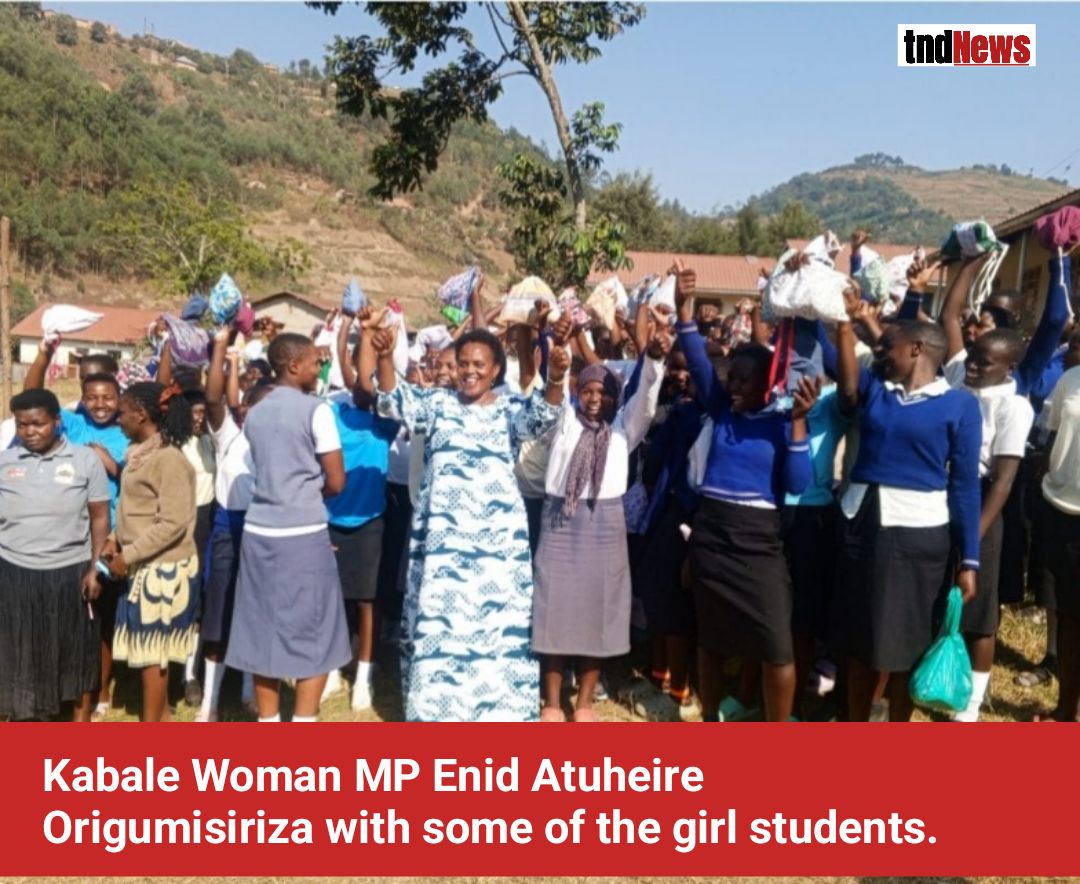
She made these remarks on August 14, 2026, during the official launch of her initiative in which she distributed sanitary pads and empowered learners across Kabale district.
The launch took place at Rubaya Secondary School, Butanda Secondary School, Butanda Primary School, Kinyamari Primary School, and Rwanyena Primary School. The programme targets thousands of girls across the district, particularly those who often drop out of school due to challenges related to their menstruation periods.

Lawmaker Enid emphasised that education is the greatest equalizer, stating, “No girl should be left behind because of her period. These pads are about continuity, dignity, and confidence for our daughters. When a girl stays in class, a family is lifted and a nation is built.”
She made these remarks while addressing students at Rubaya SSS, adding that the drive is part of her broader legislative and community agenda aimed at removing structural barriers that continue to push girls out of school.
Additionally, the MP pledged to raise this concern on the floor of Parliament, advocating for support from the government through the Ministry of Education and Sports. She called on the Ministry to prioritize the distribution of free sanitary pads for all school girls in the country.
Enid also highlighted the need to strengthen partnerships with parents, school management, and development partners to expand health, education, and economic empowerment programmes for girls nationwide.

“An educated girl is an empowered woman. An empowered woman builds a stronger nation,” she said, stressing the importance of menstrual health education and awareness, noting that girls should receive age-appropriate information about menstruation, hygiene, and reproductive health.
During her engagement with students at Rubaya Secondary School, some of the learners—who requested anonymity—shared the challenges they face. Beneficiaries who received the pads expressed heartfelt appreciation, stating that the support would enable them to attend school throughout the term without fear or shame.
They noted that lack of pads is a major reason why many young girls drop out of school at both primary and secondary levels when their menstruation periods begin.
School administrators described the intervention as timely and impactful. Headteachers noted that the lack of sanitary pads has been a leading cause of absenteeism and poor performance among girls, especially in rural schools.
They urged the MP to consider listing this issue among those to be reviewed and addressed as a matter of national importance.

While appreciating all the efforts being made to address the challenge, the MP noted that the current intervention is largely a temporary solution and may not be sufficiently reliable or sustainable in the long term.
She proposed that young people, women, and other community groups be equipped and trained at selected regional Presidential Skilling Hubs to produce quality, affordable sanitary pads.
These centres could then supply schools in their respective regions, with pads distributed to selected schools at least once every term, supported by a small deduction from the Ministry of Education’s budget with backing from the Government of Uganda.
MP Enid concluded her engagement by calling for a long-term national menstrual health strategy, revealing that Uganda needs a coordinated national framework that treats menstrual hygiene as an issue of education, health, dignity, and equal opportunity, not simply as an occasional welfare intervention.
Discover more from tndNews, Uganda
Subscribe to get the latest posts sent to your email.