Local government leaders have renewed calls for comprehensive reforms to Uganda’s decentralisation policy, saying financial constraints, staffing shortages, inequitable resource allocation and weak institutional coordination continue to undermine service delivery across districts.
Speaking during the Annual Local Government Leadership Retreat in Gulu, district chairpersons, cities and municipalities mayors from across the country argued that while decentralisation has brought government closer to citizens, several structural challenges have limited its effectiveness and reduced the ability of local governments to respond to community needs.
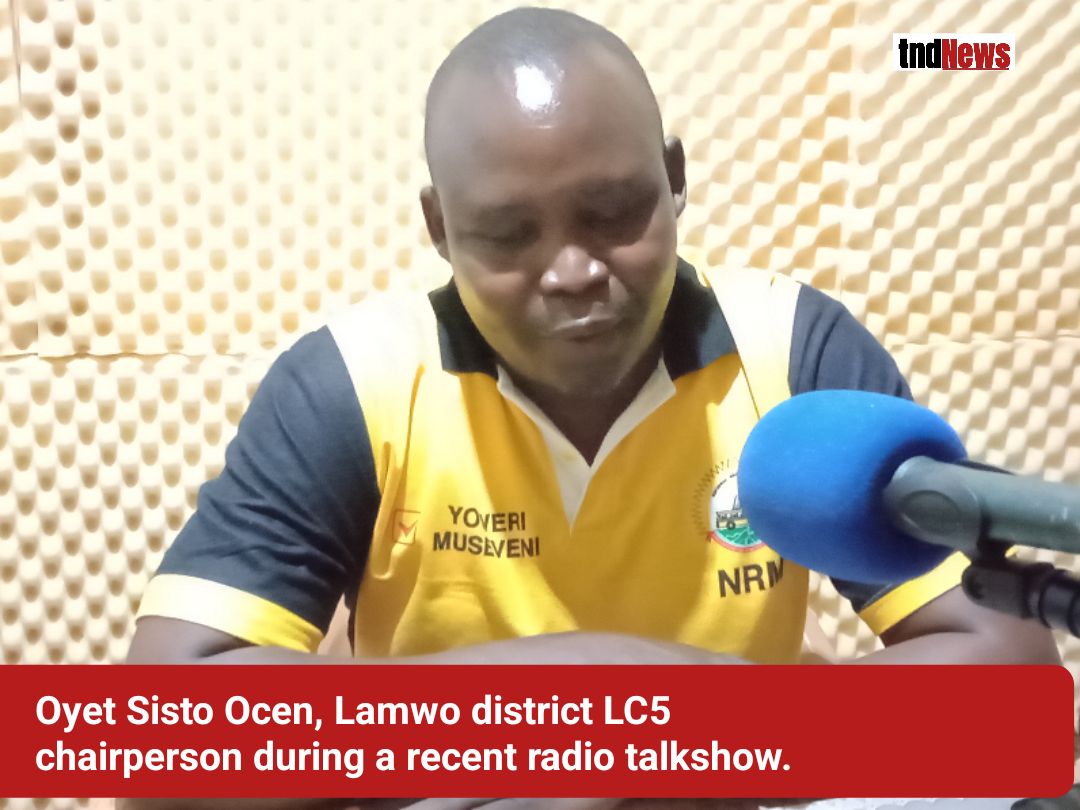
Lamwo district LC5 chairperson Oyet Sisto Ocen said Uganda’s decentralisation policy, introduced in the early 1990s, requires a comprehensive review to address emerging governance challenges and restore the autonomy of local governments.
He observed that although the legal framework supporting decentralisation remains largely intact, implementation has gradually become more centralised, particularly in the management of public finances and service delivery.
According to Ocen, one of the biggest obstacles is the limited financial independence of local governments. He noted that more than 90 percent of district budgets are financed through transfers from the central government, most of which are conditional grants earmarked for specific sectors.
“The current financing arrangement leaves districts with little room to determine their own priorities,” Ocen said, arguing that local governments should receive larger block grants that allow them to budget according to local development needs while remaining accountable for public resources.
He also called for reforms in the distribution of national resources, saying equal allocation of grants often ignores the realities faced by different districts.
Supporting the call, Pader district LC5 chairperson Akena Alfred criticised the uniform allocation of the Uganda Road Fund, saying districts receive the same funding regardless of their geographical size or the length of their road networks.
Akena cited the annual road maintenance allocation, where each district receives approximately shs1billion, arguing that such an approach disadvantages larger districts with extensive road infrastructure requiring maintenance.
He said resource allocation should instead be guided by objective indicators such as land area, population, road coverage and development needs to ensure equity and improve service delivery.
Ocen further raised concerns over the shrinking local revenue base, noting that several traditional revenue sources have either been abolished or transferred to the Uganda Revenue Authority, leaving many districts unable to finance essential local government operations.
He explained that some districts struggle to raise even shs200 million annually in locally generated revenue, making it difficult to finance council activities, project supervision and other statutory responsibilities.
Another major concern raised during the retreat was the persistent shortage of staff in local governments.
Ocen said many districts operate with less than half of their approved staffing levels because recruitment remains subject to wage bill ceilings and clearance from the Ministry of Public Service.
The shortages, he said, are particularly severe in the health and education sectors, where inadequate staffing directly affects the quality of public services.
He also urged the government to review the current public service structure, arguing that many officers have remained in the same positions for years because existing staffing structures offer limited opportunities for promotion.
The Lamwo district chairperson further expressed concern about weak institutional capacity in departments such as Internal Audit, saying many districts have only one auditor with inadequate logistical support despite the department’s critical role in promoting transparency and accountability.
On infrastructure development, Ocen criticised the continued use of centrally procured contractors under hybrid implementation arrangements, saying many projects take years to commence or are completed behind schedule.
He cited examples where government-funded projects have experienced prolonged delays or failed to deliver value for money, arguing that locally procured contractors are often easier to supervise and more responsive to district leadership.
Addressing governance and accountability, Uganda Local Governments Association (ULGA) chairperson and former Kole District LC5 chairperson Awany Andrew Moses, said local governments remain committed to fighting corruption but stressed that accountability efforts should involve every institution responsible for public oversight.
Awany argued that anti-corruption initiatives should not single out local governments while overlooking weaknesses within national accountability institutions.
He also cautioned against portraying all district leaders as corrupt, noting that the majority of current local government political leaders are serving their first terms and should first be supported through orientation and capacity building.
According to Awany, the government should establish a structured anti-corruption framework that clearly defines the responsibilities of district chairpersons, Chief Administrative Officers, Resident District Commissioners and other stakeholders in promoting accountability.
He added that empowering local leaders to spearhead integrity initiatives at the grassroots would strengthen public confidence and make the fight against corruption more sustainable.
Officials from the Ministry of Local Government acknowledged the financial pressures facing districts but encouraged local governments to explore innovative ways of financing development.
A ministry consultant observed that heavy reliance on conditional grants limits local flexibility and urged district leaders to strengthen local revenue mobilisation, improve financial management systems and build capacity to prepare competitive proposals for development funding.
The consultant also noted that many districts consistently fail to achieve their local revenue targets, affecting council operations and reducing resources available for local priorities.
District leaders agreed that Uganda’s decentralisation policy remains central to improving governance and bringing services closer to citizens.
However, they maintained that meaningful reforms are needed to strengthen fiscal autonomy, improve staffing, review resource allocation formulas, enhance accountability and give local governments greater authority to plan and implement development programmes that respond to the unique needs of their communities.
As discussions on the future of decentralisation continue, local government leaders believe that empowering districts with adequate resources, stronger institutions and greater decision-making authority will ultimately translate into better services and improved livelihoods for Ugandans.
Discover more from tndNews, Uganda
Subscribe to get the latest posts sent to your email.