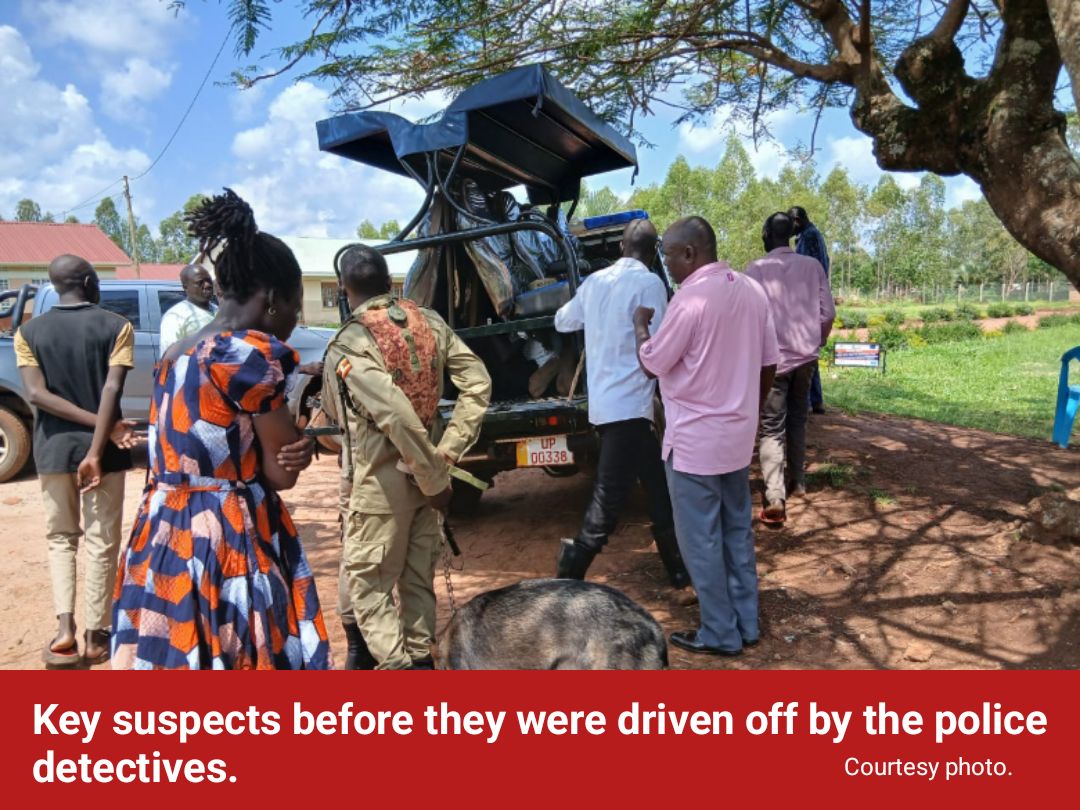
Police in Lamwo district have arrested two suspects donning yellow shirts over an alleged fraud scheme.
The fraud targets vulnerable residents who were reportedly deceived into paying money with false promises of being enrolled in the government’s cattle restocking programme.
The suspects are accused of obtaining money by false pretense after allegedly convincing residents that they could use their influence to secure beneficiaries’ names on the government livestock distribution list in exchange for payment.
A complaint was filed by Kidega William, a 61-year-old peasant farmer from Pala West village in Mura parish, Padibe town council, who reported losing shs600,000 after allegedly being promised inclusion in the programme.
According to Lamwo District Police Commander (DPC) SP Reagan Magombe, the complainant reported the matter to Lamwo Central Police Station after the promised livestock failed to materialise.
The case was registered as obtaining money by false pretence, prompting police to launch investigations.
Using intelligence-led operations, detectives tracked down and arrested two suspects who are currently in police custody as investigations continue.
SP Magombe said preliminary investigations suggest that the suspects may have been operating a wider scheme targeting elderly and economically vulnerable residents across different parts of Lamwo district.
“Our investigations indicate that the suspects allegedly convinced members of the public that they had connections with officials responsible for the cattle restocking programme and could facilitate early inclusion on the beneficiaries’ list in exchange for money,” he said.
Police estimate that the suspected fraud may have affected several victims, with investigators indicating that more than shs5 million could have been collected from different residents through similar promises.
Investigators are now working to establish the full extent of the alleged scam, identify other victims, trace any additional suspects and recover the money reportedly obtained from complainants.
SP Magombe urged anyone who may have fallen victim to similar schemes to report to the nearest police station and provide any information that could assist ongoing investigations.
He also reminded the public that government programmes are implemented through official procedures and do not require applicants or beneficiaries to pay facilitation fees.
“No government programme requires people to pay money in order to be selected as beneficiaries. Anyone demanding payment while claiming to influence beneficiary lists should be reported immediately to the police or relevant government authorities,” SP Magombe said.
Lamwo district chairperson Oyet Sisto Ocen condemned the alleged fraud, describing it as an exploitation of poor and vulnerable citizens seeking government support to improve their livelihoods.
He cautioned residents against making payments to individuals claiming to have influence over government programmes, emphasizing that beneficiary selection follows established administrative procedures.
“Government programmes are meant to benefit eligible citizens through transparent processes. No individual should ask for money in exchange for inclusion on beneficiary lists. We encourage residents to verify information with sub-county officials or district authorities before making any payments,” Oyet said.
The district chairperson also appealed to local council leaders, parish chiefs and community development officers to intensify public awareness campaigns on how government programmes operate so that residents are not deceived by fraudsters.
Community leaders, he said, play a critical role in ensuring accurate information reaches villages, especially elderly people who are often targeted by scammers.
Police have since appealed to anyone with information regarding similar incidents to cooperate with investigators to help build stronger cases against those involved.
The two suspects remain in custody at Lamwo Central Police Station pending the conclusion of investigations and possible prosecution.
Government livestock restocking programmes are intended to support vulnerable households by providing cattle, goats and other livestock to improve household incomes, food security and resilience.
Beneficiary selection is conducted through established government structures involving local leaders, technical officers and verification committees.
Authorities have repeatedly warned members of the public against paying individuals who claim they can influence access to government programmes.
Police advise residents to seek information directly from district production offices, sub-county authorities or other relevant government departments and to report any suspected cases of fraud immediately.
If convicted, individuals found guilty of obtaining money by false pretense face penalties under Uganda’s Penal Code, in addition to being required to compensate victims who were ordered by the courts.
Discover more from tndNews, Uganda
Subscribe to get the latest posts sent to your email.