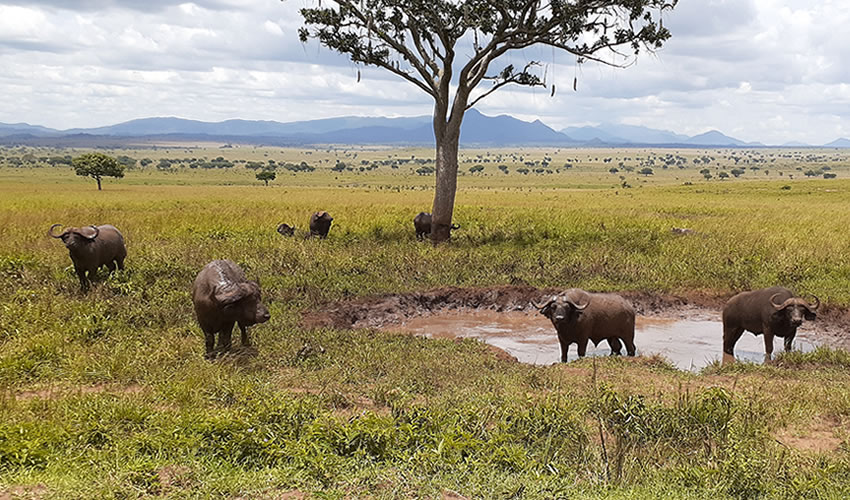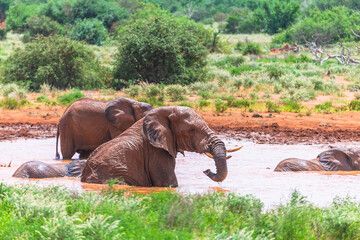
Communities in Lamwo district are grappling with growing losses and fear after elephants believed to have strayed from Kidepo Valley National Park destroyed crops and roamed through several sub-counties, highlighting the persistent challenge of human-wildlife conflict in northern Uganda.
The latest incidents have affected residents in Madi Opei sub-county, where farmers reported that a herd of about six elephants invaded their gardens, destroying acres of maize, cassava, sorghum, and other food crops that families rely on for both household consumption and income.
The destruction comes at a difficult time when prolonged dry conditions have already reduced agricultural production across the district, leaving many households uncertain about their food security.
Several residents said the elephants spent hours feeding in gardens before moving deeper into surrounding villages, leaving behind extensive damage that many farmers say they cannot recover from without external support.
Stella Auma, a farmer from Madi Opei sub-county said the drought had already affected farmers and now the elephants have finished what was left. “We don’t know how we shall survive,” she said.
Another resident, James Odongpiny, said the situation has left villagers living in constant fear and said the community is currently no longer freely going to the gardens early in the morning or in the evening because they don’t know where the elephants are.
“Children are also afraid to walk long distances because they could meet the animals,” Ojok said.
The crop destruction has renewed calls for stronger interventions to protect communities living near wildlife conservation areas.
Residents are urging the Uganda Wildlife Authority (UWA) to respond more quickly whenever elephants stray from protected areas and to strengthen measures that prevent future invasions.
Many are also calling on the government to compensate families whose livelihoods have been destroyed through wildlife incursions.
The concern deepened after another elephant was reported roaming through different parts of Lamwo district.
Lamwo district chairperson Oyet Sisto Ocen said the elephant was first sighted in Madi Opei sub-county before moving to Agoro and Potika sub-counties.
By the following morning, reports indicated that it was heading toward Katum, raising fears that nearby communities, including Padibe, could also be affected if it continued moving through populated areas.
Ocen said district authorities immediately alerted the Uganda Wildlife Authority to track the animal and safely guide it back to its natural habitat.
“The information has already been communicated to the wardens at Kidepo Valley National Park so they can monitor the elephant and safely return it to the park before it becomes a danger to the communities,” Ocen said.
He appealed to residents to remain calm but vigilant, warning them against attempting to chase or provoke the elephant.
“We advise community members to immediately report any sighting to local leaders or wildlife officials instead of confronting the animal. Human safety remains our priority, but the elephant must also be handled professionally,” he added.
Local leaders say encounters between people and wildlife have become increasingly common in communities bordering protected conservation areas, particularly during prolonged dry seasons when wild animals search for food and water beyond park boundaries.
Odongpiny said the destruction of staple crops such as maize, cassava, and sorghum not only affects household food supplies but also reduces household incomes, making it more difficult for families to meet essential needs, including school fees and healthcare.
Community leaders are now calling for long-term solutions, including strengthened wildlife barriers, rapid response teams, early warning systems, and sustained community awareness programs to reduce conflict between wildlife and people.
Enyel Eric Morris, the Kidepo Conservation Area Manager at the Uganda Wildlife Authority (UWA), confirmed that the authority had received reports about the elephants and had deployed a team to monitor their movements.
He explained that elephants occasionally stray outside protected areas in search of food and water, particularly during prolonged dry seasons when natural resources inside the park become scarce.
Morris urged residents not to confront or attempt to chase the elephants, warning that frightened elephants can become aggressive and pose a serious danger to human life.
“We appeal to community members to remain calm, avoid getting close to the animals, and immediately report any sightings to local leaders or our nearest UWA offices. Our trained rangers are equipped to handle such situations safely.”
On the issue of crop destruction, Morris acknowledged the hardships faced by affected families and said UWA continues to work with district leaders and communities to strengthen measures that reduce human-wildlife conflict.
As wildlife authorities continue monitoring the movement of the elephant, affected families remain hopeful that stronger preventive measures will be implemented to protect both rural livelihoods and wildlife, allowing communities living alongside protected areas to coexist more safely.
Discover more from tndNews, Uganda
Subscribe to get the latest posts sent to your email.