In Gulu City, therapy dogs have become powerful healers for survivors of the Lord’s Resistance Army (LRA) captivity, providing comfort and restoring hope after years of trauma and community stigma.
Nearly 25 years after peace returned to northern Uganda, many survivors of the LRA conflict still suffer from post-traumatic stress disorder (PTSD) and face rejection from their communities. But a unique program – The Big Fix Uganda’s Comfort Dog Project is offering new hope.
Every five months, more than 15 human-animal bonded therapy dogs are trained and graduated to support individuals who have endured the horrors of war. These dogs are not just pets—they are certified therapy companions helping to heal invisible wounds.
“I feel truly free when my dog Eroba-Nono curls up beside me and looks into my eyes,” shares Onen Robert, 38, a resident of Okeyo-Mero Cell, Pece-Laroo Division in Gulu City. “It’s like the trauma fades away, and I’m surrounded by magic. This dog has changed my life.”
Onen, who now works as an Animal Welfare Officer at The Big Fix Uganda, was abducted by the LRA in 2000 and spent five years in captivity before escaping in 2005. His return home marked the beginning of another battle—dealing with psychological scars and societal rejection.
“I joined The Big Fix because of the trauma I carried for more than 10 years. Eroba-Nono isn’t just a therapy dog; she’s family,” Onen says. “She senses when I’m overwhelmed, comforts me, lowers my blood pressure, and brings me peace. Unlike people, she doesn’t judge me.”
He adds that the dog’s companionship has helped control his temper and violent outbursts, which previously made him feel like a danger to others and to himself.
“Sometimes I would get so angry at anyone who mocked me. I had nightmares, sleepless nights, and lived in constant fear of another attack. But Eroba-Nono gave me hope.”
From grief to healing
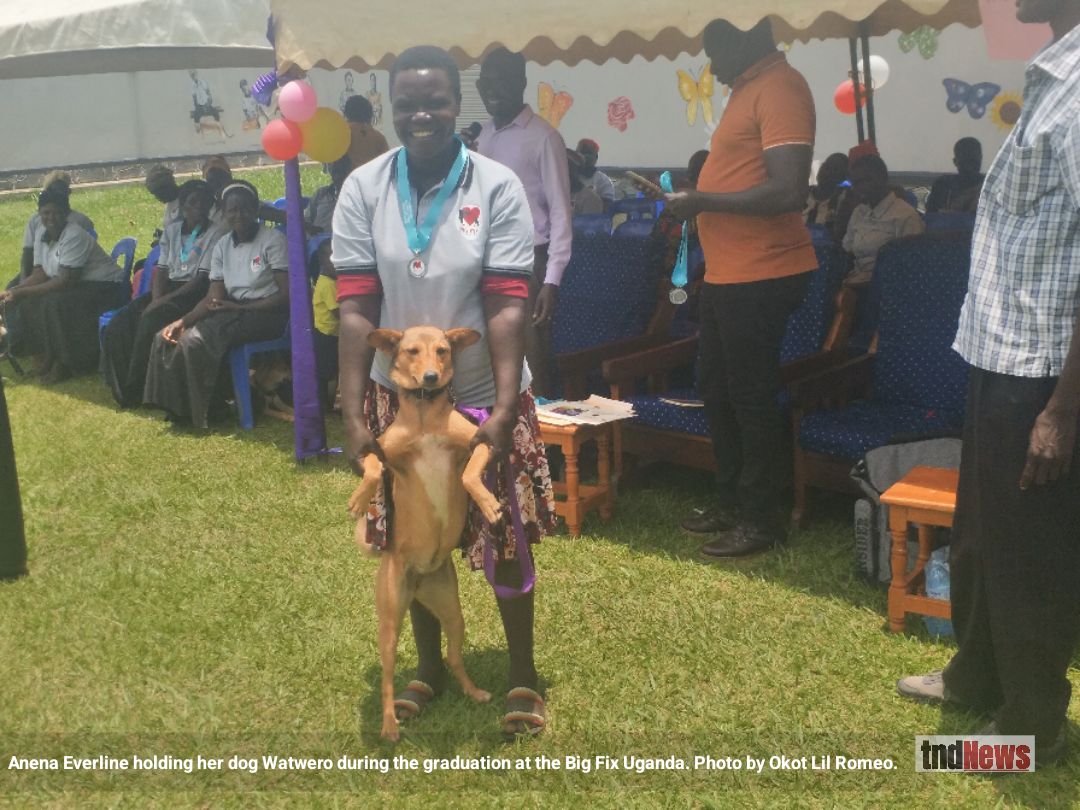
Anena Everline, a resident of Pageya Ward in Gulu, also shares her transformation story. She lost her mother two years ago and fell into deep depression until she joined the Comfort Dog Project and received her therapy dog, Watwero.
“My dog became my seventh child. She sleeps next to me, even before my own children. I used to suffer severe headaches, but after I got Watwero, the pain began to ease,” Anena says.
“Without my therapy dog, I’d be dead. She saved my life.”
Anena now shares her experience with other trauma survivors, encouraging them to embrace animal-assisted therapy.
“Dogs give pure, unconditional love. They don’t stigmatise you or remind you of your past. They just heal you.”
 A regional movement for healing
Odoch Honest, Executive Administrator at The Big Fix Uganda, confirms the success of the program.
“Since 2014, we’ve trained over 134 therapy dogs to support war survivors battling PTSD. These therapy dog handlers are now community ambassadors—spreading awareness and offering support.”
He thanked the local community for providing land and support, making it possible to reach more victims across the Acholi sub-region.
Okello Francis Oloya, Executive Director of The Big Fix Uganda, has a personal story tied to therapy animals. He lost his sight at age 12 in an unexploded bomb incident and has relied on dogs for emotional healing ever since.
“Dogs don’t remind you of your trauma. They don’t care what you did in the past or what happened to you. They accept you fully. That’s the kind of healing survivors need.”
Okello emphasised that therapy dogs also help manage hunger-related stress and reduce blood pressure, making them powerful companions in both physical and emotional healing.
Mental health crisis in Northern Uganda
Despite these positive strides, mental health remains a critical issue in the region. According to Francis Obot, Senior Nursing Officer in charge of Mental Health at Gulu Regional Referral Hospital.
“We serve the entire northern region, yet we don’t have a full-time psychiatrist. Every day we admit two patients and register over 100 outpatients with various mental health conditions, mostly trauma-related.”
 Obot supports the therapy dog initiative, calling it a “valuable alternative” in a system where professional help is scarce.
“It’s a smart approach. Paying close attention to your dog’s needs creates a healing bond. It’s an investment in mental well-being. Dogs can be part of a family and a source of stability.”
Obot also warns that while dogs can help, the quality of the human-dog relationship matters. If nurtured well, the bond brings healing. If neglected, it could cause stress.
“The human-animal bond is evolving. We must understand it better to design policies that support both humans and animals, recognising their mutual value in society.”
A new path to recovery
As war survivors in northern Uganda continue to battle the deep psychological wounds of the past, therapy dogs are offering a lifeline—bringing companionship, love, and a sense of purpose to those once left behind.
With every wag of the tail and every gentle nuzzle, these dogs are proving that healing sometimes comes on four legs.
Discover more from tndNews, Uganda
Subscribe to get the latest posts sent to your email.