Local governments across Uganda have been called to speed up preparations for the 2026/27 financial year as the Ministry of Finance, Planning and Economic Development (MoFPED) issued a directive mandating all districts to submit their Budget Framework Papers (BFPs) by 14 November 2025.
The directive was made at a planning workshop with participants from Otuke, Dokolo, Alebtong, Lira, Kole, Kotido, and Apac districts, including Resident District Commissioners (RDCs), Chief Administrative Officers (CAOs), speakers, and district chairpersons.
The workshop, held at Margaritha Palace Hotel in Lira City, served as a platform for sharing experiences and discussing strategies to make budget planning more inclusive, effective, and responsive to local priorities.
The BFPs’ reminder comes at a critical time when many districts are lagging behind in drafting Local Government Development Plans (LGDPs), a fundamental component of budget planning.
These plans are essential to ensure that funds are allocated effectively and development priorities are met, yet uneven progress across the country raises concerns over the ability of some local governments to deliver timely budgets.
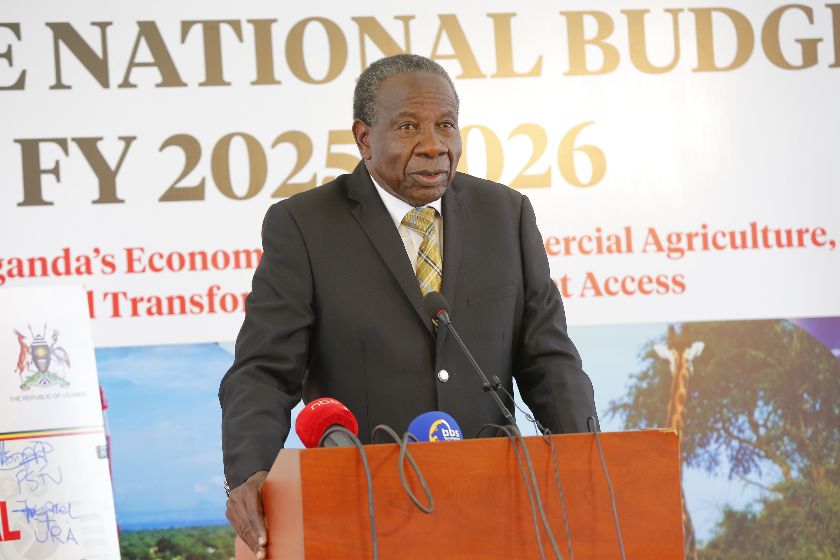
Hellen Jenny Owechi, Commissioner IT & PE, officially launching and Economic Development, delivered the directive on behalf of Finance Minister Matia Kasaija.
The meeting was held under the theme “Full Monetisation of Uganda’s Economy through Commercial Agriculture, Industrialisation, Expanding and Broadening Services, Digital Transformation and Market Access” to reflect the government’s broader vision for economic growth and efficient resource utilisation.
This workshop followed the National Budget Conference at Speke Resort Munyonyo on 11 September, which officially launched the preparation process for the 2026/27 budget as guided by Article 155 of the Constitution and Section 12 of the Public Finance Management Act (PFMA), Cap 171.
During her address, Owechi highlighted the importance of completing LGDPs by 31 March 2026, stressing that timely submission is crucial for the effective disbursement of budgeted funds.
She further emphasised the critical role of accounting officers in ensuring that political leaders are fully engaged throughout both the planning and execution stages of the budget.
While some progress has been made, she noted that only 25 districts had submitted their final development plans aligned with the Fourth National Development Plan (NDP IV) by March 2025, leaving 18 districts yet to initiate drafting.
This discrepancy underscores the need for stronger coordination between district administrations and national planning authorities to avoid delays that could hinder service delivery and development outcomes.
The 2026/27 budget represents a pivotal stage in the implementation of NDP IV, being the second year of the plan’s rollout and the first to implement the government’s Tenfold Growth Strategy. It is also the final plan aligned with Agenda 2030 and the Sustainable Development Goals (SDGs), making timely and strategic planning even more critical.
Additionally, this budget cycle will be the first the to operationalize the ruling party’s 2026/27–2030/31 manifesto, signaling the integration of political commitments into national planning and budgetary frameworks. The successful implementation of these objectives hinges on proactive engagement, accurate data, and well-prepared development plans at the local government level.
What district leaders say
Kotido Municipality mayor, Irar Peter Abrahams, noted that the shs1 billion annual road grant often remains underutilised because districts lack adequate road maintenance equipment.
He urged the Ministry to find solutions that would enhance operational efficiency and recommended the economic empowerment of all District Service Commission (DSC) members to curb corruption during recruitment processes.
Mayor Abrahams’ observations highlight the challenges of translating budget allocations into tangible infrastructure improvements, a problem that persists across many Ugandan districts.
Similarly, Dokolo district council speaker Joel Opota Okuma expressed concern over the absence of specific maintenance budgets for road machinery.
He warned that the failure to plan for the upkeep of critical infrastructure could result in expensive breakdowns, further straining local government resources and limiting the benefits of national road grants. These concerns reflect broader systemic issues in budgeting and planning, particularly regarding the sustainability of public infrastructure projects, which often face neglect due to limited foresight and inadequate financial planning.

Apac District Planner, Agunsi Benedict, added that grant allocations should correspond with the size of a district’s road network. Using a comparative example, he explained that while Oyam district has 500 kikilometresf roads and Apac has 300 kikilometresboth districts receive equal funding, an inequity that undermines effective service delivery.
Agunsi also highlighted other pressing challenges, including insufficient staffing in hospitals, dilapidated infrastructure, and a shortage of vehicles for departmental heads. These constraints directly impact the quality of public services, from healthcare to administrative efficiency, empemphasisinge need for more strategic allocation and monitoring of resources at the local level.
Alebtong district LC5 chairperson, David Kennedy Odongo, drew attention to Uganda’s high road accident rates, linking them to inadequate physical planning and poor road infrastructure.
He questioned the government’s commitment to increasing local government allocations, warning that without reforms, service delivery would remain stagnant and citizens’ needs unmet. Odongo’s comments underscore the intersection between planning, resource allocation, and public safety, highlighting the broader social and economic consequences of underfunded and poorly executed budgets.
Addressing these concerns, MoFPED’s Assistant Commissioner for Budget Policy and Evaluation, Joseph Oloo Majanga, noted that the consultations were designed to capture local perspectives before the finalisation of the 2026/27 budget.
He explained that the sessions also reviewed programme grant guidelines and the processes for disseminating funds, ensuring that allocations are both transparent and aligned with national development priorities.
The workshops are part of a nationwide effort to create inclusive budget planning mechanisms that integrate the views of local governments and ensure the equitable distribution of resources.
Similar consultative sessions are scheduled in Jinja and Mbale, targeting all four traditional regions of Uganda. These initiatives form part of the government’s wider efforts to strengthen decentralised planning, enhance fiscal responsibility, and ensure transparency and accountability in public spending.
Despite these efforts, some districts remain significantly behind schedule. Eight local governments: Bugweri, Butebo, Buvuma, Gomba, Kalungu, Kiboga, Luuka, and Lugazi Municipality still lack draft LGDP IVs, raising concerns about their readiness for the upcoming financial year.
This situation points to a persistent challenge in local government capacity, highlighting the need for technical support, training, and oversight to ensure that all districts can participate fully in the budget process. MoFPED’s continued push for timely submissions reflects the critical importance of planning, monitoring, and evaluation in achieving the country’s long-term development goals, including Vision 2040.
The importance of these consultations extends beyond administrative compliance; they are fundamental to ensuring that national priorities translate into local action. District-level participation in budget planning allows for more informed decisions, better-targeted resource allocation, and improved public service delivery.
By engaging local leaders, the Ministry aims to capture the realities on the ground, identify gaps, and design interventions that respond to the actual needs of communities. This approach aligns with Uganda’s broader development agenda, which emphasises decentralisation, and evidence-based policy-making.
Furthermore, the process underscores the link between budget planning and economic development. Effective budgeting supports initiatives such as commercial agriculture, indindustrialisationxpansion of services, digital transformation, and market access, all of which are central to Uganda’s vision for accelerated growth.
When districts align their LGDPs with national priorities and submit BFPs on time, they create a roadmap for sustainable development that can be monitored and evaluated. This not only enhances accountability but also ensures that funds are used efficiently and achieve the intended impact on citizens’ lives.
By highlighting gaps in road maintenance, staffing, infrastructure, and equipment, leaders provide valuable feedback that informs the national budgeting process.
The workshop thus acts as a bridge between policy formulation at the central level and implementation at the local level, ensuring that national strategies are grounded in the realities of district administration.
As Uganda prepares for the 2026/27 financial year, the emphasis on timely LGDP submissions and active participation by local governments is more critical than ever. The challenges highlighted during the Lira City workshop, ranging from underutilised road grants and maintenance issues to staffing shortages and infrastructure deficits, illustrate the complex operationalisation.
Addressing these challenges requires not only adequate funding but also strategic planning, capacity building, and stakeholder engagement to ensure that every district can meet its development objectives.
In conclusion, the MoFPED directive to local governments is a timely reminder of the importance of preparedness, inclusivity, and accountability in budget planning. By ensuring that LGDPs are completed and BFPs submitted on schedule, districts contribute to the overall success of national development goals, the operationalisation of the ruling party’s manifesto, and the achievement of Vision 2040.
As consultative sessions continue across the country, all districts must prioritise planning, address structural gaps, and actively engage with stakeholders to create a transparent, responsive, and effective budgeting process that benefits all Ugandans.
Discover more from tndNews, Uganda
Subscribe to get the latest posts sent to your email.