As the COP30 Presidency presents its forest protection blueprint at COP31 in Türkiye, governments and environmental advocates face growing pressure to turn international commitments into measurable action, protect primary forests and ensure Indigenous communities have a decisive role in conservation.
A new international roadmap aimed at halting and reversing deforestation and forest degradation by 2030 is placing renewed pressure on governments to move beyond climate pledges and develop practical national strategies, with Indigenous land rights, financing and protection of existing forests emerging as central tests of its success.
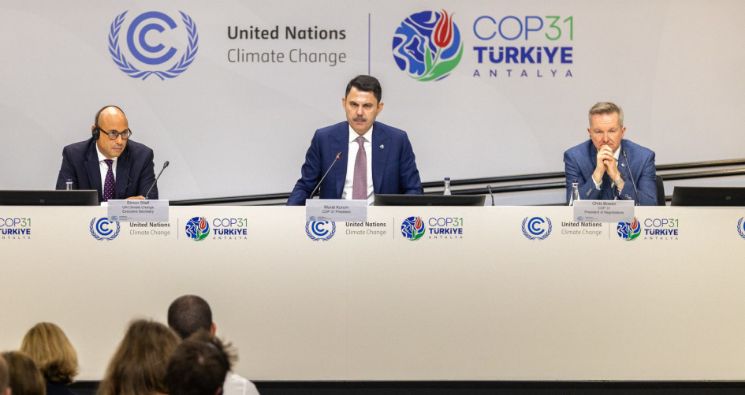
Presented during COP31 in Antalya on November 9, the COP30 Presidency’s roadmap seeks to translate existing international climate commitments into practical measures that countries can implement according to their national circumstances.
The initiative comes amid persistent concerns that global efforts to protect forests remain constrained by inadequate financing, weak enforcement, competing land-use interests and insufficient recognition of communities that depend on forests for their livelihoods.
Although countries have repeatedly committed to ending deforestation, the challenge remains how to translate those promises into policies, institutional capacity and investments capable of delivering results before the end of the decade.
COP30 President André Corrêa do Lago said the roadmap was designed as an implementation document, requiring international institutions to help governments develop their own national pathways rather than imposing a uniform approach.
“Since this is an implementation document, we need institutions to support countries to develop their own roadmaps and it was very good today to hear UNEP, FAO and UNDP clearly supporting the roadmap,” he said.
He expressed hope that the initiative would help countries ensure forests continue benefiting their populations while being preserved for climate protection and biodiversity.
The endorsement from the United Nations Environment Programme (UNEP), Food and Agriculture Organization (FAO) and United Nations Development Programme (UNDP) signals the importance of institutional cooperation in translating the roadmap’s recommendations into country-level action.
However, the initiative is not a negotiated agreement binding governments to new obligations. It is a voluntary, non-prescriptive contribution from the COP30 Presidency, intended to organise existing commitments, financing mechanisms and opportunities for international cooperation.
Its effectiveness will therefore depend largely on whether governments adopt its recommendations and commit the resources needed to implement them.
Five action areas define the proposed forest strategy
The roadmap identifies five complementary areas through which governments can strengthen forest protection and sustainable management.
They include forest conservation; sustainable forest management, agroforestry and bioeconomy; combating forest degradation; preventing deforestation; and restoration, reforestation and afforestation.
The framework recognises that forest protection requires more than planting trees or expanding forest cover. It also involves preventing the destruction of existing ecosystems, improving how forests are managed and restoring degraded landscapes.
This distinction is particularly important because forests that have existed for centuries provide ecological functions that newly planted trees cannot immediately reproduce.
The roadmap proposes a five-step approach to help countries move from broad commitments to implementation.
Governments are encouraged to diagnose the condition of their forests and identify the drivers of forest loss, align policies, institutions and financing, establish measurable targets, deliver interventions while monitoring progress, and regularly evaluate and adjust their strategies.
The approach is intended to accommodate different national circumstances while providing a common direction for international cooperation.
The document also identifies opportunities to strengthen forest monitoring systems, improve technical assistance and capacity-building, combat transnational environmental crime and promote trade incentives that reward sustainable and deforestation-free production.
These measures could help governments address some of the structural problems that allow illegal logging, land conversion and forest degradation to continue across national borders.
UK warns that planting new forests cannot replace primary forests
One of the central issues emerging from discussions in Antalya is the need to distinguish between protecting existing forests and restoring areas that have already been destroyed.
The United Kingdom’s Director for International Climate Finance and Strategy, Matt Toombs, argued that stabilising global forest area would not be sufficient if governments continued losing primary forests.
“For the UK, the heart of the commitment goes further than stabilising global forest area and it means halting the loss of the forests we still have, especially primary forests, and restoring what has been lost,” Toombs said.
He warned against treating forest restoration as compensation for the destruction of existing ecosystems.
“Both matter, and they work best together, but one cannot stand in for the other and the carbon and biodiversity of standing forests can take decades or even centuries to recover, so new forests elsewhere cannot make up for the ones we lose,” he added.
The distinction has major implications for climate policy because mature forests store substantial amounts of carbon while supporting complex ecosystems and providing habitats for wildlife.
Their destruction can release stored carbon, undermine biodiversity and disrupt water systems, while replacement forests may take decades to recover comparable ecological functions.
FAO figures cited by the COP30 Presidency illustrate the continuing scale of the challenge. Global annual deforestation declined from an estimated 17.6 million hectares during 1990–2000 to 10.9 million hectares during 2015–2025.
Despite that progress, millions of hectares continue to disappear annually.
The roadmap therefore seeks to address both outright deforestation and forest degradation, which can weaken the ability of standing forests to store carbon, regulate water and sustain biodiversity without necessarily removing all tree cover.
Its global approach includes tropical, subtropical, temperate and boreal forests, alongside associated ecosystems such as peatlands and mangroves.
This broader scope is significant because forest-related climate risks extend beyond the destruction of tropical rainforests. Degradation, drought, wildfires and other pressures can undermine ecosystems across different geographical regions.
Indigenous communities demand leadership, not consultation alone
The role of Indigenous Peoples and local communities has emerged as another defining issue in discussions about the roadmap.
For communities whose livelihoods, cultural identities and economic activities are closely connected to forests, conservation policies can have far-reaching consequences.
Their participation is therefore not simply a question of including local voices in international discussions. It also concerns land tenure, recognition of customary rights, access to resources and the authority to influence decisions affecting their territories.
Juan Carlos Jintiach, Executive Secretary of the Global Alliance of Territorial Communities, described the roadmap as an opportunity to transform relationships between international institutions and the people protecting forests.
“This roadmap is a historic opportunity to change the relationship between international institutions and the peoples protecting forests,” he said.
He called for Indigenous Peoples and local communities to be recognised as leaders and equal partners rather than merely beneficiaries of conservation programmes.
“Let the roadmap recognise Indigenous Peoples and local communities not simply as beneficiaries, but as leaders and equal partners. Let us measure success not by the number of meetings held, but by whether forests are still standing and rights are respected,” Jintiach said.
His intervention raises a critical question for governments and development institutions: whether forest protection programmes will strengthen the rights and decision-making authority of communities or continue treating them primarily as recipients of externally designed interventions.
Recognition of Indigenous knowledge and territorial rights could also improve conservation outcomes by strengthening community participation in forest monitoring, sustainable resource management and efforts to prevent illegal exploitation.
For countries with extensive forest-dependent populations, the challenge will be balancing conservation objectives with development needs while ensuring that communities do not bear disproportionate costs.
Switzerland calls for political follow-up at future climate summits
While the roadmap has attracted support as a practical framework for accelerating forest protection, questions remain about its political status and how future climate conferences will maintain momentum.
Oliver Wolf, Senior Policy Adviser at the Swiss Federal Office for the Environment, emphasised that the document remained open to contributions from governments and other relevant stakeholders.
He clarified that it should not be interpreted as an officially approved document negotiated and adopted by all parties to the UN climate process.
“The roadmap is open to all Parties and relevant stakeholders. It is not an approved document of the Parties,” Wolf said.
He acknowledged that governments and stakeholders might have different views about some of its proposals, including areas requiring further clarification or presenting implementation challenges.
Nevertheless, Switzerland welcomed the availability of a proposal that could help advance international cooperation on forests.
Wolf proposed including a dedicated forest paragraph in the COP31 cover decision to reaffirm the 2030 commitment, recognise the COP30 Presidency’s work and request continued follow-up by current and future COP presidencies.
The proposal is significant because the roadmap does not create a new formal negotiation process or introduce additional legally binding obligations.
Instead, its political influence will depend on whether governments continue discussing its recommendations and incorporate them into their national policies and international cooperation programmes.
A reference in the COP31 outcome could provide a mechanism for maintaining attention on forest protection beyond the conclusion of the current climate conference.
It could also help prevent the roadmap from becoming another international initiative that attracts attention during a climate summit but receives limited political attention afterwards.
Financing remains a major obstacle to forest protection
Perhaps the biggest challenge facing the roadmap is the gap between the financial resources currently available for forests and the investments required to achieve global conservation objectives.
According to figures cited by the COP30 Presidency from UNEP, annual forest financing needs to increase from approximately US$84.5 billion in 2023 to more than US$300 billion annually by 2030.
This represents a substantial increase in investment within a relatively short period.
The financing challenge is particularly important for developing countries, many of which contain significant forest resources but face competing demands on limited public budgets.
The roadmap highlights that domestic public budgets accounted for approximately 88.3 per cent of recorded forest finance in 2023, while international public financing represented only 3.4 per cent.
This distribution raises questions about whether countries with substantial forest resources can realistically meet international conservation expectations without predictable external support.
The document examines 30 international forest financing mechanisms, including results-based payments, jurisdictional REDD+ programmes and Brazil’s Tropical Forest Forever Facility.
It identifies opportunities to improve existing financing arrangements, expand access to resources and provide stronger incentives for countries and communities that protect forests and practise sustainable forest management.
However, increasing funding alone will not guarantee successful conservation.
Financial mechanisms must also be accessible, transparent and capable of demonstrating that investments produce measurable environmental and social benefits.
For communities protecting forests, this includes ensuring that funding reaches local institutions and recognises their contribution rather than concentrating benefits among national governments, financial intermediaries or large conservation organisations.
The relationship between forest financing and community rights is therefore likely to remain central to discussions about how the roadmap is implemented.
Africa faces the challenge of turning forest commitments into national action
For African countries, the roadmap presents an opportunity to connect forest conservation with economic development, climate resilience and sustainable livelihoods.
The continent’s forest ecosystems support biodiversity, regulate water systems, store carbon and sustain communities whose livelihoods depend on agriculture, forestry and natural resources.
However, pressure from agricultural expansion, charcoal production, infrastructure development, illegal logging and competing land uses continues to threaten forests in several African countries.
Uganda, for example, faces the challenge of balancing agricultural development, energy needs and infrastructure expansion with the protection of its forests and other natural ecosystems.
The country’s dependence on biomass energy, including firewood and charcoal, also illustrates why forest conservation cannot be separated from household energy access and economic conditions.
A credible national pathway would therefore need to address the underlying drivers of forest loss while supporting alternative livelihoods, sustainable agriculture, affordable energy and stronger enforcement against illegal exploitation.
The roadmap’s emphasis on country-led planning could provide an opportunity for governments to identify these interconnected pressures and develop strategies suited to their own circumstances.
For African governments, access to international climate finance and technical assistance will be particularly important in translating forest commitments into practical programmes.
The framework also creates space for cooperation between governments, development institutions, conservation organisations, private investors and communities to support restoration, agroforestry and sustainable forest-based enterprises.
However, its success will depend on whether these opportunities translate into adequately funded interventions rather than additional policy declarations.
The presentation of the roadmap at COP31 comes against the backdrop of the global commitment to halt and reverse deforestation and forest degradation by 2030, reinforced through the first Global Stocktake under the Paris Agreement at COP28 in Dubai.
The COP30 Presidency developed the document following international consultations involving governments, institutions, experts, Indigenous Peoples, local communities and other stakeholders.
Its presentation in Antalya represents an attempt to maintain the political momentum generated by Brazil’s COP30 presidency and connect existing climate decisions with practical implementation.
The roadmap also seeks to strengthen cooperation across international institutions and existing forest-related initiatives rather than establish an entirely new global framework.
Yet the contrasting priorities raised by the UK, Indigenous representatives and Switzerland demonstrate that implementation will require more than technical guidance.
Governments must protect existing primary forests, restore degraded ecosystems, respect territorial rights, mobilise financing and establish accountability mechanisms capable of measuring progress.
For Indigenous Peoples and local communities, success will be reflected in whether their rights are respected and their territories remain protected.
For governments, it will depend on whether national strategies receive the political commitment, institutional capacity and financial resources required to deliver results.
And for the international community, the central test will be whether the 2030 forest commitment produces measurable reductions in forest loss rather than another cycle of ambitious declarations.
As countries continue their discussions in Antalya, the message emerging from the COP30 Presidency’s initiative is that the world does not necessarily need another forest protection promise. It needs a credible pathway for delivering the commitments already made.
The remaining four years to 2030 will determine whether that pathway can translate international cooperation into forests that remain standing, ecosystems that recover and communities whose rights are recognised.
Discover more from tndNews, Uganda
Subscribe to get the latest posts sent to your email.