Despite other factors contributing to environmental degradation, sugarcane growing is one of the key economic activities driving wetland loss in Masindi district.
The district revealed that currently, approximately 30 per cent of its wetland cover is degraded, with only 70 per cent remaining.
Simon Akweteireho, the Wetland Management and Conservation Specialist at Masindi District Local Government, said wetlands in the district are increasingly under pressure to disappear.
He cited the rapid expansion of economic activities, with sugarcane growing taking the lead in most parts of the district.
Other factors include rapid urbanisation and population growth.
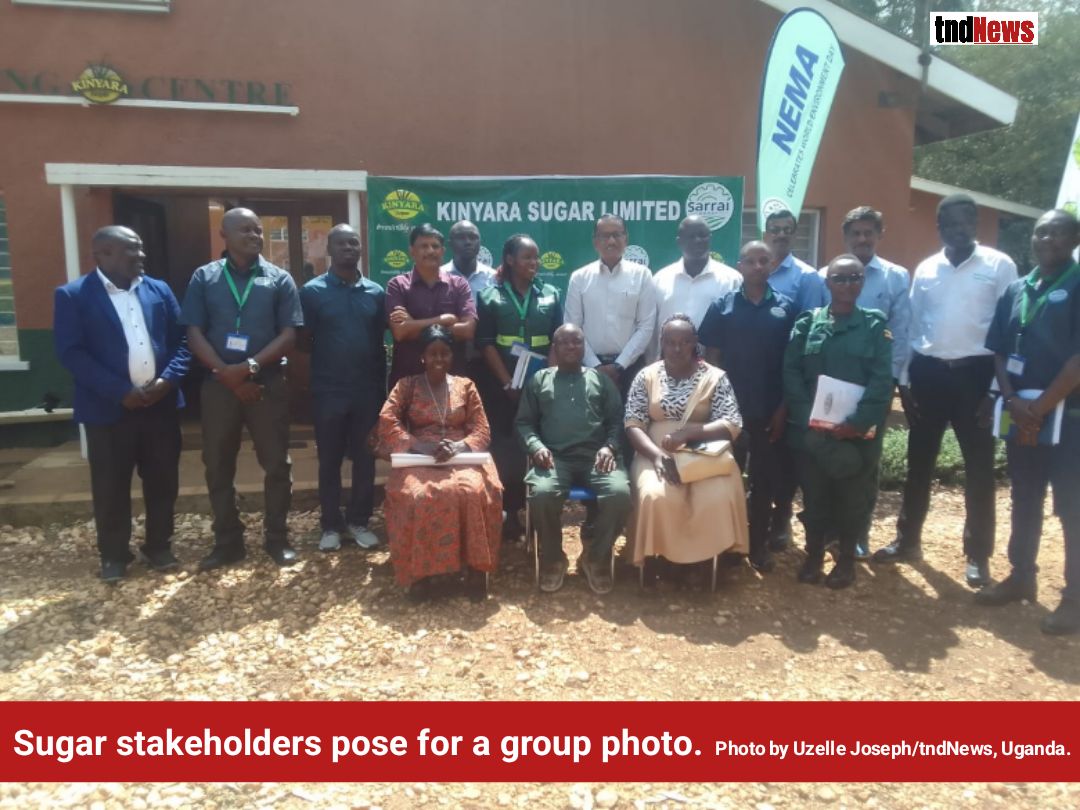
Akweteireho made the remarks on Wednesday, October 28, 2026, at Kinyara Sugar Works premises during a wetland conservation sensitisation meeting organised by the National Environment Management Authority (NEMA) in collaboration with Masindi District Local Government, Kinyara Sugar Limited and other private sector partners.
Akweteireho said growing demand for land for settlement, agriculture, and socioeconomic development has increased pressure on the district’s natural resources.
He explained that Masindi previously had extensive natural forest cover and abundant wetland resources, but the situation had continued to deteriorate as human activities expanded.
According to Akweteireho, Bwijanga, Budongo and Pakanyi are among the sub-counties most affected by wetland degradation.
He also identified Kimengo and Kijunjubwa as areas experiencing increasing pressure on wetlands, particularly around the River Kafu catchment.
Akweteireho said the district had undertaken several initiatives to address the problem, including developing catchment management plans for the River Kafu and other water resource systems with support from the Ministry of Internal Affairs.
He added that the district was working with development partners and private-sector organisations, including Kinyara Sugar Limited, the Environment Conservation Trust of Uganda and the Jane Goodall Institute, to promote sustainable wetland management.
He said the interventions were intended to protect wetlands for the benefit of present and future generations.
Meanwhile, Christine Ainabwinona, the Assistant Commissioner for National Environmental Management Authority (NEMA) in the Albertine Graben, based in Hoima City, said the authority is working with district officials and other stakeholders to address wetland degradation in Masindi.
Ainabwinona said NEMA had earlier documented cases of wetland degradation in Bwijanga Subcounty involving individual sugarcane outgrowers.
She explained that the authority had previously inspected degraded wetlands in the area and issued environmental restoration orders to farmers found cultivating in protected areas.
The assistant commissioner warned that those who failed to comply could face enforcement action, including the removal of illegal developments or activities at their own expense, in accordance with the law.
Ainabwinona, however, identified limited public awareness of wetland regulations and inadequate enforcement capacity and transport among local government partners as some of the challenges affecting conservation efforts.
Robert Atugonza, the chairman of Masindi Sugarcane Growers Limited (MASGAL), acknowledged that some sugarcane farmers were cultivating in wetlands, describing the sensitisation meeting as an important step towards improving conservation.
Atugonza, however, called on the government to extend its conservation efforts beyond organised sugarcane growers, arguing that other agricultural activities also contribute to wetland degradation.
He said farmers and communities living near wetlands should be actively involved in conservation initiatives through sensitisation and community engagement.
Atugonza argued that communities that understand the value of wetlands would be better placed to protect them, reducing the need for enforcement interventions.
He added that sugarcane farmers supplying Kinyara were subject to contractual regulations that prohibit sugarcane cultivation in wetlands and require farmers to retain some land for food production.
Kinyara Sugar Limited Chief Executive Officer Ramalingam Ravi welcomed the engagement, saying environmental protection was important to the company’s agricultural operations.
He said the company recognised the need to protect ecosystems, support surrounding communities and promote sustainability throughout its sugarcane value chain.
Ravi pledged the company’s continued support and cooperation with NEMA and other stakeholders in future environmental conservation initiatives.
The meeting targeted Kinyara sugarcane outgrowers, focusing on sustainable sugarcane production and the protection of wetlands.
Discover more from tndNews, Uganda
Subscribe to get the latest posts sent to your email.