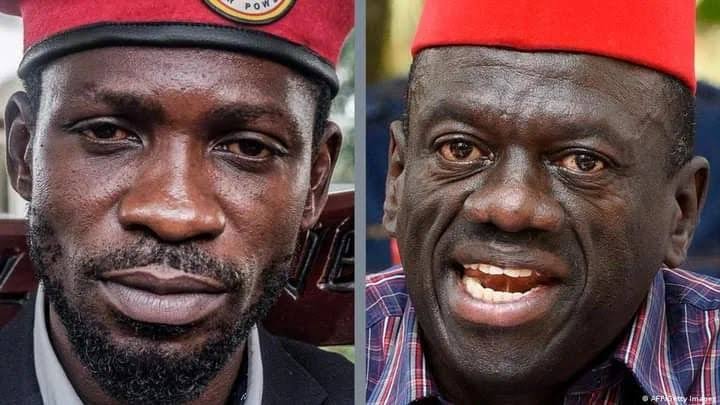
A British-American state witness, Andrew Wilson Orlando, has told court that opposition politician Dr Kizza Besigye allegedly questioned the seriousness of National Unity Platform (NUP) leader Bobi Wine as a credible alternative to President Yoweri Museveni.
Wilson made the claims while continuing his testimony in court concerning alleged activities aimed at destabilising and overthrowing the Ugandan government.
According to the witness, Besigye made the comments during a meeting at Riverside Apartments in Nairobi following Besigye’s arrest together with his co-accused, Obeid Lutale.
Wilson told court that Besigye described Bobi Wine as “unserious” when discussing his suitability as an alternative to Museveni.
However, the witness claimed that Besigye viewed Bobi Wine’s supporters differently, saying they were, in some respects, more serious than the leadership of the NUP.
Wilson further testified that Besigye did not consider Bobi Wine himself to be a credible alternative to Museveni, according to the evidence presented before court.

The witness also alleged that Besigye had concerns about the NUP’s internal structures and believed that government agents had infiltrated the opposition party.
According to Wilson, Besigye therefore considered the NUP unsuitable as a partner in what the witness described as efforts to overthrow Museveni’s government.
Wilson told court that Besigye also believed the Uganda Police Force would struggle to contain widespread civil unrest if such a situation developed across the country.
The witness further claimed that Besigye believed the army was divided and could therefore respond differently in the event of large-scale unrest.
Wilson also made claims concerning the alleged use of boda bodas as part of a strategy to create widespread unrest.
According to his testimony, Besigye allegedly believed that a campaign involving boda boda riders could spread across the country and become difficult for the police to contain.
The witness suggested that the alleged strategy was viewed as a possible way of creating conditions that could eventually lead to the overthrow of the government.
Wilson also gave evidence relating to an alleged US$500,000 in counterfeit currency, introducing another aspect of the case being heard by court.
He claimed that although the money had allegedly been presented as being connected to plans to destabilise Uganda’s economy, he was told that it was instead intended to purchase coffee from farmers in rural areas.
The witness made additional claims concerning the possible international reaction to any attempt to remove Museveni’s government from power.
According to Wilson, Besigye allegedly told him that, apart from France, other European countries would not oppose the overthrow of Museveni.
Wilson’s testimony comes as the prosecution continues presenting evidence concerning alleged plans and activities involving Besigye and his co-accused.
The evidence has included claims about political mobilisation, alleged strategies for creating unrest and discussions involving opposition figures and organisations.
The court is expected to consider the testimony alongside other evidence presented during the proceedings before determining the weight that should be attached to the various allegations.

Wilson’s claims about Bobi Wine, the NUP and Besigye have not independently established that the alleged plans took place as described.
The allegations attributed to Besigye remain claims contained in Wilson’s testimony, and Besigye and other individuals mentioned in the evidence have the opportunity to respond to the allegations through the ongoing court proceedings.
Wilson was continuing with his testimony as the final audio recording from Nairobi was played before court.
The proceedings are expected to shed further light on the prosecution’s allegations and the evidence it relies upon in the case.
The testimony has also brought renewed attention to relationships and disagreements among Uganda’s opposition figures, particularly concerning strategies for challenging the long-standing government of President Museveni.
For now, Wilson remains a key witness in the proceedings, with his account forming part of the evidence that court will consider as the case continues.
Discover more from tndNews, Uganda
Subscribe to get the latest posts sent to your email.