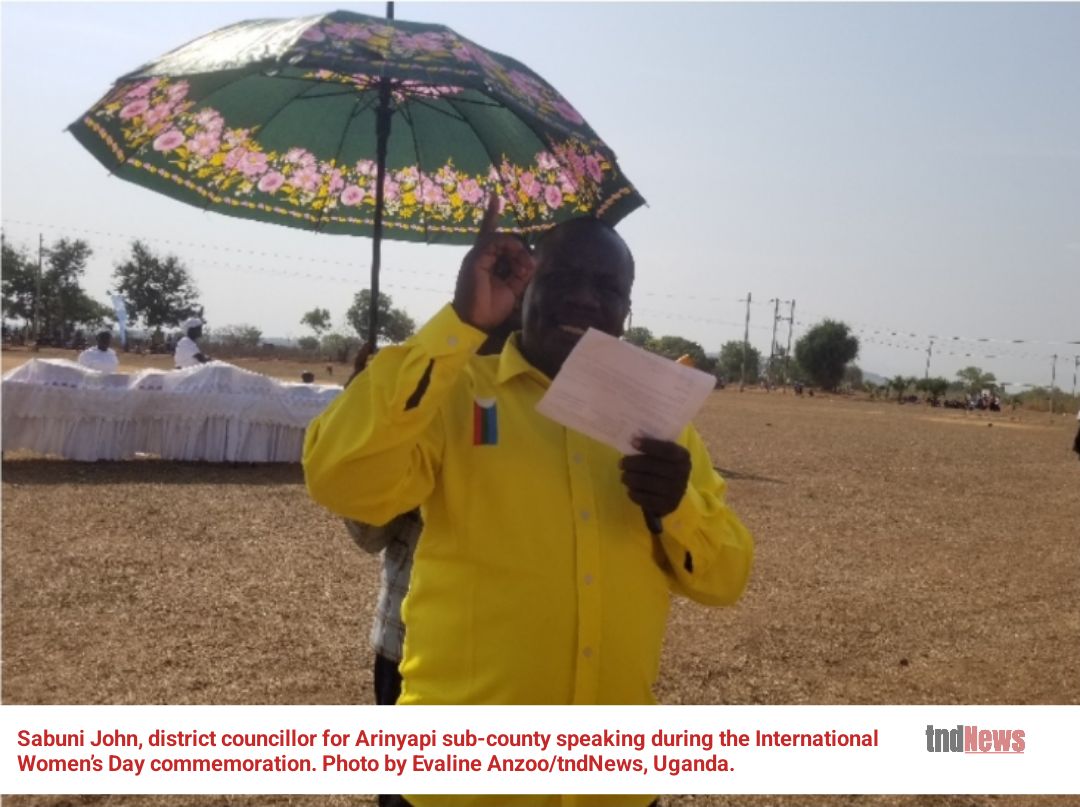
A section of men in Adjumani district has expressed growing concern over the way women empowerment programs are being implemented in the district.
These men claim that the initiatives have left many men feeling vulnerable within their own homes.
They argue that while empowering women is important for development, the current approach has, in some cases, created tension within families and communities.
According to Sabuni John, district councillor of Arinyapi sub-county, who spoke during the International Women’s Day in Arinyapi sub-county, some men now feel sidelined in decision-making at home, a situation they say has affected family stability and productivity.
“Gender-based violence between men and women, men suffer more. The challenge is that when you are beaten by your wife, you keep quiet. But innocently, these women, the energetic ones, are beating their husbands in the house,” he said.
“But as a man, you cannot open your mouth to say: ‘Yesterday I was terribly beaten.’ I’m requesting all the partners, please look into that seriously,” said Sabuni.
He claims that several women who have benefited from empowerment initiatives through government and non-governmental organisations have become financially independent but are no longer willing to cooperate with their spouses in managing households.
“Now, Mr. RDC, here is another thing we also need to address. Much as we empower and we continue to empower them, there is a challenge in the low productivity because most of these women are now using contraceptives which is causing a lot of issues at home,” he stressed.
The LC1 chairman of Arinyapi village, alleges that the situation has led to increased domestic conflicts, with claims that in certain households men are experiencing verbal and even physical abuse from their partners.
“Mr Guest of Honour, these days, if you go to homes, it is very difficult to find women at home, they spend most of their time in marketplaces, shops, causing fights between them and their husbands,” the LC1 stated.
Seseseko Dominic, another man, raised concern about the growing use of contraceptives among women, saying it has led to disagreements within families, particularly where couples have not jointly agreed on family planning decisions.
He argues that this has contributed to a decline in birth rates and strained relationships between partners.
According to the men, these challenges have also affected agricultural productivity in homes and communities, as family disputes sometimes prevent couples from working together on farming and other economic activities that sustain their livelihoods.
Community members are now appealing to the government and development partners implementing gender-related programs to review their strategies and ensure that both men and women are included.
They suggest that future programs should focus on family-centred approaches that promote dialogue, mutual respect, and shared decision-making between spouses to avoid misunderstandings and conflicts.
Local leaders in Adjumani district have also called for increased community sensitisation on gender equality, emphasising that empowerment should strengthen families rather than create divisions.
They stress that balanced empowerment programs that involve both men and women could help improve cooperation within households, boost productivity, and contribute to peaceful communities.
Residents hope that with proper engagement and guidance from authorities and partners, gender programs can continue to promote equality while maintaining harmony within families.
Discover more from tndNews, Uganda
Subscribe to get the latest posts sent to your email.