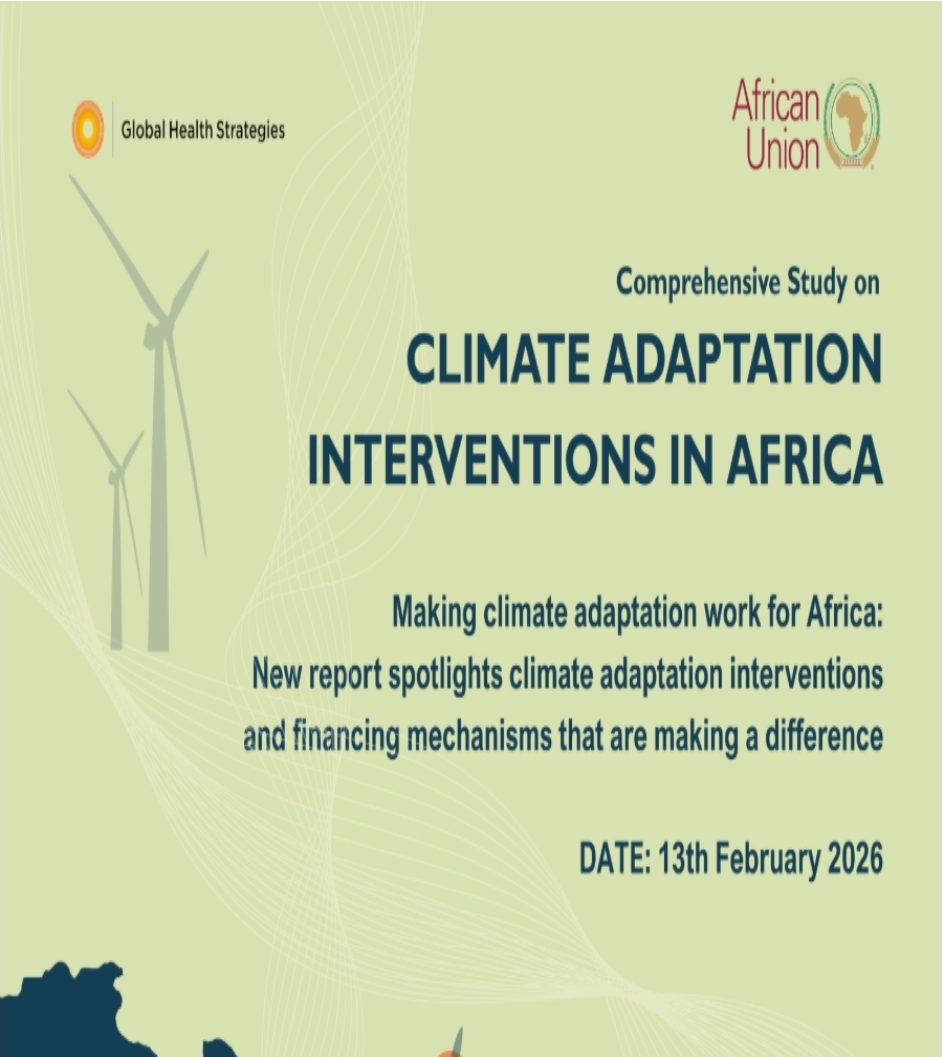
A new continental report reveals that locally led climate adaptation initiatives across Africa are delivering measurable results, but scaling impact will require major shifts in financing, governance, and investment priorities.
As climate impacts intensify across the continent, the report provides a comprehensive analysis of adaptation interventions across African Union Member States, identifying scalable models, financing mechanisms, and policy approaches that are strengthening resilience at national and community levels.
Key findings
Africa receives less than 10% of global adaptation finance, and under 20% of that funding reaches local actors, despite locally led solutions showing stronger and more sustainable outcomes.
The study mapped hundreds of locally led adaptation initiatives across Africa, but found progress remains uneven with East and West Africa leading due to stronger decentralization and governance systems, while Central and North Africa lag behind.
Analysis of 280 adaptation projects (2014–2024) showed:
● Gender inclusion in 68% of projects
● Youth participation in only 41%
● Indigenous knowledge integrated in just 23% — highlighting major equity and inclusion gaps.
● Adaptation initiatives are expanding but remain fragmented, donor-driven, and often small-scale, limiting long-term institutional impact and scalability across countries.
● Evidence shows that strong governance, local leadership, and decentralized decision-making drive successful adaptation more than technology alone.
Despite Africa contributing less than 4% of global emissions, the continent faces some of the highest adaptation risks and costs, reinforcing the urgency for locally led financing models.
Why this matters now
Launched during the African Union Summit, the report contributes directly to ongoing continental discussions on climate resilience, adaptation financing, and Africa’s collective climate priorities.
As AU Member States continue to advance Agenda 2063 goals and strengthen coordinated responses to climate risks, the findings provide timely evidence on how locally led adaptation approaches can accelerate implementation, improve accountability, and ensure climate finance reaches communities most affected by climate impacts.
The report also supports policy conversations around strengthening African ownership of climate solutions, scaling investment in adaptation systems, and aligning national efforts with regional frameworks to build long-term resilience across the continent.
Read the full report here.
Discover more from tndNews, Uganda
Subscribe to get the latest posts sent to your email.