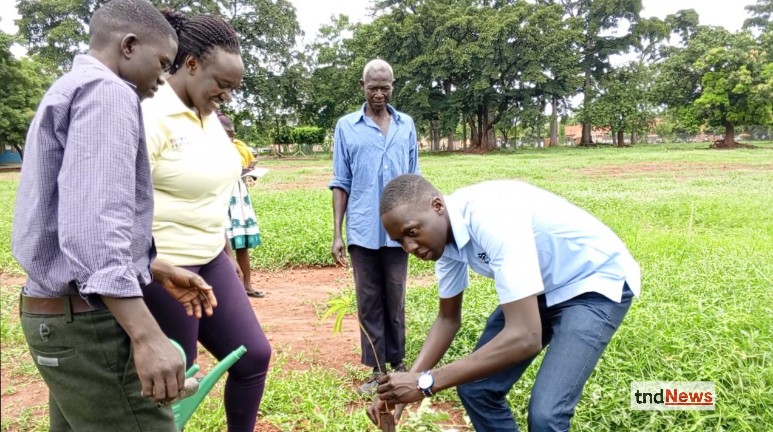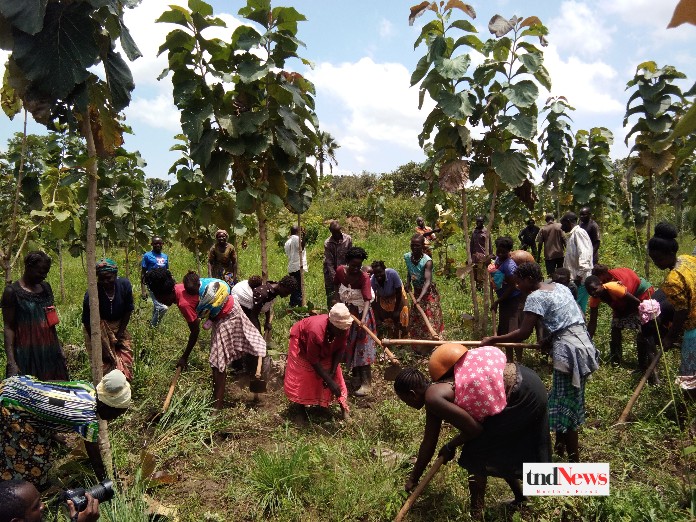
Lamwo | Residents of Palabek Gem sub-county in Lamwo district have begun planting indigenous tree species to mitigate environmental hazards caused by continuous deforestation.
With support from the Office of the Prime Minister (OPM) through the Development Response to Displacement Impacts Project (DRDIP), residents of Palabek Gem have planted over 6,000 tree seedlings, including eucalyptus, mahogany, pine, and teak trees.
DRDIP is a World Bank-funded project that aims to improve access to basic social services (health, education, water, and sanitation), create economic opportunities, and improve environmental management in refugee-hosting districts and settlements.
The project addresses the social, economic, and environmental impacts of long-term refugee presence in host communities and settlements through an interlinked investment component
The chairperson of the “Awic Pawena Central Tree Planting Project,” Charles Okwera, stated that they have mobilized efforts to raise awareness about the devastating effects of deforestation in the area.
“There is a need to embark on tree planting as part of efforts to conserve and protect the environment from further degradation caused by changing climatic conditions in the Acholi sub-region. These changes have led to declining food production, reduced rainfall, and increased temperatures in the region,” said Okwera.
Residents who gathered on Friday in Awic Pawena Central village, Pawena parish in Palabek Gem, emphasized that the region has experienced a drastic reduction in rainfall this year.

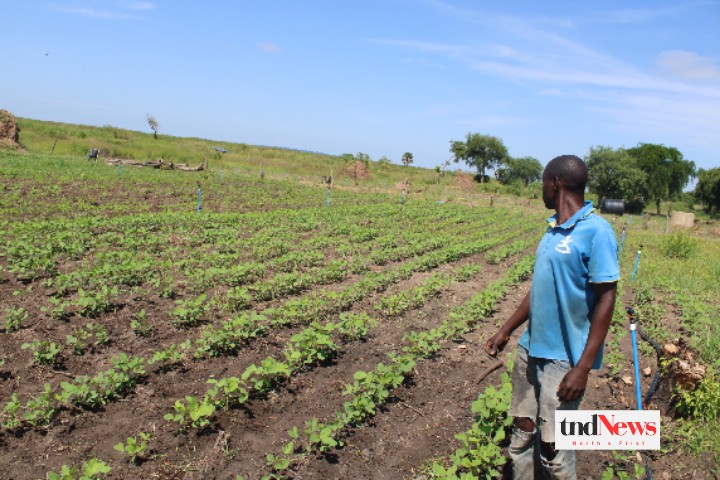
This has negatively impacted farming, posing a significant threat to people’s livelihoods, as most residents, who are predominantly farmers, struggle with insufficient rainfall affecting crop yield
Ongaya Jacob, a member of the Pawena Tree Planting Project, emphasized the need for district leadership and residents to collaborate in increasing tree cove
Similarly, Atero Nighty, another member, pointed out that Palabek Gem Sub County is battling the effects of environmental degradation. She expressed hope that the tree planting project could help reverse the damage.
“However, for a long time, the area has struggled to conserve forest reserves,” Atero explained.
Wilfred Nyeko, the DRDIP Desk Officer for Lamwo district, urged the community to either brace for climate change or face its consequences.
“The environmental component of this project aims to highlight the dangers of deforestation and the declining rainfall in Lamwo District and the Acholi sub-region. As you must have noticed, in recent years, rainfall has decreased, leading to extreme heat and rising temperatures,” Nyeko noted.
He further explained that these factors have significantly affected farming, the predominant occupation of Lamwo residents.
“You will also agree that the use of trees for domestic purposes exposes the environment and the community to health hazards. So, we are campaigning to raise awareness about these dangers while also promoting the use of alternative energy sources such as gas in homes,” Nyeko disclosed.
Martin Anywar, Kitgum District Forest Officer, praised the Awic Pawena group for their tree-planting initiative, emphasizing that it is an effective way to conserve the environment.
He also urged the government to resolve disputes over forest reserves in order to promote reforestation efforts.
Anywar emphasized that the National Forestry and Tree Planting Act of 2003, which requires the planting of at least two trees before cutting down one, has been poorly implemented for nearly two decades.
This has resulted in the harsh climatic conditions currently experienced in the Acholi sub-region.
“Embarking on tree planting is the responsibility of every community in the region to help restore the lost nature caused by activities such as charcoal burning and logging,” Anywar said.
In 1990, the Acholi region had 104,641 hectares of protected forest cover under the National Forestry Authority (NFA).
However, by 2020, this had dwindled to 24,000 hectares, contributing to 34% of the land being bare, according to a report by the NFA.
Some districts in northern Uganda, including Agago, Kitgum, and Lamwo, have experienced extreme heat waves, with temperatures reaching 42°C as of March 2022. This is significantly higher than previous years’ temperatures, which ranged from 18°C to 22°C.
The residents of Palabek Gem remain committed to restoring their environment and combating climate change through their tree-planting efforts.
By Vincent Kaguta