From Alebtong to Buganda, new research reveals that joy is not tied to wealth, and why Uganda may need a Ministry of Happiness to secure its future well-being.
A few years ago, between 2017 and 2020, I had the privilege of supervising a PhD student from the University of Edinburgh, Stephen McConnachie. His research was as fascinating as it was unconventional: he was conducting an ethnographic study on happiness in Uganda, focusing on Buganda under the theme: “Wellbeing in Buganda: The Pursuit of a Good Life in Two Villages.”
As his supervisor, I was both intrigued and challenged. Happiness is not a concept we often measure in Uganda, nor one we consider a serious subject for research. We talk endlessly about poverty, disease, infrastructure, politics, and development, but rarely about happiness.

Stephen’s work lingered in my mind, and in 2018, I decided to conduct a small study of my own in Lango sub-region to satisfy a growing curiosity. Together with colleagues at Global Health Network (U), we looked into levels of happiness across different districts.
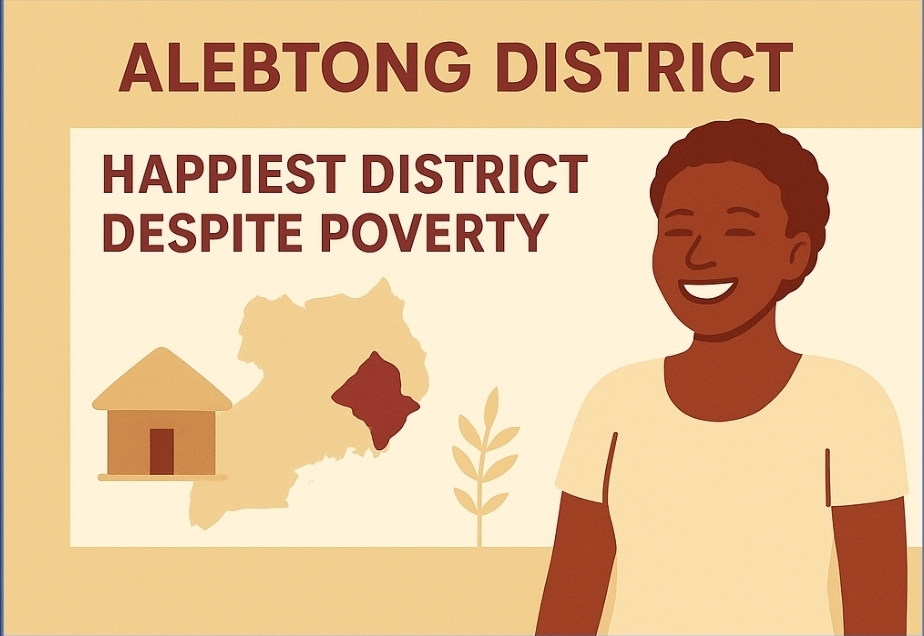
What we found in Alebtong district was astonishing. Despite having some of the highest poverty rates in the region, the people of Alebtong consistently reported greater happiness than their peers in better-off districts like Lira and Oyam. In other words, poverty did not erase joy.
I remember sitting under a mango tree in Abako sub-county, speaking with a grandmother who told me, “Doctor, we are poor, but when we sit together, laugh, and share what little we have, our hearts are full. That is our wealth.” Her words have never left me.
The findings from Alebtong challenged a common assumption, that wealth automatically translates to happiness. In fact, international evidence shows otherwise. The World Happiness Report 2023, which surveys 137 countries, found that some of the richest nations also grapple with loneliness, depression, and declining social trust.
Conversely, countries with modest incomes but stronger community bonds often rank higher on happiness indices. Finland, for example, has consistently topped the global happiness rankings, not because of extraordinary wealth, but because of strong social support systems, equality, and a culture of trust.
The contradiction between happiness and wealth is also evident closer to home. Uganda’s economy has grown steadily over the past two decades, yet ordinary people often report declining satisfaction with life. Rising inequality, youth unemployment, and family breakdowns erode the social fabric that sustains joy. On the other hand, communities like Alebtong remind us that laughter, solidarity, and meaning can thrive even in material scarcity.
Why does happiness matter? Science is increasingly clear: happiness is not a luxury; it is a health determinant. Studies have shown that happier people live longer, healthier lives. To put it starkly, an unhappy person may die at 40, while a happier peer under similar living conditions could live to 50 or beyond. Happiness lowers stress, strengthens immunity, reduces the risk of chronic diseases, and enhances productivity.
From an economic perspective, happier populations are more innovative, cooperative, and resilient, fueling national prosperity. Some governments have already recognized this. In 2016, the United Arab Emirates created a Ministry of Happiness, tasked with aligning national policies with well-being. Bhutan famously measures “Gross National Happiness” as a more important indicator than GDP.
In New Zealand, the government introduced a “Wellbeing Budget” to prioritize mental health, child welfare, and social cohesion. These countries are proving that happiness is not fluff, it is policy.
Uganda cannot afford to ignore this. Imagine if we had a Ministry of Happiness, dedicated to promoting community well-being, mental health, cultural pride, and social connection. Imagine if every district had a Department of Happiness, ensuring that development was not only about roads and dams, but also about the quality of life. Imagine if government programs measured success not just by shillings spent, but by the smiles on people’s faces.
This is not as far-fetched as it sounds. Our culture already values joy. From the vibrant dances of Buganda to the folk songs of Lango, from weddings to communal harvests, we celebrate togetherness. What we need is to institutionalize this wisdom, to treat happiness as a national priority, as important as health or education.
In the words of the grandmother from Abako, happiness is our hidden wealth. It is time for Uganda to recognize it, nurture it, and measure it. If we truly want to build a healthy, prosperous Uganda, we must stop treating happiness as a luxury and start recognizing it as a necessity.
Poverty reduction programs, employment schemes, and infrastructure projects will mean little if Ugandans live longer lives of misery. As the evidence shows, a happy Uganda will not only be healthier, it will also be wealthier.
The time has come to bring happiness to the center of our national vision.
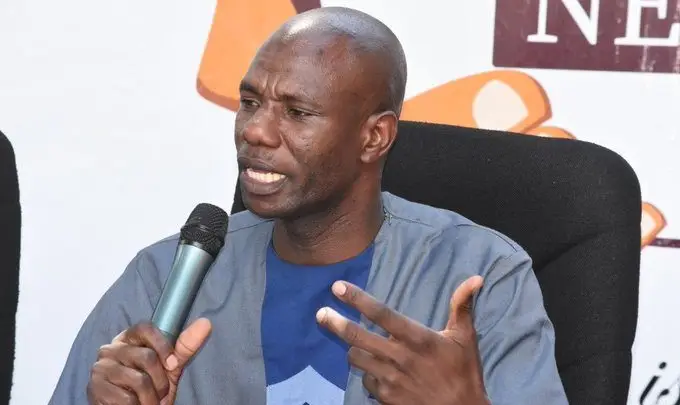
Dr. Bob is a senior global health and development leader with over 23 years of experience designing, managing, and evaluating multi-sectoral health programs across East and Southern Africa. He’s tndNews’ Senior Resident Columnist.
Discover more from tndNews, Uganda
Subscribe to get the latest posts sent to your email.