Gulu City | Journalists in northern Uganda have been urged to prioritise issue-based reporting during the upcoming election season, in an effort to promote informed civic participation and peaceful democratic processes.
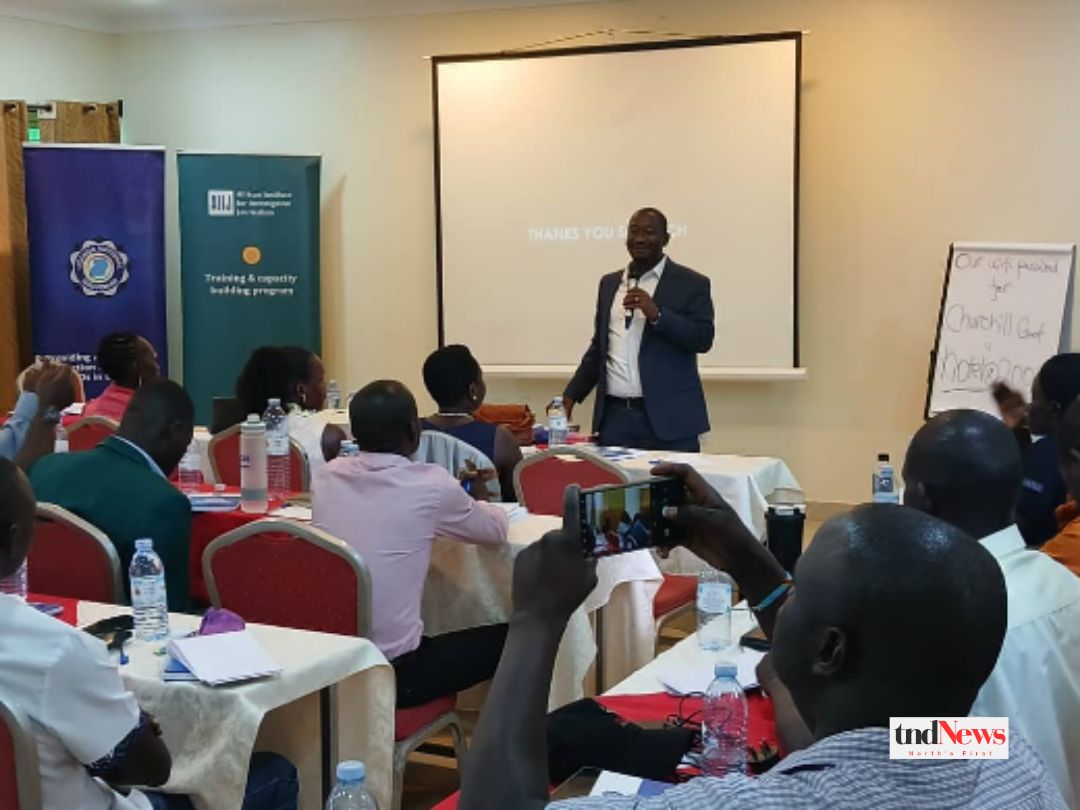
The call came during a one-day capacity-building training at Churchill Court in Gulu City. The African Institute of Investigative Journalism (AIIJ) organised the training in collaboration with the Uganda National NGO Forum, bringing together media practitioners from across the region.
Members of the Fourth Estate were trained in responsible and ethical election coverage, with a focus on amplifying stories that affect everyday citizens.
The facilitators emphasised how important the media is to influencing public opinion and bolstering democracy. Solomon Serwanjja, Executive Director of the African Institute for Investigative Journalism, stated that most politicians take journalists for granted, and he urged journalists to make the upcoming election memorable.
“For a long time we’ve let our politicians take us for granted as the media because we just push their propaganda and narratives. We push their politics we push their slogans, we push their content out.
“I think this election, we have to be alive to the fact that it’s an opportunity for us as journalists to start a conversation around issue-based politics rather than politicking,” he said. “I know it’s a political season, but it is important that we go beyond the sloganeering that is used during elections to address critical issues to help the electorate make informed decisions.”
He added: “We need to make sure that we put their feet to the fire and ask them uncomfortable questions, hard questions to support the electorate to make inform decisions based on issues and not sloganeering.”
Serwanjja, the lead facilitator, encouraged journalists to use various fact-checking tools, citing the dangers of misinformation. “We live in an era where there’s a lot of fake news and deep intelligence giving out a lot of false information. This is a very thin line between the truths these days, especially with artificial intelligence coming into play.”
We need to do fact checking, he guided. “One of the core fundamentals of journalism is accuracy and is it the truth?”
Opio John Paul, a journalist from Arua One FM owned by Vision Group, thanked the training organisers and promised to put the skills they learnt to good use.
“I’m very happy for this training organized by Uganda NGO Forum in partnership with AIIJ. It’s one of the best things to me especially this election period time.
“Most of us as field reporters were being targeted and a number of people don’t know our role especially the safety part, where we are encouraged to also take care of ourselves. We need to know that no stories worthy our life or my life.”
“So, this is something very important with a short documentaries, the videos we’ve watched, you really know that yes, as a journalist, I must be careful, especially this time of election. And to me, my take home is that I should take care of myself: that is safety first,” Opio said.
Winne Lenia, chief editor of Radio Voice of Life in Arua City, stated that the training has empowered her and that she intends to apply the skills to her media house.
“This training, particularly, has empowered me in person and I think it is getting to the media house that I’m serving too.
“Looking at the elections that are coming, I’ve been thinking of how I am going to do this because it’s the first time I’m getting to cover election from the editorial position. And I have really been empowered. I’ve taken a lot of skills and as female journalist, yes,” Lenia said.
“It has been emphasized that we usually fear and we are always the victims. So, I encourage female journalists who are not here but opting to cover these elections on how to conduct themselves ethically. I don’t deny the fact that we face a lot of challenges in the field, be it gender, you know a lot of it.”
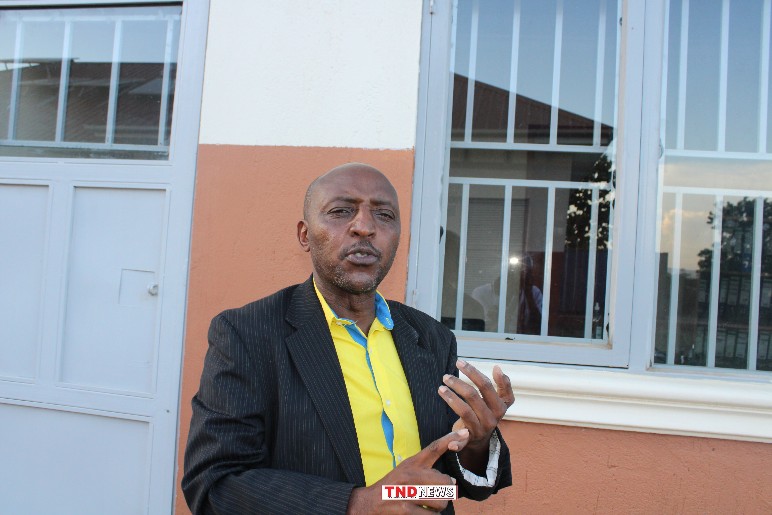
In his closing remarks, Moses Mulindwa of the Uganda National NGO Forum emphasised the importance of collaboration between the media and civil society, promising that the NGO forum would continue to support journalists.

“Much as election it’s period, it doesn’t mean that other human rights issues will stop. We don’t want you to pay a deaf ear to this. There will still be issues to do with unlawful land evictions, there will be children still suffering, and we want these stories to still come out.
“The whole thing shouldn’t just be elections as if nothing else is happening in the community,” Mulindwa said, adding: “And I promised as NGO forum, we shall continue to support you journalists in different ways that you may need.”
As Uganda prepares for its next election cycle, Gulu’s message is clear: the media must rise to the challenge and place people, not politics, at the centre of the story.
Discover more from tndNews, Uganda
Subscribe to get the latest posts sent to your email.