Alebtong | The fight against corruption in Alebtong district has gained renewed urgency following a series of coordinated high-level engagements led by the Office of the Inspectorate of Government (IGG).
Over a two-day period this month (May) 2025, the IGG organized strategic meetings and community dialogues aimed at exposing, confronting, and addressing systemic corruption, particularly in public service recruitment and resource allocation.
The campaign began with a pivotal meeting held on Tuesday, May 20, 2025, at the Alebtong district council hall. This engagement brought together key state actors, including district leaders, religious and cultural representatives, and civil society stakeholders.
The discussions centered on irregular recruitment, bribery, and the general decline in public service delivery due to mismanagement and corruption.
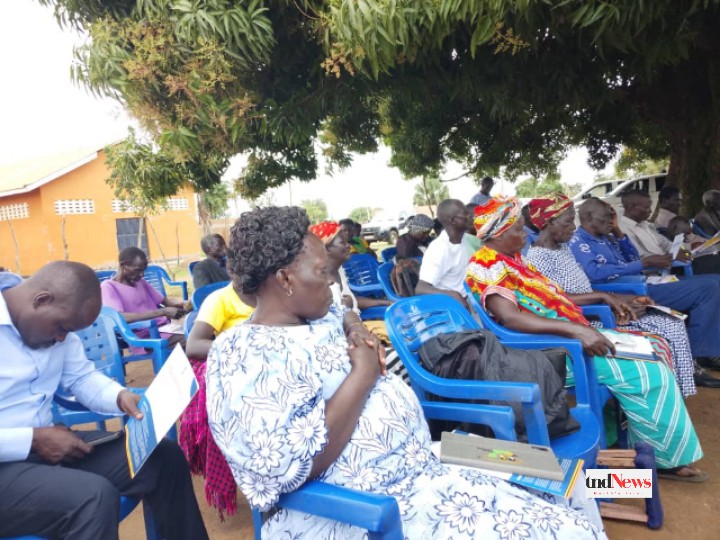
The series of events concluded on Wednesday, May 21, 2025, with a community baraza, a public dialogue held at Aloi town council grounds, where ‘ordinary citizens’ were given a platform to voice their grievances and suggestions.
The meeting at the district hall opened with a detailed address by Mary Mable Nakajooba Ssebagala, the Principal Inspectorate Officer. She emphasized the IGG’s constitutional mandate under Article 225 of the 1995 Constitution of Uganda, which empowers the office to promote transparency, fight corruption, and foster good governance across all levels of public administration.
Ssebagala expressed concern over the estimated shs10 trillion lost annually to corruption in Uganda, a figure that starkly illustrates how deeply the vice has become a problem in the country’s institutions.
According to Ssebagala, corruption has not only drained public funds but has also led to the deterioration of essential public infrastructure, such as health centers and schools. She pointed out that many schools have collapsed due to shoddy work, with corrupt officials often colluding with unscrupulous contractors.
Ssebagala also called attention to the growing influence of tribalism and nepotism, which she said had replaced meritocracy and crippled the integrity of public service delivery.
She urged all public officials to declare their wealth as required by the Leadership Code Act, describing the exercise as a crucial step in the pursuit of accountability and transparency.
The open discussions that followed her address gave rise to a wave of candid testimonials and urgent appeals from various stakeholders.
Santa Angela, former councilor for Ngetta and Adekokwok sub-counties, Lira district, questioned whether the IGG had any effective mechanisms to combat the widespread practice of demanding bribes from job applicants.
She also voiced concerns where applicants were coerced into paying money to secure positions within public institutions, lamenting the moral and social decay this has caused.
Dr. Tonny Odung, the Alebtong District Health Officer, commended the IGG for taking proactive steps to restore integrity in public service.
He, however, emphasized the need for laws to be applied equally to both bribe takers and givers insisting that those offering bribes should face legal consequences just like the public officials who solicit them.
District Police Commander SP Mwesigwa Joshua, addressed the issue of police bond, which has been the subject of numerous public complaints. He reminded the attendees that bond is a constitutional right and should never be commercialized.
According to him, the Police Standards Unit (PSU) will eventually launch investigations into allegations that police officers were charging money in exchange for granting bond.
He clarified that the legal framework provides for the detention of juveniles for no more than 24 hours and adults for no more than 48 hours, calling for public education on this matter to dispel misconceptions.
However, the most explosive remarks came from the Resident District Commissioner, Mathias Lutwama. He launched a scathing attack on the District Service Commission (DSC), accusing it of gross irregularities in the recent recruitment exercises.
Lutwama alleged that qualified candidates were deliberately dropped from the shortlist without justification, while others were mysteriously re-listed for positions they had previously failed to qualify for.
He reported that some candidates had allegedly paid up to shs200,000 to receive appointment letters. According to Lutwama, the entire recruitment process was compromised, riddled with favoritism and corruption.
In response, Amos Olal Odur, chairperson of the District Service Commission, vehemently denied the allegations.
Speaking to tndNews, Odur called on CAO Franko Olaboro to publicly clarify why names of successful candidates were rejected despite meeting all criteria.
He maintained that the Commission had not solicited or accepted any bribes, and dismissed the accusations as politically motivated or based on misinformation.
Alebtong district boss, David Kennedy Odongo, expressed concern that the ongoing recruitment for the 2024/2025 financial year had already been tainted by irregularities.
He affirmed his refusal to support the appointment of unqualified individuals and called for transparency and adherence to merit during hiring.
The Chief Administrative Officer, Franko Olaboro, assured the participants that Alebtong District had established internal mechanisms to ensure accountability.
These include regular senior management meetings, the formation of an internal audit unit, and the implementation of a rewards and sanctions committee to monitor employee conduct and ensure adherence to ethical standards.
Following this high-level meeting, the IGG officials convened a separate session with grassroots leaders and local community members on the morning of Wednesday, May 21, 2025, in Aloi Town Council. This meeting provided further insights into the extent of the corruption problem in Alebtong.
A local resident, Lillian Akello, expressed her frustration with the recruitment process, which she described as secretive and biased. She alleged that “kickbacks” were being solicited by certain individuals within the DSC in exchange for jobs.
This, she said, had made it difficult for genuinely qualified local residents to secure employment.
Retired Superintendent of Prisons, Anthony Opio, delivered a sobering assessment of the district’s employment practices. He described the recruitment process as one of the worst in the district, claiming that positions were often awarded to outsiders despite the presence of qualified locals.
He gave an example of a group of teachers who were recruited over a year ago but had yet to receive their appointment letters.
According to Opio, the CAO had failed to publicly display the list of recruited individuals on the district notice board, forcing interested parties to obtain the information directly from his office, which raises suspicions of foul play.
He appealed to the government to ensure that all individuals involved in bribery, whether as givers or recipients, are prosecuted equally.
Once again, Mary Mable Nakajooba Ssebagala addressed the audience, elaborating on the importance of wealth declaration among public officials. She explained that such measures help to promote transparency and ensure public trust.
Regarding the issue of salary disparities, Ssebagala acknowledged the challenge but clarified that it is a policy matter currently under review by the central government, with proposals already submitted to the president for harmonization.
She also urged the District Service Commission to display the list of recruited individuals in a public space as a means of restoring public confidence and ensuring that the recruitment process is open to scrutiny. She assured residents that the IGG is committed to investigating all allegations of corruption and taking appropriate legal action.
Alfred Atulinde, the Regional Inspectorate Officer from the Lira Zonal Office, provided the community with a detailed overview of the functions and responsibilities of the IGG.
He explained that the IGG’s mandate includes combating corruption by investigating and prosecuting public officials involved in illegal activities.
Additionally, the office promotes good governance by enforcing ethical conduct, encouraging accountability, and upholding the rule of law.
He further noted that the IGG is responsible for enforcing the Leadership Code Act and educating the public on the importance of integrity in governance.
Atulinde concluded by urging residents to report any form of corruption, emphasizing that the success of anti-corruption efforts relies heavily on community involvement and vigilance.
Recommendation
Several key recommendations were made during the sessions. First, the District Service Commission was asked to immediately make public all recruitment results by displaying them on official notice boards.
Secondly, the CAO’s office was advised to strengthen internal audits and accountability systems to enhance transparency.
The IGG was also called upon to ensure that both givers and takers of bribes face the full force of the law, thereby setting a deterrent precedent.
Furthermore, Alebtong people were encouraged to actively participate in the fight against corruption by reporting cases through IGG hotlines, community dialogues, and whistleblower protections.
Finally, there was a collective call for the central government to review and strengthen laws surrounding public sector recruitment and the issuance of police bonds to close existing legal loopholes.
The Inspectorate of Government’s recent activities in Alebtong District have sparked a much-needed dialogue around integrity, justice, and institutional accountability. From top-level government officials to local residents, there is a growing consensus on the urgent need for reform.
While these engagements mark a significant step forward, the real challenge lies in follow-through. Sustained political will, timely prosecutions, effective public oversight, and protection for whistleblowers will be crucial in ensuring that the efforts made during these engagements do not fade into mere rhetoric.
If properly implemented, the reforms and recommendations generated from these meetings could transform Alebtong into a shining example of anti-corruption progress in Uganda, one built on transparency, fairness, and the rule of law.
Discover more from tndNews, Uganda
Subscribe to get the latest posts sent to your email.