Adjumani appeals to disaster minister Onek over refugee-host community conflicts
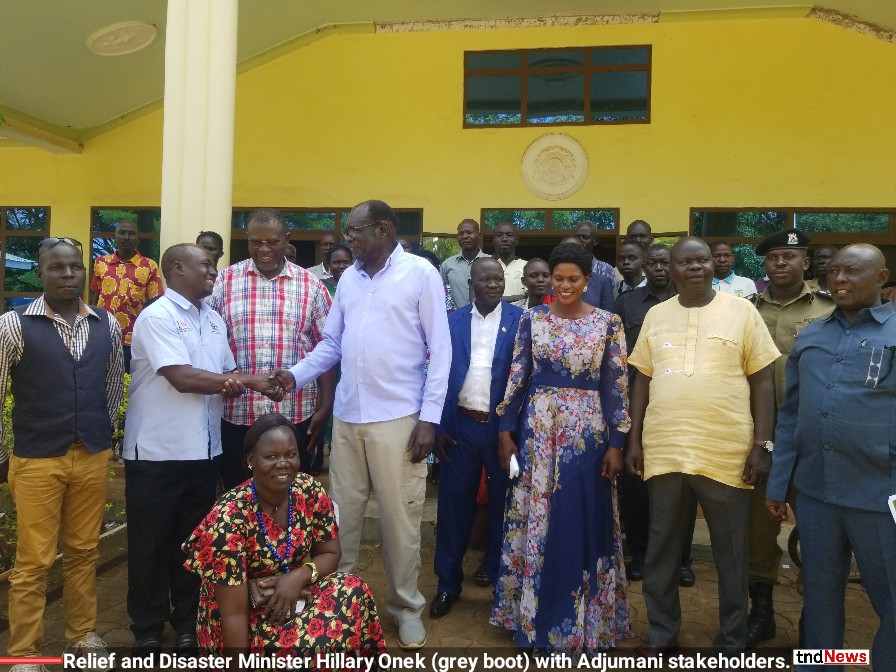
Adjumani | The Adjumani district leadership has urged Hillary Onek, Minister for Relief, Disaster Preparedness, and Refugees, to intervene in the district’s escalating conflicts between refugees and host communities.
These disputes, fueled by competition for natural resources and security concerns, have strained the two groups’ previously harmonious relationship.
In recent weeks, district officials have faced conflicts over grazing, settlement, and farming land, as well as allegations of armed robbery and theft.
Four refugees were recently arrested in connection with these crimes, three of whom were brought to court.
Adjumani district chairman Ben Anyama expressed the district’s concerns to Minister Onek, emphasizing the role of illegal firearms in escalating tensions.
“The uncontrolled inflow of guns from South Sudan through porous borders is destabilizing the peace and stability in Uganda. We urge the minister to negotiate with the South Sudan government to curb the misuse of firearms,” Anyama said.
Refugee leader Amos Kong of Ayilo II Zone blamed the conflicts on insufficient land allocated to refugees for farming and grazing.
“We are only given 30 by 30 meters of land per household, which is not enough for farming or grazing animals. This scarcity forces our animals to stray into the host community’s crops, leading to conflict,” Kong explained.
Jesca Ababiku, an Adjumani woman Member of Parliament, recounted how refugees and host communities coexisted peacefully for over 40 years.
However, she stated that the influx of refugees bringing livestock from South Sudan has disrupted this harmony, as animals stray into host community lands, destroying crops and causing disputes.
Minister Onek’s response
Minister Onek praised Adjumani’s leadership and host communities for their hospitality, and he encouraged refugee leaders to educate their communities about Uganda’s refugee policies.
“Uganda is the largest refugee-hosting country in Africa, with over 1.74 million refugees and asylum seekers, 79% of whom are women and children with unique needs.
“We have allocated land for 91% of refugees to live in settlements while 9% reside in urban areas. Despite our open-door policy, refugees must respect the host communities and Uganda’s laws,” Onek emphasized.
Way forward
The Minister promised to work with local and international partners to address these issues. He also encouraged the Office of the Prime Minister to review land allocation policies to better meet the needs of both refugees and host communities.
The district leadership and refugee leaders agreed to work together to resolve disputes through dialogue and promote peaceful coexistence.
They did, however, advocate for immediate interventions, such as increased border security, improved land allocation policies, and increased community sensitization efforts.
Discover more from tndNews, Uganda
Subscribe to get the latest posts sent to your email.