For five-and-a-half-years, Jennifer (name changed to protect identity) believed that every month she spent working in Saudi Arabia brought her closer to the life she had imagined for herself in Uganda.
A graduate of Kyambogo University with a Bachelor’s degree in Accounting and Finance, Jennifer traveled to the Gulf in search of financial independence and her ambition was straightforward; earn enough money to acquire land, build a family home and return to Uganda with something permanent to show for years of sacrifice.
She sent money home, invested in construction and watched her dream take shape from thousands of kilometres away. Unfortunately, when she returned to Uganda in September 2026, her dream was still trapped inside a hollow structure.
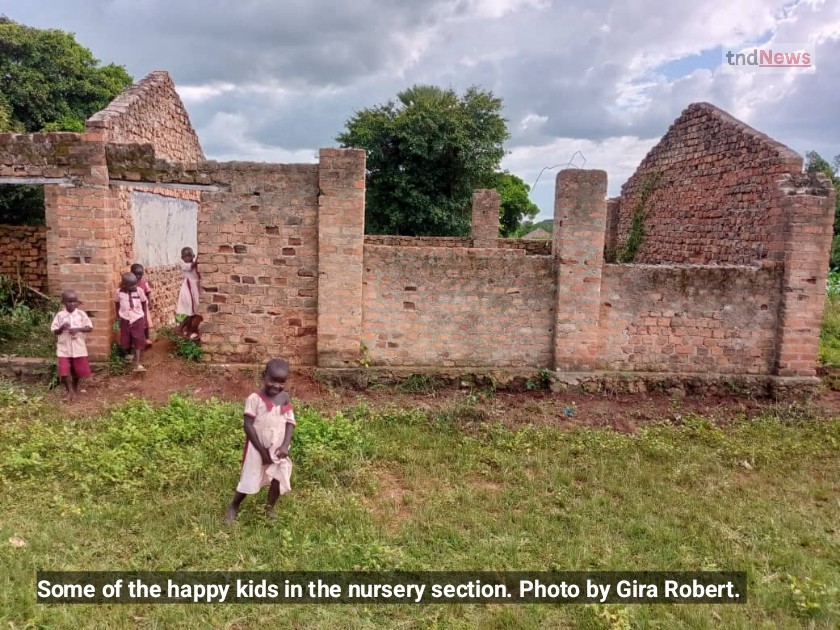
The three-bedroom house she had hoped would provide security and dignity was unfinished and its windows had no proper fittings.The rooms lacked doors, and the floors remained unpaved.
And when rainwater entered through unsealed sections, she gets more than wet. She also became vulnerable to intruders with the absence of main doors.
Additionally, without enough money to rent alternative accommodation, Jennifer moved into the unfinished building.
“I found it unsafe to go back to my parents’ place at my age, I did not have money for rent, so I decided to come and live inside this open structure,” she said.
Her return was not the conclusion of a successful overseas employment journey and it was the beginning of another struggle on rebuilding a life after years of work abroad failed to deliver the security she had pursued.
Jennifer revealed that her employment in Saudi Arabia ended abruptly after she demanded her monthly salary and she alleges that a relative of her employer accused her of theft, leading to her arrest and transfer between police stations before she was taken to a deportation centre in Riyadh.
She further revealed that she was deported without receiving the money she believed she was owed and her account could not independently establish the circumstances of the accusation, the handling of her case or the legal basis of her deportation.
However, her experience raises questions that are increasingly central to Uganda’s labour migration debate of what happens when a worker’s overseas employment turns into a crisis and who is responsible for ensuring that returning migrants do not come home with nothing.
Therefore, for Jennifer, the answer is visible in the unfinished walls of her house and for Uganda the question is much larger.
Uganda has developed a formal system for recruiting and deploying workers abroad, particularly to the Gulf, yet the growth of overseas employment has exposed weaknesses in recruitment oversight, worker protection, and access to justice and integration support.
Official statistics show that hundreds of thousands of Ugandans have been deployed abroad through registered recruitment companies and behind those figures are workers whose experiences range from improved livelihoods and successful investments to unpaid wages, abuse, deportation and financial ruin.
However, the challenge is no longer simply how to help Ugandans find jobs overseas, but it is how to ensure that those jobs are safe, legal, fairly paid and capable of delivering the opportunities workers were promised.
A migration boom measured in people, and not just remittances
Jennifer’s experience comes against the backdrop of a rapidly expanding labour migration programme that has become an important source of income for Ugandan households and foreign exchange for the country.
Uganda began its Labour Externalization Programme in 2005, establishing a formal framework through which recruitment companies could connect Ugandan workers to employers abroad.
The programme has since grown dramatically with Saudi Arabia emerging as the dominant destination for Ugandans seeking overseas employment.
Uganda Bureau of Statistics’ Annual Statistical Abstract 2024, drawing on Ministry of Gender Labour and Social Development records shows that 27,063 Ugandans were deployed abroad in 2023, down from 93,396 in 2022.
The figures reveal the scale of the programme and its gender imbalance and between 2019 and 2023, women accounted for 130.
Further, the 2025 National Migration Policy published by the Ministry of Internal Affairs provides a more recent picture of the programme and it records 293,973 workers deployed between 2016 and October 2024, including 248,568 women and 45,405 men with Saudi Arabia accounting for 238, 987 of those deployments.
Therefore, the figures demonstrates that, labour migration is not a marginal activity but rather it has bemigrationjor livelihood strategy particularly for women seeking employment in domestic work, hospitality and other service occupations.
However, the official statistics capture only workers processed through the formal recruitment system but not the informal systems.
The National Planning Authority’s National Development Report for FY2023/24 estimated that approximately 200,000 additional Ugandans had travelled abroad for work without being captured in the Ministry’s deployment database and it acknowledged that this makes it difficult to establish the actual number of Ugandans working overseas.
Therefore, workers who travel through informal arrangements may not have verified contracts, access to official pre-departure training or a recruitment company that can be held accountable when an employment relationship collapses.
Further, it also means that the scale of exploitation, premature returns and unpaid wages remains difficult to measure and for families, the decisions to migrate is often made long before a government statistic is recorded.
Thus, a young woman may be responding to household debt, unemployment or the need to support children and a young man may be seeking employment or an opportunity to accumulate capital for a business.
Further, the promise of a monthly salary paid in a stronger currency can make overseas employment appear to be the most realistic route out of poverty and yet the difference between a safe migration journey and a dangerous one often begins with the person who offers the job.
How Ugandans access jobs abroad
Uganda’s Ministry of Gender, Labour and Social, Development operates the External Employment Information System (EEMIS), a digital platform intended to improve the management of overseas employment and enable job seekers access vetted companies.
The Ministry’s External Employment Unit coordinates licensed recruitment companies, Uganda’s diplomatic missions, the Ministry of Foreign Affairs, migrant workers and other government institutions involved in the deployment process.
Under the Employment (Recruitment of Migrant Workers) Regulations, 2021, a foreign employer or recruitment agency must provide a job order identifying the available positions, required qualifications, proposed salaries and other employment conditions.
Accordingly, the job order is expected to undergo verification through the relevant Ugandan mission and approval by the Ministry before recruitment can proceed and the process also requires workers to receive information about their employment contracts, rights and obligations alongside pre-departure orientation.
In practice, a job seeker should be able to establish several facts before accepting an overseas position and the recruitment company must be licensed while the vacancy must be genuine and approved.
Further, the worker should know the employer’s identity, the destination country, the job description, the salary, the working hours, the accommodation arrangements and the conditions under which the contract can be terminated.
In February 2026, the government warned tour and travel companies against engaging in labour externalization without the necessary authorization.
Then, Minister of State for Labour, Employment and Industrial Relations Esther Anyakun revealed that some tour companies and individual agents were advertising overseas jobs on social media, collecting money from unsuspecting young people and failing to deploy them.
According to government, these requirements are intended to prevent a situation in which a person agrees to travel for one job but arrives abroad to discover that the work, salary or employer is different from what was promised.
However, the existence of a formal framework does not mean that every job seeker follows it.
She emphasised that only companies licensed by the Ministry of Gender are authorized to recruit Ugandans for overseas employment. Individual agents are not licensed to independently facilitate labour externalization.
Therefore, the warning highlights a growing challenge: social media has made it easier for fraudulent recruiters to reach people who may never have visited a licensed recruitment office.
A job advertisement promising a high salary, free accommodation and an immediate visa can circulate rapidly through WhatsApp groups, Facebook pages and personal networks.
For a desperate job seeker, the offer may appear credible because it comes from a friend, relative or someone who claims to have successfully travelled abroad.

The Ministry’s EEMIS platform provides a route for checking recruitment companies and accessing approved vacancies.
Thus, the crucial question is whether job seekers are being equipped to use these systems before they hand over money, passports or personal documents.
The recruiter’s responsibility: What licensed companies say
Recruitment companies occupy a critical position in Uganda’s labour migration system and they are the bridge between a worker seeking employment and a foreign employer looking for labour and their responsibilities extend beyond finding candidates and processing travel documents.
Further, they are expected to verify vacancies, explain contracts, prepare workers for employment abroad and respond when problems arise.
The Uganda Association of External Recruitment Agencies (UAERA), the industry body representing recruitment companies, has previously defended its role in protecting migrant workers.
In March 2022, the Office of the Prime Minister reported that UAERA chairman Baker Akatambira said the association did not condone the ill-treatment of migrant workers.
Akatambira said the association maintained contact with workers through supervisors in destination countries and provided training opportunities before departure.
“As UAERA, we constantly keep in touch with the labourers we recruit through our supervisors in the countries where they are deployed and also offer them training opportunities before they leave for work,” he said.
The association’s position reflects the industry’s argument that recruitment companies can help monitor workers and intervene when employment arrangements break down.
However, the effectiveness of those safeguards depends on whether workers can actually access assistance when they need it.
A worker employed inside a private household may have limited access to a telephone, little freedom to leave the premises and no practical way to contact a recruitment company.
The distance between Kampala and Riyadh, Doha or Dubai can make an intervention difficult, particularly where the employer controls the worker’s documents or communication.
The International Labour Organization has identified persistent weaknesses in Uganda’s recruitment oversight system.
A June 2026 ILO policy brief examining the registration, licensing and inspection of private employment agencies identified gaps in inspection capacity, informal recruitment, pre-departure training quality, overseas protection, complaints handling and coordination between institutions.
The findings suggest that the challenge is not simply the absence of regulations and it is the ability to enforce them throughout the migration journey and recruitment companies also face their own operational challenges.
An ILO policy brief published in August 2025 found that private recruitment agencies in Uganda, Kenya and Ethiopia experienced difficulties including lengthy processing times, which could exceed employers’ deadlines and undermine their operations.
When a job becomes a trap
For some Ugandans, the danger begins before they leave the country with unlicensed recruiters and informal brokers may advertise jobs that do not exist, promise salaries that are never paid or collect money from applicants before disappearing.
Others may arrange travel through routes that bypass official labour migration procedures and the risks become more serious when workers arrive in destination countries without valid employment documentation or are placed in jobs different from those they were promised.
The 2024 United States Department of State Trafficking in Persons Report on Uganda documented cases in which both legal and fraudulent recruitment agencies facilitated employment in the Middle East, where some Ugandans were subsequently exploited in forced labour.
The report identified domestic work, hospitality and construction as sectors in which Ugandan workers faced exploitation and it also documented concerns about passport confiscation, unpaid wages, excessive working hours and physical abuse.
Human trafficking is not limited to the movement of people across borders illegally and a person may travel through an authorised recruitment company and enter a country legally, yet later become a victim of trafficking if they are subjected to exploitation through coercion, deception or abuse of vulnerability.
Therefore, this distinction is important because many migrant workers assume that obtaining a visa or travelling through an established recruitment company guarantees their safety.
Further, a worker may have a valid visa but still be trapped in an abusive employment relationship and a contract may specify a salary, but the employer may withhold wages and a worker may retain a passport at departure, only to have it taken away after arrival.
In some cases, the employer’s control over a worker’s immigration status can make leaving an abusive workplace particularly difficult.
The United States Department of State has also reported allegations of Ugandan domestic workers being sold or transferred between employers in Saudi Arabia through online marketplaces.
Therefore, such practices demonstrate why labour migration must be managed as a continuing process rather than a one-time recruitment transaction and protection must begin before departure and continue throughout the worker’s employment, including when a contract ends or a worker is forced to return home.
The other side of migration: Opportunity, sacrifice and the return home
For many Ugandans, working abroad has provided an opportunity to earn incomes that would be difficult to obtain locally, support families, acquire property and finance education.
According to Uganda’s Ministry of Finance, the country received approximately $1.4 billion in diaspora remittances in 2024 and the money supports household consumption, education, healthcare, housing and investment and the economic contribution is significant, but remittances do not tell the whole story.
A worker may send money home consistently while living in poor conditions abroad. Another may return with savings but struggle to establish a business.
A third may lose everything after an emergency, an unpaid salary or an abrupt termination of employment.
For Jennifer, the financial consequences of her return are inseparable from the physical condition of her house and she had invested in an asset that was supposed to provide long-term security and instead, the unfinished structure has become her immediate shelter.
Her experience also highlights a problem that receives less attention than the initial recruitment process: what happens to workers when their overseas employment ends unexpectedly?
The answer often depends on whether they have savings, family support, access to legal assistance and the ability to find work in Uganda and for some returnees, the transition is manageable while for others, it can mean unemployment, debt, family conflict and psychological distress.
Thus, a returnee who spent years supporting relatives may face uncomfortable questions about why they have come home without the expected financial gains and those who return after abuse or deportation may also need medical care, counseling and assistance recovering unpaid wages.
The challenges are particularly difficult for women who return with children to support or who have experienced abuse in domestic employment.
The unfinished business of reintegration
Uganda’s response to labour migration has traditionally concentrated on recruitment, deployment and the regulation of employment agencies but the return of migrant workers is increasingly becoming a policy priority.
In March 2026, the Ministry of Gender, Labour and Social Development, with support from the International Labour Organization, convened a national consultation to develop a National Return and Reintegration Framework.
The consultation brought together government institutions, workers’ and employers’ organisations, private recruitment agencies, civil society organisations and migrant training institutions.
Participants identified unemployment, psychosocial stress and limited access to support services as major challenges facing returning migrants and they also acknowledged that Uganda lacked a comprehensive national framework for return and reintegration, leaving support fragmented across institutions.
The framework is intended to provide a coordinated approach to helping returnees access employment, skills development, social protection and livelihood opportunities.
An ILO labour market assessment published in February 2026 identified agribusiness, construction and digital trade as sectors with potential to absorb returning migrant workers.
The assessment also found that many returnees were interested in self-employment but faced barriers including insufficient capital and limited business training.
For Jennifer, such support could mean more than completing her house and it could mean recovering unpaid wages, accessing legal assistance, rebuilding her savings and finding a sustainable source of income in Uganda.
Ugandan missions abroad, recruitment companies and government agencies need to identify workers at risk of premature return and help them access assistance before their employment situations deteriorate and a worker facing abuse should not have to wait until deportation to receive support.
Equally, a person who returns after completing a contract should be able to access information about investment opportunities, skills recognition and employment in Uganda.
The ILO’s proposed framework provides an opportunity to establish a more systematic response.
The question is whether it will receive the resources and institutional coordination required to move beyond policy discussions.
What safe, regular and well-managed labour migration should look like
The International Labour Organization’s fair recruitment principles emphasize that recruitment should respect workers’ rights and protect them from exploitation.
In Uganda, the practical implications are clear and a safe migration system should begin with a verified job vacancy and a licensed recruitment company.
Workers should receive accurate information about their prospective employment, including salary, working hours, accommodation, insurance and the conditions for terminating their contracts.
Further, they should be able to examine and understand their contracts before signing receive copies and retain control of their personal documents and pre-departure orientation should go beyond explaining travel procedures.
Workers need to know how to contact Uganda’s diplomatic missions, report abuse, and seek medical assistance and access legal support in their destination countries.
Recruitment companies should maintain effective communication with workers after deployment, while employers must be held accountable for complying with employment contracts.
Government should strengthen inspection, complaints handling and coordination between the Ministry of Gender, the Ministry of Foreign Affairs, Uganda’s diplomatic missions and law enforcement agencies.
The importance of overseas protection is underscored by the United States Department of State’s 2024 Trafficking in Persons Report, which identified gaps in Uganda’s overseas labour monitoring capacity, including the limited deployment of labour attachés in diplomatic missions.
A well-managed system must also ensure that workers can leave abusive employment relationships without becoming undocumented or facing retaliation and it must recognize that migration does not end when a worker returns to Uganda.
The ability to recover unpaid wages, access counseling, obtain recognition for skills acquired abroad and rebuild a livelihood should be part of the protection system.
Thus, these safeguards are not merely administrative requirements and they determine whether migration becomes a pathway to opportunity or a cycle of vulnerability.
The economic pressures driving migration from Uganda are unlikely to disappear overnight and the National Planning Authority has described overseas employment programmes as a way of providing structured employment opportunities while the country works towards creating sustainable jobs through investment in agriculture, infrastructure, industry and tourism.
For many households, migration will continue to offer a practical route to financial independence but the promise of employment abroad should not be measured only by the number of people who board planes at Entebbe International Airport.
Therefore, it should also be measured by the number who receive the salaries they were promised, complete their contracts safely, return with savings and successfully rebuild their lives at home.

Discover more from tndNews, Uganda
Subscribe to get the latest posts sent to your email.