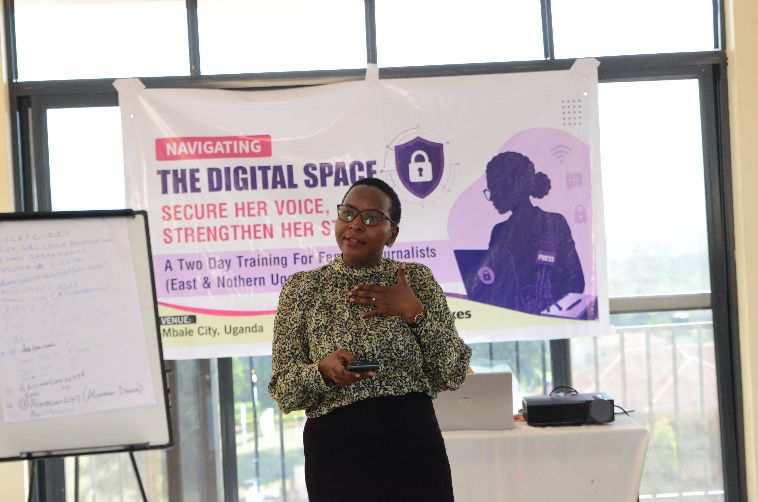
Mbale | For many female journalists in Uganda, the digital space has become both a powerful tool for storytelling and a source of intimidation.
Online harassment, cyberbullying, and digital threats continue to affect women in the media, often undermining their confidence, safety, and freedom of expression.
To address these challenges, the Uganda Media Women’s Association (UMWA), in partnership with the Finnish Foundation for Media Development (VIKES), organized a two-day digital safety training for female journalists from Northern and Eastern Uganda.
The training was held at Mountain Inn Hotel in Mbale City and focused on equipping participants with practical skills to protect themselves online.
For Fibie Masongole, a journalist with the Daily Monitor, the training came at the right time. She recalled facing various forms of online harassment, particularly during election periods when journalists often become targets of abuse and misinformation.
“I have experienced several online challenges, especially during elections. This training has given me practical knowledge on how to stay safe online and use digital platforms responsibly,” she said.
Patricia Alany Sedu, a radio presenter at Voice of Lango, noted that cyber harassment remains a common experience for many women working in media.
“As a social media handler, I am optimistic that a lot will change in my digital space,” she said, expressing appreciation to UMWA for creating a platform where female journalists can learn and share experiences.
The training also highlighted the importance of protecting personal and professional data. Desire Alimocan of Radio Pacis said she gained valuable skills in digital security, including creating strong passwords and adopting safe computer practices.
“I now understand how to secure my data from threats and attacks. Simple practices like using stronger passwords and logging out after using a computer can make a big difference,” she explained.
For Mwamin Nakasinga of IUIU Radio at the Islamic University in Uganda, the sessions provided practical knowledge on securing social media accounts through two-factor authentication and recognizing suspicious emails, links, and messages.
She encouraged fellow journalists to report abusive online accounts and harmful content to platform administrators to help create safer digital environments.
Speaking during the training, UMWA media trainer Laila Ndagire said digital safety is increasingly essential for journalists, particularly women who often face gender-based attacks online.
“We have equipped participants with practical skills on setting strong passwords, verifying information, protecting their online identities, and responding to digital threats. When journalists are safe, they can serve their communities more effectively,” she said.
Catherine Apalat, UMWA project coordinator and a staff member at Mama FM, said the training is part of a four-year programme implemented by UMWA and VIKES to promote media equality, rights, and inclusion.
She cited findings from a 2023 UMWA survey, which revealed that female journalists frequently experience cyber harassment while carrying out their professional duties online.
“Digital platforms offer many opportunities, but they also expose women journalists to unique risks. Our goal is to ensure they have the knowledge and tools needed to navigate these spaces safely and confidently,” Apalat said.
As journalism increasingly moves into digital spaces, the experiences shared by participants reflect a growing need for online safety awareness.
Beyond protecting personal data, digital security empowers journalists to continue informing the public without fear of intimidation, ensuring that their voices remain strong in shaping conversations that matter.
The training underscored a simple but powerful message: when female journalists are equipped to protect themselves online, they are better positioned to tell stories, amplify community voices, and contribute to a more inclusive and resilient media landscape.
Discover more from tndNews, Uganda
Subscribe to get the latest posts sent to your email.