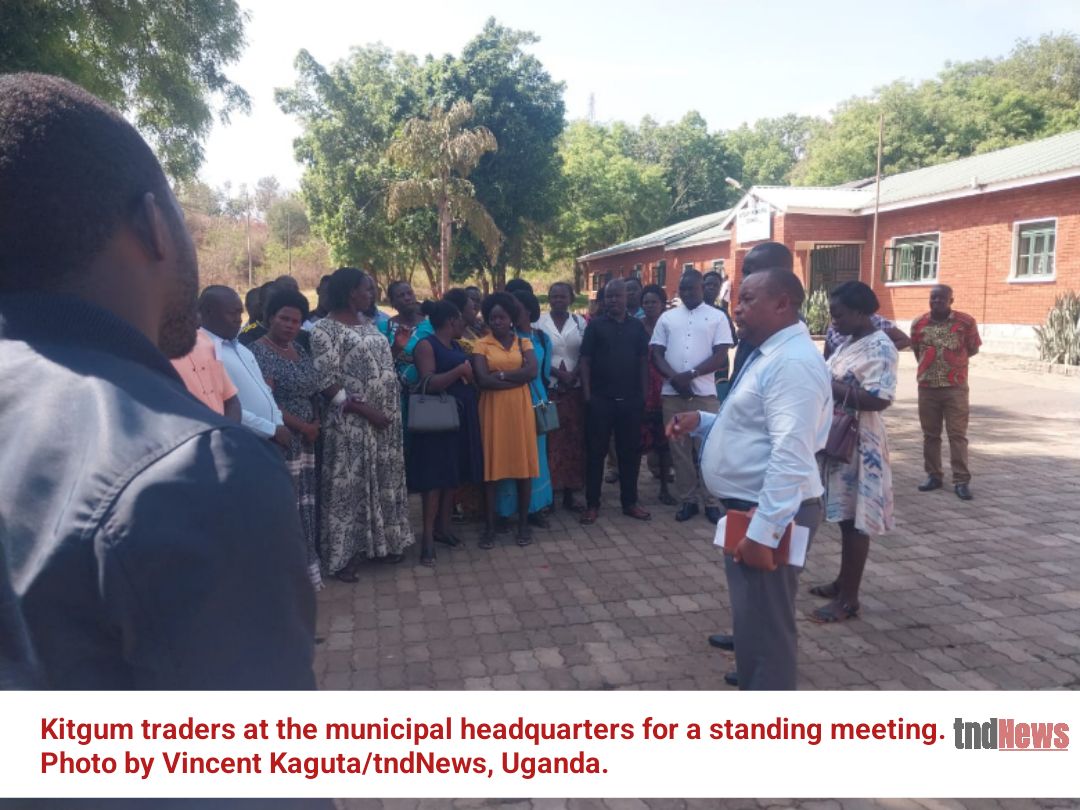
For many small business owners in Kitgum Municipality, Tuesday morning began not with opening shop doors, but with closing them in protest.
More than 80 traders from different parts of the municipality gathered peacefully to voice their frustration over a newly introduced trading license regime they say is pushing them to the brink. Their message was simple but urgent: survival first, revenue later.
The traders, operating mainly from Kitgum Central Division, argue that the revised license fees are excessive, abruptly implemented, and insensitive to the economic realities facing small and medium enterprises.
Okot Simon, a business man in Kitgum town, says several shop owners claim their trading licenses were nearly doubled following recent inspections, with revenue collectors allegedly demanding immediate payment.
“We were not consulted. We were just assessed and told to pay,” Okot said during the protest. “Business is already slow, and now the fees have gone up.”
The demonstration, though peaceful, reflected deeper anxieties within the municipality’s business community. Traders say they are grappling with rising operational costs, including rent, transport, and tax obligations to the Uganda Revenue Authority.
The new municipal charges, they argue, compound an already heavy financial burden. Beyond the figures on paper, the protest revealed a broader concern about fairness and competitiveness in Kitgum’s evolving commercial landscape.
Many traders pointed to what they describe as uneven enforcement and regulatory gaps. They raised concerns about hawkers operating in front of established shops without similar obligations, auction activities in Bar-dege that they believe distort market dynamics, and additional charges levied on signposts.
One of the traders who spoke on condition of anonymity questioned whether certain businesses are operating under licensing arrangements that give them an unfair advantage.
Allegations were raised that some members of the Indian business community engage in both wholesale and retail trade under a single license. Traders argue that if accurate, such practices undermine equity in the licensing framework.
For the small shop owner selling sugar, soap, and salt in a modest stall, these concerns are not abstract policy debates; they are matters of daily survival.
“We are not refusing to pay taxes,” another trader emphasized. “We want to pay what is fair. We also want the system to treat everyone equally.”
In response to the protest, Kitgum Municipal authorities temporarily halted enforcement of the new trading license fees to allow room for dialogue.
The Town Clerk, Joseph Emmanuel Bagonza, acknowledged the concerns and pledged to convene a meeting with municipal officials and representatives of the traders within a week.
On the question of foreign-owned businesses and licensing structures, Bagonza noted that Uganda operates under a free-market policy.
However, he indicated that discussions could be held to determine whether the current licensing approach particularly regarding single or dual licensing for wholesale and retail operations requires review.
Kitgum Central Division chairperson Godfrey Tolit clarified that trading licenses are assessed individually and in accordance with the law.
He emphasised that any trader dissatisfied with their assessment has the right to file a formal complaint with the town clerk. A separate team would then conduct a fresh evaluation, and its decision would be final.
Authorities have urged traders to follow established appeal procedures rather than resort to confrontation, assuring them that the municipality remains open to lawful engagement.
Yet the episode underscores a recurring tension in many growing urban centers: the delicate balance between local revenue mobilization and protecting fragile small businesses.
Municipal councils depend heavily on locally generated revenue to fund services such as garbage collection, street lighting, and infrastructure maintenance.
At the same time, small traders form the backbone of the local economy, providing employment and essential goods to communities.
In Kitgum, where economic recovery and expansion remain gradual, traders say policy shifts must be introduced with transparency and consultation.
They argue that sudden increases especially without stakeholder engagement erode trust between authorities and the business community.
As negotiations loom, both sides face a critical test. For municipal leaders, it is an opportunity to demonstrate responsiveness and fairness in tax administration. For traders, it is a chance to secure a licensing framework they believe reflects economic realities on the ground.
The coming week of dialogue may determine not only the fate of the disputed license fees, but also the tone of future relations between Kitgum’s revenue authorities and the small businesses that keep the municipality’s economy alive.
Discover more from tndNews, Uganda
Subscribe to get the latest posts sent to your email.