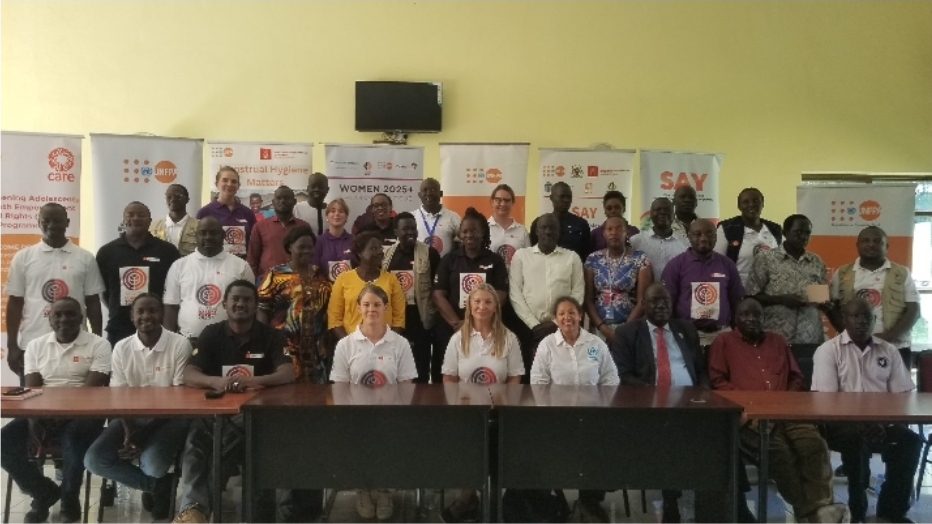
Signe Winding Albjerg, the Ambassador of Denmark to Uganda, together with Kristine Blokhus, the UNFPA Country Representative, conducted a high-level field monitoring visit to the Strengthening Adolescents and Youth (SAY) Project in Adjumani district.
The delegation included the Royal Danish Embassy’s Male Change Maker, Dr Jimmy Spire Ssentongo, a Professor at Uganda Christian University (UCU), acclaimed cartoonist, and human rights activist, as well as the UNFPA Male Champion, Don Zan Muwanguzi, a mental health activist and Founder of Awesome Mind Speaks.
The visit, made last month, demonstrated a unified commitment to the Women Uganda 2025+ campaign by emphasising the crucial role of male engagement in advancing gender equality and addressing issues such as teenage pregnancy and gender-based violence (GBV).
The visit was a key activity under the Women Uganda 2025+ campaign, a collaboration launched by female Heads of Missions from Denmark, the United Kingdom, the Netherlands, Sweden, UN Women, and UNFPA. The campaign aims to transform policy and practice through the active involvement of progressive men acting as male change makers.
Adjumani LC5 chairman Anyama Ben, in his opening remarks, appreciated the government of Denmark for always having Uganda at heart, especially Adjumani district, and applauded the Ambassador for her continued support.
He urged the donors to continue supporting the district, one of the largest refugee-hosting districts with nineteen settlements and over 230,600 refugees.
“I want to thank the government of Denmark for loving Uganda, and especially the Ambassador H.E. Signe for always coming in person when there’s an activity in Adjumani, and also my sister Kristine from UNFPA. The Danish Embassy has helped the people of Adjumani a lot, especially during this period when UNHCR is withdrawing support for refugees.
“These people don’t have land for cultivation since the land given to them is very small. So, thank you very much, Ambassador,” said Anyama.
The Principal Chief Administrative Officer of Adjumani District, Edema Richard, highlighted the success of the SAY project in different sectors of the district.
“In the area of sexual and reproductive health rights affecting adolescents, youth, and women, we are working together for both the host community and refugee population. We thank the people of Denmark for contributing their taxpayers’ money to address the challenges facing Adjumani District Local Government.
“Our target is women, youth, and adolescents in addressing teenage pregnancy, which is high in Adjumani, and GBV, which also remains a major issue. We are trying to reduce this together,” said Edema.
He added: “Under the programme, we have addressed these challenges since the refugee influx in 2013. We used the resources appropriately and tried to reduce some of these cases. But we still have high levels of teenage pregnancies and GBV. We are using SAY programme resources through youth clubs, school clubs, and health clubs to address these challenges.”
Ambassador Albjerg highlighted the Royal Danish Embassy’s commitment through its partnership with Dr Spire Ssentongo, who will use his expertise to create positive messages promoting gender equality, focusing on women in leadership, teenage pregnancy, and women’s rights.
“We work with many partners, but whatever we do requires the commitment of the local government and communities. Otherwise, all efforts will be in vain. I’m always happy to come to Adjumani and experience the strong commitment from the local government and communities at all levels to this cause.
“I also commend the communities for generously hosting refugees—over 230,637 of them, more than the host population. This generosity cannot be taken for granted. We know you are under immense financial pressure with increasing refugee inflows,” she said.
Signe added: “We support you as a refugee-hosting district in many ways—food, livelihoods, and environmental support—but today, our focus is on youth, adolescents, and sexual reproductive health and rights. We are happy to see the progress of our SAY programme, launched here in Adjumani though implemented in five districts.
“We are here as part of a campaign called Women Uganda 2025+. It emphasises women’s rights and opportunities in Uganda but from a different angle. The idea came from discussions among female ambassadors, led by my Dutch colleague, on promoting women’s rights and addressing challenges young girls face.
“We realised most of our conversations involved only women, creating a sense of power struggle between men and women. That is not productive. So, we developed a campaign that puts men at the centre of the fight for women’s rights. We are engaging male champions and role models from different sectors to promote positive masculinity and talk about women’s rights,” ambassador Signe added.
The SAY Programme plays a vital role in increasing access to and utilisation of Sexual and Reproductive Health and Rights (SRHR) and Sexual and Gender-Based Violence (SGBV) services for young people aged 10–24, including those in refugee settlements and host communities.
 Kristine Blokhus, UNFPA Country Representative, emphasised the strategic alignment of the initiative.
“The SAY Programme is a model for integrated development and humanitarian support. The inclusion of our male champions alongside the Ambassador ensures that we are actively engaging men and boys as allies to accelerate progress toward ending GBV and achieving zero preventable maternal deaths and zero unmet need for family planning.”
Romney Blessing, a member of Alere Secondary School Health Club, said, “When I heard about the school health club, I joined it, and it has really impacted me. It gave me the right to speak in front of people, express my feelings, speak in public, and make good decisions for myself, my school, and others.”
Mawut Thon Mawut, one of the role model boys, highlighted the impact of the project on youths in both settlements and host communities.
“In our community, men used to stay at home doing nothing while women did all the housework. In our tribe, men don’t cook; they just wait for food, and if there’s none, they would beat their wives. But now there’s change. People used to fight every day and night, but now violence has reduced. Boys are helping their sisters. Since the programme started, at least 50% of the population now understands.
“I thank the donors from Denmark and UNFPA for supporting us. This project has helped the community and me personally. I used to fear speaking in public, but now I can,” Mawut said.
Kabange Never, 25, a mother of three in Alere Refugee Settlement, shared her experience before and after the project.
“My husband used to beat me almost every day, but when the role model men advised him, we now have peace at home. Before, men never helped even when their wives were sick or pregnant.
“They said, ‘I paid fifty cows for your bride price; you must work.’ Parents used to marry off young girls for cattle, but that’s reducing now. Men are accompanying us to health centres for antenatal care and sometimes help with housework,” Never narrated.
Droma Willam, a Ugandan and member of the Role Model Men, said, “Before this project, we didn’t interact with refugees. Now we do. I thank the government of Denmark for bringing this project. We used to fight with our brothers and wives, but the level of fighting and instability has dropped from 80% to 30%.
“Thank you, especially the implementing partner. I hope the support continues to strengthen coexistence between host communities and refugees,” Droma said.
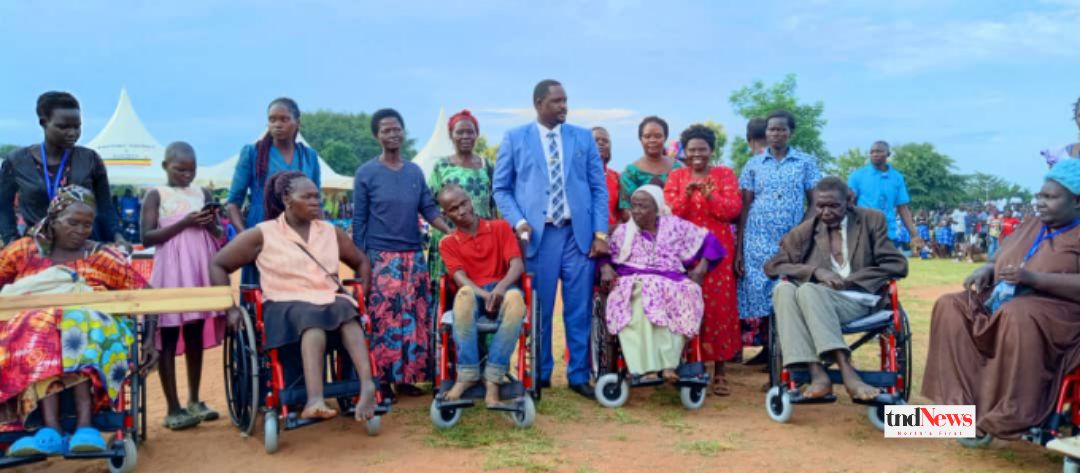
The role model men and boys showcased their talents to the Ambassador and her team in Alere Refugee Settlement during the monitoring visit.
The interactions with the Ambassador, UNFPA Representative, and activists were intended to inspire and challenge young boys and girls to become agents of change.
The visit enhanced visibility for the Women Uganda 2025+ campaign and generated compelling content to strengthen advocacy efforts, aligning with the focus on girls’ leadership and the role of male champions in communities.
The Strengthening Adolescents and Youth (SAY) Programme is a vital initiative focused on increasing access to and utilisation of SRHR and SGBV services for young people, including those in refugee settlements, across five districts in Uganda.
Discover more from tndNews, Uganda
Subscribe to get the latest posts sent to your email.