Bunyoro Kitara Kingdom (BKK) has taken an intervention of mobilising clans leaders in the fight against irregularities in property allocations to children, an act that is caused by lacking a family will.
BKK says at a meeting on March 20 that without a will, there is growing gender-based violence (GBV).
Robert Rukahemura, the kingdom’s cultural and social affairs officer, said that they are currently engaging all clan heads to sensitise them on how to settle disputes and encouraging their people to write wills as one way of preventing conflicts in communities.
“We noticed an unnecessarily growing trend in GBV within our communities, especially when it comes to property allocation, especially lands. This is because some people don’t make wills before they die, but some choose to make wills that are against the law,” he said.
He added that to minimise future land disputes, the kingdom has been encouraging parents to write wills, though it’s a culture that is still lacking among some people.
Rukahemura emphasised the need to respect the Constitution while handling inheritance matters.
Counsel Denis Kiiza, the kingdom legal officer, said that it is important for people to write balanced wills that favor both sons and daughters to have equal shares of land from their parents.
Kiiza said that the Constitution recognizes equality between boys and girls, and therefore all children inherit properties, especially lands, equally.
He said that any law, rule, or cultural practice that fails to align with the Constitution is unjust.
Kiiza disclosed that according to the inheritance law, the widow receives 20% of the estate, the children receive 75%, dependents receive 4%, and 1% is designated for the heir.
Andrew Byakutaga, the BKK prime minister, in a message delivered through Alex Katusabe, the chief administrative secretary, applauded the clan heads for their efforts in mobilising their clans to actively participate in the kingdom activities.
However, he emphasised that as clan leaders sensitise communities to Will making, there is also a need to encourage them to make Wills that do not contradict the national Constitution.
Byakutaga noted that this has been Omukama’s endless effort to protect the widows and orphans and the clans, but also clan heads have the responsibilities of protecting someone’s home after his death.
Kabatalya, the gender and culture officer for Hoima district, noted that lack of wills has fueled gender-based violence among homes. He noted that this is a challenge that calls for cohesive collaboration among different stakeholders, including government and cultural institutions.
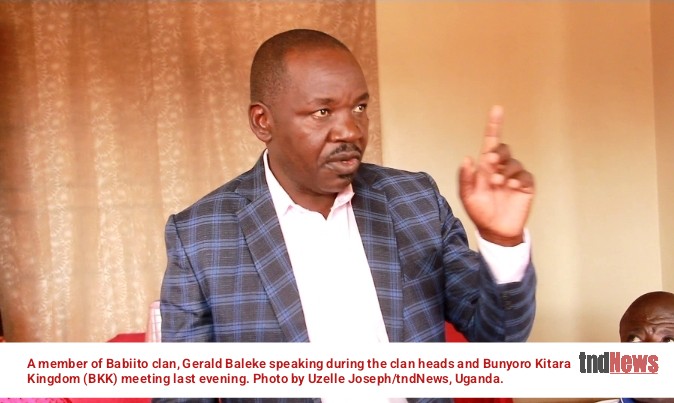
Gerald Baleke, a member of the Babiito clan, attributed the cause of GBV to religious interference.
Although different stakeholders talked of increasing violence in homes as a result of lack of wills, none disclosed the current statistics for Bunyoro.
Recently, in a media engagement with the Judiciary and Judicial Service Commission at Hoima High Court, Chief Grade One Magistrate Juliana Kimono said that currently the court has a huge case backlog with more land cases, a challenge that calls for combined efforts.
However, the clan leaders agreed to work tirelessly to ensure that communities are sensitized to will-making as a way to overcome the challenge.
Discover more from tndNews, Uganda
Subscribe to get the latest posts sent to your email.