Education Above All supports calls for the protection of rights to education.
Gulu, 24 July 2022: A group of thirty youth from Uganda and South Sudan concluded a week-long series of global youth advocacy training.
Organized by the Education Above All (EAA) foundation, the training was geared towards raising awareness and building the capacity of youth on the need to protect education from attack.
The training is part of EAA’s Unite To Protect Global Youth Rallies that are taking place with youth around the world participating. The Youth Rally in Gulu marks the second in the series, with the first taking place in Gaza, State of Palestine, in June this year.
The youth rally in Uganda comes after a series of reports on some youth and children being unable to attend school as a result of conflict and tension in their communities.
The five-day workshop, which is part of EAA’s partnership with the Forest Whitaker Peace and Development Initiative (WPDI), ran from the 4th until the 8th of July and offered the youth a range of activities aimed at building advocacy skills, interactive learning about sustainable peacebuilding and global citizenship, alongside practical activations: implementing these skills in the community and on social media.
Pascaline Aburi Albino from South Sudan states that the continued conflict in her country has harmed the education of youth and children for fear of being kidnapped, maimed, killed, and/or recruited into forced rebellion.
Further, she cites cultural practices in her pastoral community as a major factor hampering girl child education, where girls are seen as a source of wealth for a family, not by being educated and productive, but instead through being married off in exchange for cows.
“The girls in my community have no voice and choice on whom they want to spend the rest of their lives with. A rich man will approach the family anytime to ask for your hand in marriage and for most young girls they will have no option,” Pascaline explained.
In Sudan, sporadic violence has continued to impact education according to the latest ‘Education Under Attack’ report issued by the Global Coalition to Protect Education From Attack.
The report cites at least ten reports of attacks on schools between 2020-2021 and an additional 26 schools being used as shelters by displaced persons resulting in significant damage to their infrastructure and facilities.
Korobe Hellen, another youth peacekeeper from Karamoja region, revealed that growing up in the pastoral community has made her understand that most parents don’t see education for girls as necessary.
“While the boys are busy being given the job of looking after cows, the girls are raised to become wives and mothers at an early age. There is less meaning to the value of education imposed by this old-aged culture,” Hellen said.

“This has been worsened by the continued raids that have not only disrupted education for the few at school youth and children but also sparked fear of being kidnapped or killed by unsuspecting armed cattle raiders,” she noted.
In Northern Uganda, youth advocates like 32-year-old George Otoo, have had to live with the post-traumatic experience of the two-decade Lord Resistance Army (LRA) rebellion.
“Sometimes I am lost in thoughts; I keep recounting the bad memories of the things I witnessed as a child soldier but my healing has been gradual and empowered by this program. I see hope for a better future now,” said George
Adding that, as a peacemaker and beneficiary of the joint EAA-WPDI programme, he is destined for greater heights in dealing with trauma and inspiring action for change in his community.
These and many others are a reflection of the lives of youth who have been raised under conflict and insecure conditions in Africa, with a focus on South Sudan and Uganda. Indeed, the levels of poverty and history of conflict in the Northern and Eastern regions of Uganda have had a great impact on the accessibility and quality of education.
According to the UN, the secondary level enrolment of the richest 20 per cent of the population (43.1 per cent) is five times that of the poorest 20 per cent (8.2 per cent).
In geographical terms, the highest Secondary Net Enrolment is seen in Kampala at 52 per cent and the lowest in Acholi with a staggering 7 per cent figure, according to UNICEF Uganda)
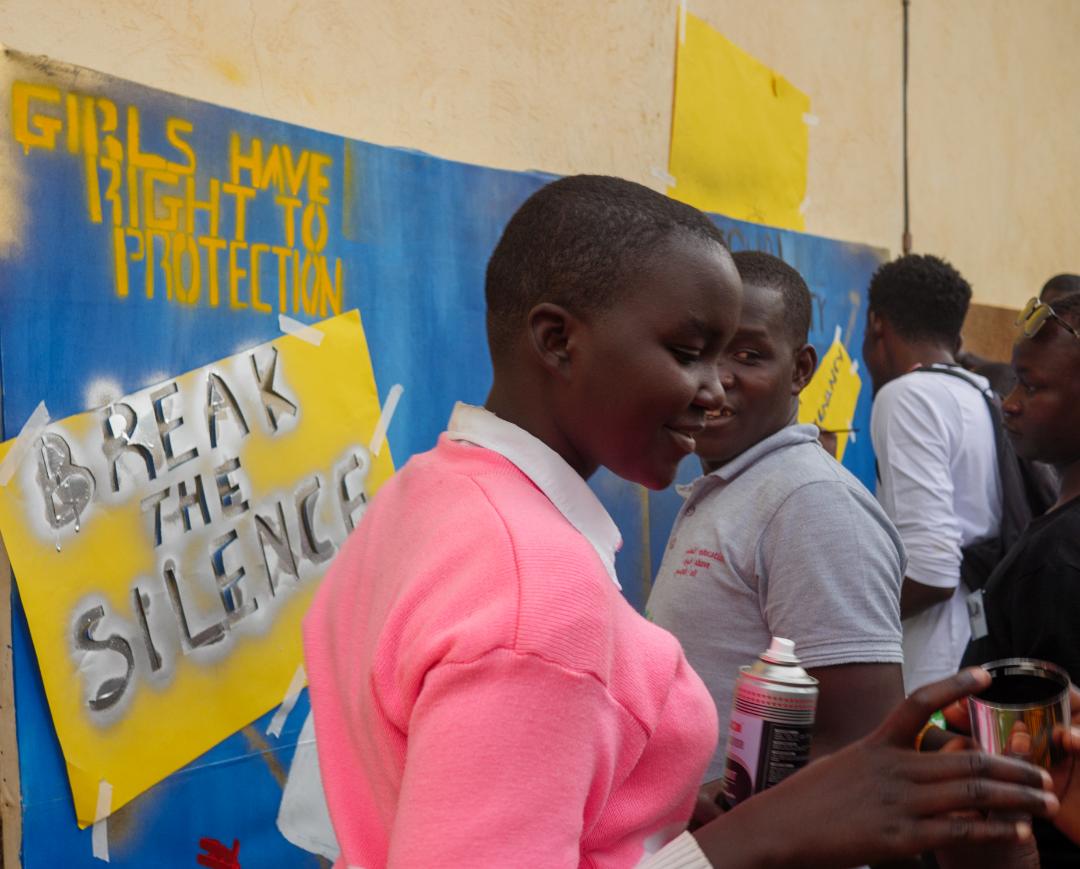
In addition to the workshop, participants in Gulu were invited to share their calls to action in the form of art. The final artwork will be displayed as part of a mural at the World Cup in Qatar alongside pieces created by youth participants from other countries who have taken part in the Global Youth Rallies.
“There are many ways to communicate, and art has not been fully exploited to send a global call for action. We feel with these messages we’ll be reaching out to policymakers and opinion leaders in a medium that is geared towards reframing their imaginations and action for the sake of the youth” said, Kenneth Mulinde, a visual artist and EAA youth advocate.
According to Boran Choi, an education and advocacy senior specialist at the Education Above All Foundation, the final artwork will reflect a collective demand from youth communities across the globe to uphold UN Security resolution 2601, condemning attacks on education and urging the Member States to hold perpetrators to account.
Discover more from tndNews, Uganda
Subscribe to get the latest posts sent to your email.