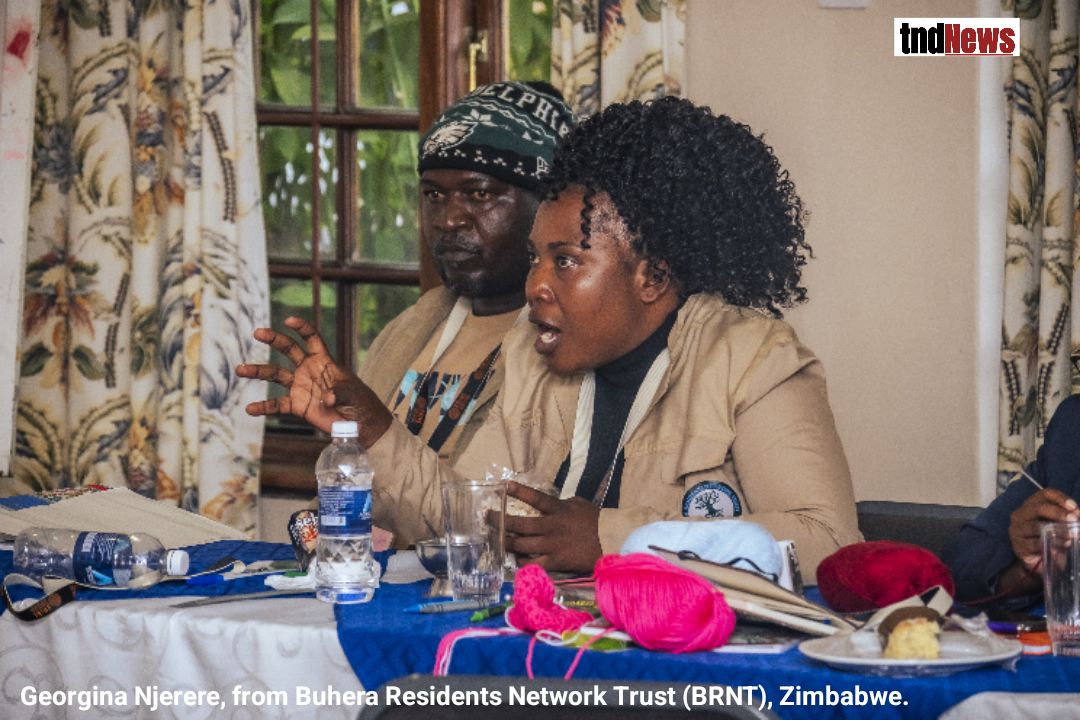
Harare, Zimbabwe | The African ecofeminists convening in Harare on Wednesday called for a just, feminist and people-centred energy transition that protects communities, women’s rights and the environment.
Convened by SHINE Collab under the theme “Building Ecofeminist Futures Beyond Extractivism and Transition Mineral Frontiers,” the gathering come at a critical moment as Africa becomes increasingly central to the global demand for transition minerals such as lithium, cobalt, graphite, copper, nickel and rare earth elements needed to power the clean energy economy.
While recognising the importance of renewable energy in addressing the climate crisis, participants warned that the energy transition must not reproduce the same systems of exploitation, dispossession and environmental destruction that have historically characterised extractive industries across the continent.
“A truly just energy transition cannot be achieved if it is built on the continued exploitation of African communities, ecosystems and women’s labour. Climate action must place justice, dignity, ecological integrity and community wellbeing at its centre,” said Dr Melania Chiponda, Executive Director, Shine Collab, a global feminist movement of CSOs, grassroot community based organisations and faith-based groups.
On the first day of the week long convening, participants reflected on the realities of mining, climate governance, energy transition and women’s leadership in defending land, livelihoods and natural resources.
Experiences shared from the Democratic Republic of Congo, Malawi, Mozambique, Zimbabwe, South Africa, Kenya and other African countries revealed a common pattern of environmental degradation, pollution, land dispossession, inadequate compensation, shrinking civic space and weak accountability despite the immense wealth generated from mineral resources.
According to Sibongile Ndlovu, Project Coordinator, EarthLife, South Africa, climate change cuts across many issues. For African woman, energy, water, food production is key.
“Women have shown that the issues they face are similar, regardless of the country they come from. The problem however, is the approach leaders take to solving them.
“Their approach is not bottom up. Leaders are discussing without the participation of women and therefore decisions and policies do not capture women’s perspectives and lived experiences,” she said, adding that the ecofeminist convening in Harare demands that leaders should not base policy decisions only on science and economics but must begin considering grassroot women’s lived experiences.
Further, women leaders described how communities continue to shoulder the environmental and social costs of mining while receiving little benefit from the revenues generated from their lands.
Participants highlighted the urgent need for stronger legal protections, environmental accountability, community education and meaningful public participation in decisions affecting natural resources.
The convening also critically examined the political economy of transition minerals and questioned the current trajectory of the global energy transition, cautioning that increasing demand for critical minerals should not become another chapter of resource exploitation under the banner of climate action.
Participants stressed that renewable energy investments must uphold human rights, respect Indigenous and local knowledge systems, preserve biodiversity and ensure communities remain central to decision-making processes.
Discussions explored key continental and global policy processes shaping Africa’s climate and energy future, including the African Union climate agenda, the Global Goal on Adaptation, Loss and Damage financing, the Gender Action Plan, Mission 300, the African Development Bank’s energy initiatives and the United Nations Guiding Principles on Critical Energy Transition Minerals.
The convening further highlighted how climate and energy decisions continue to be dominated by governments, corporations and international institutions with limited participation from affected communities.
Salina Sanou, an climate gender working at the intersection of climate and indigenous women called for women, Indigenous Peoples, youth and grassroots organisations to be recognised as equal partners in shaping policies that affect their lands, livelihoods and futures.
Personal testimonies from activists across the continent underscored the resilience of African women confronting environmental degradation, gender inequality, child marriage, land dispossession, poverty and shrinking civic space.
These stories reinforced the power of solidarity, legal empowerment, feminist leadership and intergenerational organising in advancing climate justice.
The convening also celebrated African knowledge systems and cultural traditions of environmental stewardship. Traditional leaders welcomed participants by affirming the central role women have historically played in protecting land, water, biodiversity and community wellbeing, reinforcing the importance of Indigenous knowledge in building sustainable futures.
In addition to critical dialogue, participants exchanged practical experiences on community-led renewable energy, climate resilience, food sovereignty, care-centred economies and women’s economic empowerment, demonstrating that viable alternatives to extractivist development already exist across the continent.
Participants called for development pathways that transform unequal systems of power, uphold environmental justice, protect the rights of frontline communities and recognise women’s leadership as central to building resilient, equitable and sustainable societies.
Discover more from tndNews, Uganda
Subscribe to get the latest posts sent to your email.