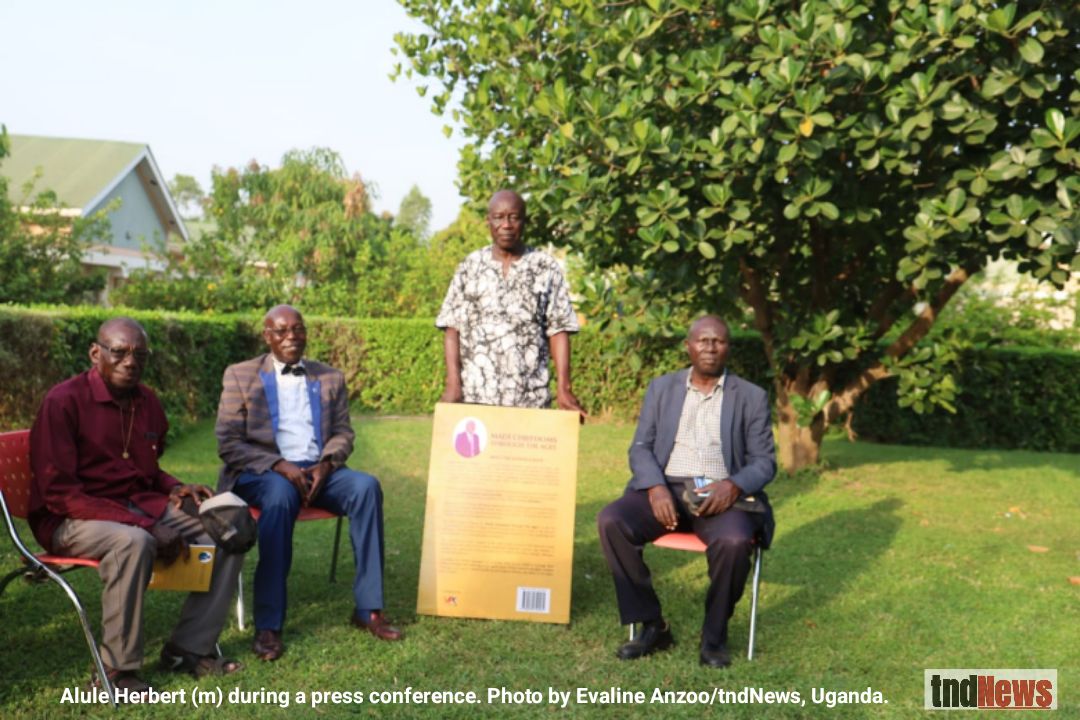
Adjumani | The rich history, culture, and journey of the Madi people have been preserved in writing following the launch of a new book titled “Madi Chiefdoms Through the Ages 1400–2025 AD,” authored by renowned researcher and historian Alule Herbert.
The book was officially launched this week in Adjumani district, attracting cultural leaders, government officials, and community members, who hailed the publication as a major milestone in the heritage of the Madi people for future generations.
Speaking during the launch, Alule said the publication is not a personal achievement but a collective resource intended to benefit the Madi community and anyone interested in African history.
“I wrote it, but it’s not my book. It is for the people of Madi who want to know something about our East African or African history. It is the book of the youth.
“I have written it to bridge the gap between the past and the present as a foundation, as a compass which we must leave our youth to continue with for the cultural development of the Madi people,” Alule added.
The author explained that the idea of writing the book was inspired by concerns that colonial influence had distorted aspects of Madi culture and history, making it necessary to document authentic accounts of the people’s origins and traditions.
“It is a book born out of a spark, saying: colonial time, there was a distortion of our culture which governed our Madi. But I started with who are the Madi? Where do they come from? And where are they? And why are they where they are now? In that, I managed to find the Madi by research. We have come from Omo River Valley of Southwestern Ethiopia,” he said.
Alule further noted that his research traced the migration journey of the Madi people over centuries.
“We are Omoti tribe who, after leaving Omo, went first to Egypt,” he added.
The publication documents the evolution of Madi chiefdoms from the 15th century to the present day, highlighting traditional governance systems, migration patterns, cultural practices, and the challenges that have shaped the identity of the Madi people over time.
Adjumani district chairperson Anyanzo John Ambayo commended the author for undertaking extensive research and pledged support towards ensuring the book reaches educational institutions across the district.
“As the LC5, I am ready to support you Mr. Alule; my office and that of CAO, we shall leave here with 15 books to be distributed to all the 12 government schools, and the three will remain in the offices,” he announced.
He emphasised that preserving culture should go hand in hand with promoting peace and unity among the people.
“But we still have a lot to do to make peace prevail in Madi. As cultural leaders, I want to appeal to you to talk to people about peace and unity so that we come back to stay together,” he added.
The Resident District Commissioner of Adjumani, Toko Swaib, described the publication as a well-researched historical work and expressed confidence in its contribution to cultural education and identity preservation.
“This is a very good history, and I can confirm as a history teacher that you have done the research very thoroughly. I want to say I will give you my total support. And indeed, it’s a very good history,” Toko said.
He noted that stronger cultural institutions could play a significant role in addressing some of the social challenges communities face today.
“Let’s support. When we finally have full authority in the hands of our cultural institutions, many of the problems we are going through today will not be there,” he added.
The Prime Minister of the Madi Cultural Institution, Amacha Goli, described the book as a valuable repository of indigenous knowledge and cultural heritage that can serve generations to come.
“The book presents traditional practices, local wisdom and community experiences that have been recorded, and I am encouraging everyone to share this book widely because it helps solve the issue of intercultural differences by promoting and supporting the preservation of our culture and local language,” Goli said.
He noted that documenting oral traditions and community experiences in written form is essential for safeguarding cultural identity in modernisation and globalisation.
Participants at the launch welcomed the publication, saying it provides an opportunity for young people to understand their roots and appreciate the contributions of their ancestors in shaping the Madi community.
Others observed that the book could become an important reference material in schools, cultural institutions and research centres interested in the history of the West Nile and the broader East African region.
The launch comes at a time when communities across Uganda are increasingly seeking ways to preserve indigenous knowledge, languages, and cultural practices that risk being lost as older generations pass on.
The launch of the book marks a significant step in preserving the history and identity of the Madi people.
Beyond documenting the past, the book serves as a bridge between generations, offering young people a deeper understanding of their heritage while providing valuable insights for scholars and future leaders.
As calls for peace, unity, and cultural preservation continue to grow, the publication stands as both a historical record and a guide for strengthening the cultural foundations of the Madi community for years to come.
Discover more from tndNews, Uganda
Subscribe to get the latest posts sent to your email.