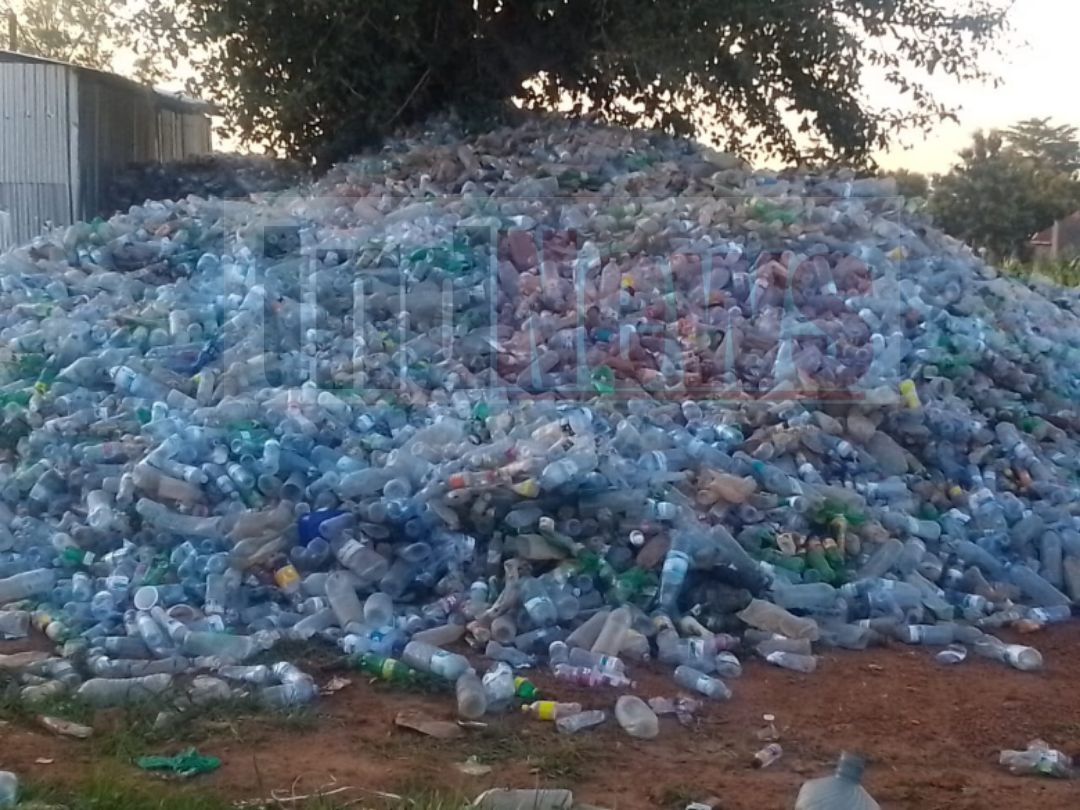
Adjumani | What many people see as rubbish scattered along roadsides, drainage channels, wetlands, and trading centres is increasingly becoming a source of income and survival for dozens of residents in Adjumani district.
Across towns and trading centres, plastic waste dealers and collectors are transforming discarded plastic bottles, containers, and polythene materials into a livelihood that supports families while helping to keep communities clean.
For years, plastic waste has been one of the major environmental challenges facing Adjumani. Empty bottles and polythene bags often clog drainage systems, pollute wetlands, and degrade the natural environment.
However, a growing number of residents who are now turning this environmental menace into an economic opportunity by collecting and selling them is Issa Abdu.
Abu is a plastic and scrap dealer who has been in the business since 2013.
Over the last 13 years, he has built a network of collectors and buyers, creating employment opportunities for vulnerable people while contributing to environmental conservation.
According to Mayanja Ismail, who buys plastics from community members for resale, the business has become an important source of income.
“I buy plastics from community members who collect and bring them for sale. I buy one kilogram of plastic at shs200. I also work with some boys who help me in the business,” he said.
“Whenever the plastics accumulate, a customer of mine comes and buys for recycling in Kampala, and he normally buys them at shs3,500 per kilogram, I use the money to pay school fees for my children, buy food, pay rent because I am renting this place, and also pay salaries for the boys working with me,” Ismail explained.
The recycling chain is not only benefiting business owners, but also changing the lives of people who once struggled to survive.
One of the workers employed in the business, Sereko John, narrated how the opportunity helped him rebuild his life after years of hardship.
“When I left my home in Jinja and came to Adjumani looking for a job, I failed to get one and I was suffering. Sometimes, I slept in front of people’s shops, and during the day I pretended to be a mad person so that people could give me food or money.
“But when I came to Ismail, he gave me this job, and now I can buy food and clothes for myself, and I am at least okay,” he said.
Stories like John’s demonstrate how the plastic recycling business is becoming a lifeline for unemployed youth and vulnerable individuals in the district.
Environmental experts said the growing participation of community members in plastic collection is a positive development that could significantly reduce pollution if more people embrace it.
The Adjumani District Environment Officer, Amadra Sabino, noted that plastic waste remains a major threat to ecosystems and natural resources.
“In relation to plastics, these directly contribute to the degradation of our environment by affecting soil quality, wetlands, rivers, and other ecosystems.”
“These plastics are everywhere. I am happy that some of our community members have seen opportunities in this menace,” he added.
Sabino encouraged more residents to participate in the recycling value chain.
“They are trying to collect these plastics and participate in the value chain of recycling plastic materials. This is an opportunity that everybody must tap into. If other people are already involved in these activities, the rest will also follow so that our environment is fully protected,” he added.
District leaders have also acknowledged the growing challenge of waste management and the need for long-term solutions.
The Deputy Chief Administrative Officer of Adjumani district, Wabi Richard, said plastic waste continues to pose a serious problem, but noted that the expansion of recycling industries across Uganda presents new opportunities for waste management and employment creation.
“It is true that we have a very big problem of waste management, especially the management of plastic bottles and polythene materials.
“This has already taken shape. We have seen many factories emerging that recycle plastic bottles and other materials. It is therefore my plea and request that everybody manages these bottles and plastic materials responsibly.”
Wabi, however, warned against illegal practices associated with scrap collection, noting that some individuals have resorted to vandalising public infrvandalising
“I also want to request that as people engage in this business; they should be careful in the management of scrap. There is a big problem not only in Adjumani but throughout Uganda where some people mismanage scrap. People even reach a level of attacking road furniture, signposts, and other public property,” he cautioned.
Looking ahead, district authorities said they are exploring ways to improve waste management and attract investors into the recycling sector.
“As Adjumani continues growing toward municipality status, especially within the town council, we are looking at a comprehensive waste management master plan. We are also exploring how to attract investors to establish recycling plants in the district through local economic development approaches,” Wabi said.
For many residents, the plastic recycling business represents more than just a source of income. It is a practical solution to two pressing challenges: unemployment and environmental degradation.
As discarded plastic continues to pile up across communities, the efforts of collectors and dealers are proving that waste can be transformed into wealth.
Their work is not only helping families earn a living, but is also contributing to cleaner neighbourhoods, healthier ecosystems, and a more sustainable future for Adjumani district.
With greater community participation, responsible waste management, and investment in recycling infrastructure, plastic waste could become a valuable resource in building a cleaner and more prosperous Adjumani.
Discover more from tndNews, Uganda
Subscribe to get the latest posts sent to your email.