Adjumani district, home to more than 200,000 refugees mainly from South Sudan, is having a quiet economic transformation taking shape inside 19 refugee settlements.
At the center of it all are women, who, despite facing immense hardship, are driving local economies through small-scale businesses.
With support from the Lutheran World Federation (LWF), at least 2,902 women received financial grants in 2023 to start income-generating activities.
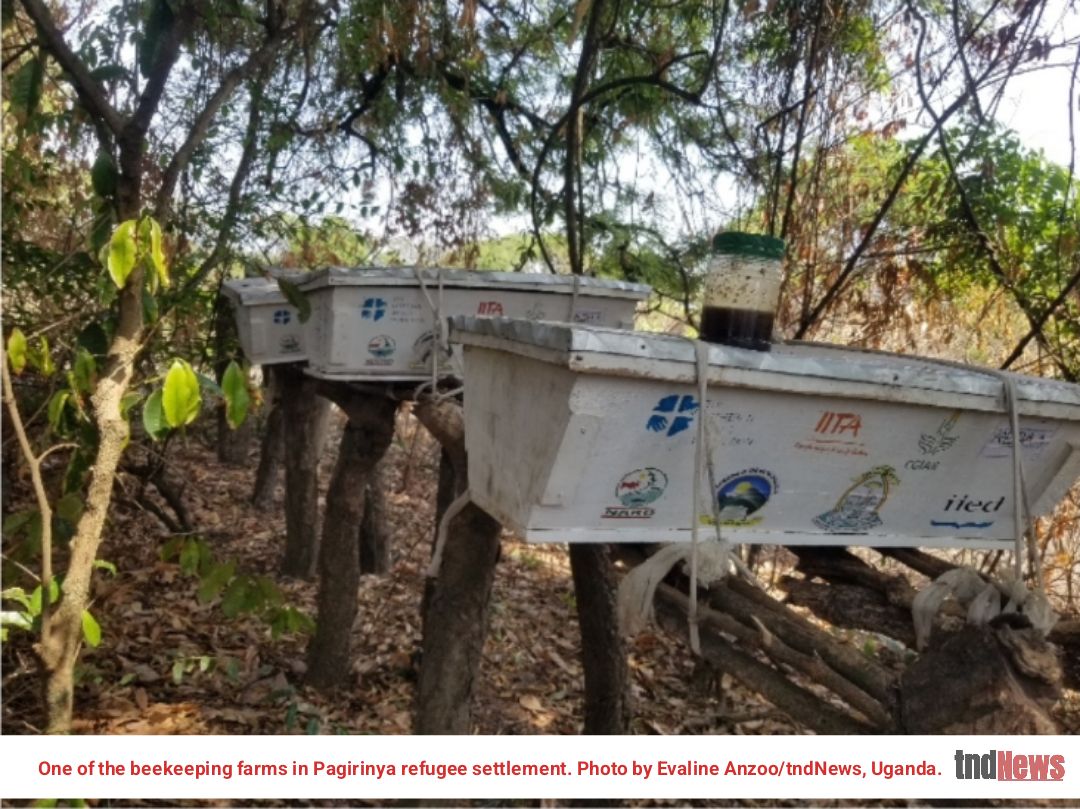
Many have turned to producing essential goods such as liquid and bar soaps, detergents, and processing locally sourced honey.
For women like Anzoa Susan, the journey began with training. “We started in 2021 with training from LWF. After that, we began beekeeping and harvesting honey,” she explains.
“From the honey, we can now pay school fees, cater for our family needs, and buy medicine.”
 Yet, despite this progress, Susan highlights a major obstacle: “Our greatest challenge is that we don’t know anything about the certification of our products. It makes it very difficult for us to sell far.”
This challenge is echoed by Elizabeth Aduk, who produces liquid soap and dreams of expanding her business beyond Adjumani.
“My vision in the next three years is to supply many agencies, not just within Adjumani,” she says. “The government can support us by giving recommendations and documents, and even help advertise our businesses.”
Despite these barriers, local consumers are increasingly embracing refugee-made products. Alice Bibiana Amadrio, says she prefers locally produced honey because of its purity.
“I choose local products because they are original and not mixed. In Kampala, I once bought honey that was mixed with sugar, but here it is pure,” she explains, adding that there is still a lack of awareness on where to report uncertified or expired products.
District officials acknowledge both the progress and the gaps
Dipio Agnes notes that women especially refugees are actively running businesses, but certification remains a major hurdle. “We still have very low product certification levels. In the refugee settlements, I am not sure of any product that has been certified,” she says, adding that efforts are underway to improve awareness.
The Uganda National Bureau of Standards is working with partners to address the issue. According to Enock, the agency’s role is to ensure product quality and safety across the country.
“Our mandate is to support quality-related issues. Even if indirectly, we work with partners like the Food and Agriculture Organisation to ensure products meet required standards,” he explains.
As refugee women continue to build livelihoods and sustain their families, the need for certification support remains critical. Without it, their businesses risk being confined to small local markets limiting growth, income, and long-term sustainability.
Still, their resilience is undeniable. From beekeeping to soap-making, the women of Adjumani are not just surviving a crisis, they are reshaping it into an opportunity.
Discover more from tndNews, Uganda
Subscribe to get the latest posts sent to your email.