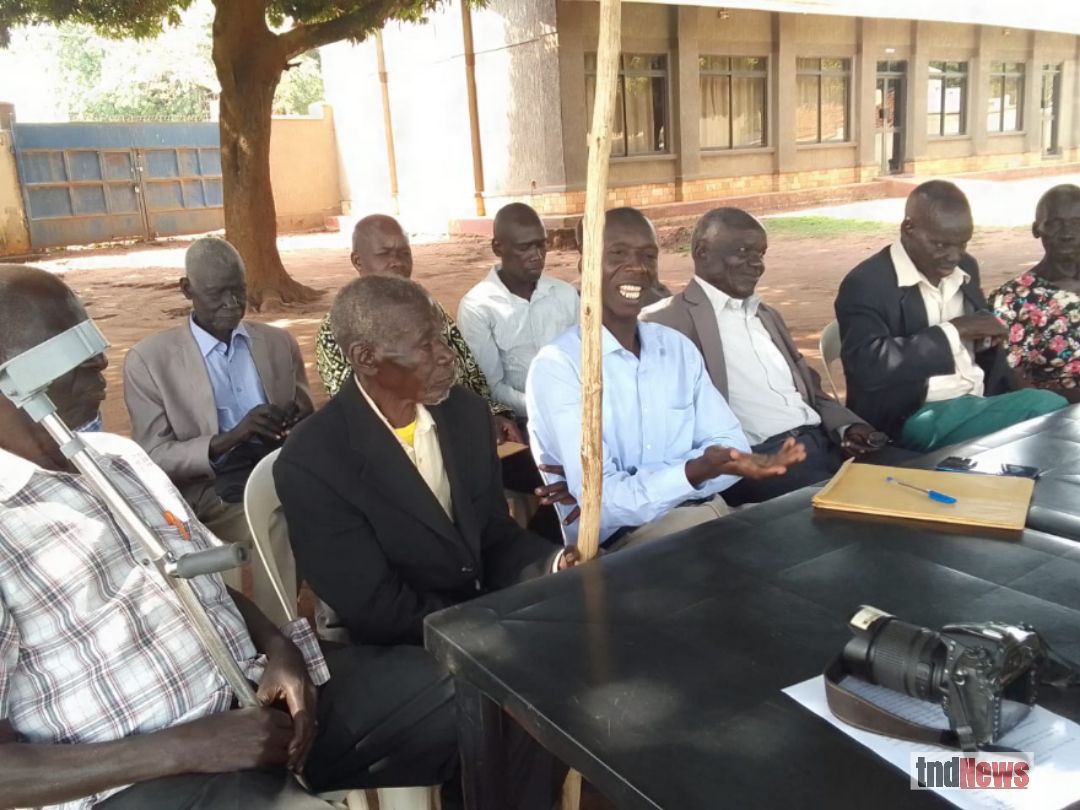
A group of over 70 vulnerable former employees of the defunct East African Community (EAC), under the umbrella of EACOBA in the Lango sub-region, are seeking a meeting with President Yoweri Kaguta Museveni.
They say there are outstanding payments due for 49 years, dating back to the Community’s collapse in 1977, during the regime of former president Idi Amin Dada.
Addressing journalists on Friday, February 27, 2026, at the Grand Pacific Hotel in Lira City, Stephen Aboke, the national coordinator of EACOBA, presented their grievances.
He acknowledged the positive steps taken by the Parliament of Uganda in passing the EAC Mediation Agreement Bill and commended President Museveni for assenting to it in 2025.
Aboke stated that while former EAC workers nationwide await the Auditor General’s report, he appealed for immediate, coordinated action.
The co-ordinator specifically called upon the Ministry of East Africa Community Affairs (MEACA), including its Principal Human Resource Officer, Internal Audit, and Permanent Secretary, as well as the Ministry of Public Service and the Ministry of Finance, Planning and Economic Development (MOFPED), to resolve the matter urgently.
Also read: Museveni signs laws to boost building safety and housing finance
Fred Ogwal Alele, a resident of Agwata sub-county in Dokolo district and chairperson of the East African Community Post and Telecommunications employees, shared his personal experience.
Ogwal, who joined the service on July 13, 1970, explained that following disagreements among the three partner states, the Community collapsed when the government of Idi Amin was overthrown.
He noted that according to the law, dues are supposed to be settled within six months of such an event.
The chairperson added that the change of governments between 1977 and 1981 adversely affected payments to beneficiaries across the country, especially Ugandans.
He told journalists that a total of 12,000 Ugandans were employed by the Community, and he himself worked in Lira, Apac, Kampala, Kabale, and Masaka.
He further noted that this prolonged delay has left many beneficiaries elderly, frail, and living in vulnerable conditions. Worst of all, they are dying without receiving their pay, with daily reports of deaths and hospitalizations among members fighting for their rightful benefits.
He emphasized that timely intervention is, therefore, both a legal obligation and a humanitarian necessity.
The chairperson called for the immediate implementation of the agreed mediation outcomes, the reconstitution of the inter-ministerial committee, a dedicated budget allocation in the financial year 2026-2027, and a structured payment plan ensuring full settlement within that fiscal year.
Aida Obuku, the widow of the late Obuku Stanley, a beneficiary from Ogwang Acuma parish in Aboke sub-county, Kole district, shared her story.
Her late husband was recruited in 1962 and worked until the Community collapsed in 1977 in Mombasa, Kenya. Unfortunately, Obuku passed away in 1988.
“Since my husband’s time, the government pledged to pay their pensions, as was done in Kenya and Tanzania. But for Uganda, since 1977 up to now, we have not received any payments,” she said.
She appealed to President Yoweri Kaguta Museveni to intervene and provide a remedy to this matter, which has now spanned over 49 years. “It is very sad for the government to pay only when a person is no longer alive,” she lamented.
She also extended credit to the Kole North MP, Dr. Samuel Opio Acuti, for championing this issue on the floor of Parliament.
The retired Rev. Peter Odyeng, a resident of Alango village, Obutu parish, Okwerodot sub-county in Kole district, also shared his plight. He served as an assistant station master in Munkono from 1967 until the Community’s collapse in 1977.
He said that upon his return, he received only a severance package in 1998, not his full pension. “I am now requesting President Yoweri Kaguta Museveni to come and rescue us in this matter,” he pleaded.
Discover more from tndNews, Uganda
Subscribe to get the latest posts sent to your email.