Gulu, Uganda | As governments prepare for the 70th session of the UN Commission on the Status of Women (CSW70), new data and survivor voices are exposing a stark reality: the world is drifting dangerously off course in its pledge to end female genital mutilation/cutting (FGM/C) and ensure menstrual health for all by 2030.
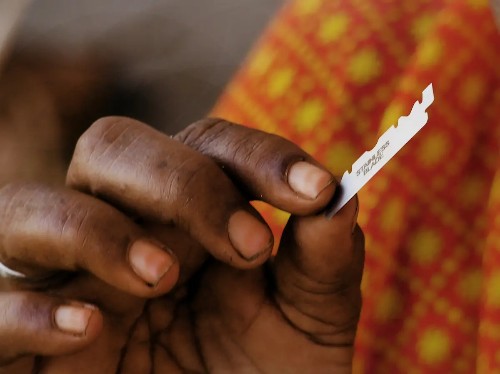
At a SHE & Rights session held in February 2026, experts warned that despite global commitments under Sustainable Development Goal (SDG) 5.3, FGM/C has increased by 15% over the past eight years rising from 200 million survivors in 2016 to over 230 million in 2024.
“One-third of FGM/C happens in Asia around 80 million cases; and if we are serious about gender equality, we must confront this as a grave human rights violation,” said Shobha Shukla, host of the SHE & Rights platform.
Research presented by Equality Now shows FGM/C is practiced in at least 94 countries. Yet only 59 have specific laws prohibiting it and prosecutions remain rare.
A February 2026 report, Towards Justice: Global Challenges and Opportunities in Litigating Cases of Female Genital Mutilation, examined legal battles across India, Kenya, Liberia, Burkina Faso, The Gambia, and the United States. The findings reveal major enforcement gaps, weak justice systems, and growing anti-rights pushback.
The report also underscores how survivors are increasingly turning to strategic litigation to clarify laws, set precedents, and defend hard-won protections from rollback.
The session coincided with the 20th anniversary of the Universal Periodic Review (UPR), a UN Human Rights Council mechanism that assesses all 193 member states every 4.5 years.
Advocates say UPR recommendations have helped bring international scrutiny to countries such as India over FGM/C but implementation remains uneven.
Survivor to advocate: ‘Ending FGM is Justice’
For Catherine Menganyi, a nurse-epidemiologist and FGM/C survivor from Kenya, the statistics are deeply personal.
“My journey began where the shoe hurt most and the psychosocial trauma remains raw even today. But I have since helped save over a thousand girls from undergoing the cut,” she told participants.
She emphasized that FGM/C is not an isolated act, but part of a wider system that controls women’s bodies and normalizes violence.
Health experts are also raising alarm over the “medicalisation” of FGM/C, particularly in Asia, where healthcare providers are increasingly involved. Global bodies including the World Health Organization have explicitly condemned the practice as unethical and medically unjustifiable.
While FGM/C figures rise, another silent crisis is undermining girls’ rights: menstrual poverty.
In India alone, approximately 4 million girls dropped out of primary school over the past four years, according to government data cited at the session. Advocates argue that poor menstrual hygiene infrastructure is a major contributor.
In a landmark ruling, the Supreme Court of India declared menstrual health a fundamental right under Article 21 of the Constitution, which guarantees the right to live with dignity.
The 127-page judgment mandates that functional, gender-segregated toilets with water in every school, free biodegradable sanitary napkins, menstrual hygiene management corners with spare uniforms, safe disposal mechanisms, and gender-responsive curricula to break stigma.
The Court ordered district education officers to conduct inspections and submit compliance reports within three months.
“Menstrual health is not charity it is constitutional, and when girls drop out because of biology, that harm is systemic,” said gender justice advocate Debanjana Choudhuri.
Yet experts warn that without funding, monitoring, and political will, the ruling risks remaining symbolic.
Breast cancer screening: A data-backed model of hope
Amid the sobering statistics, one grassroots health initiative offered a model of measurable impact.
“Swasthya Setu,” implemented by Humana People to People India across 570 villages in Uttar Pradesh and Karnataka, screened 233,583 women between February and December 2025.
Outcomes included 448 women identified with unusual symptoms, 21 confirmed breast cancer cases, 15 women already initiated treatment, and 88% referral completion rate well above national averages.
Community health workers (ASHAs) used theatre, street plays, and small group discussions to break stigma and encourage breast self-examination. Experts say the project demonstrates how community-led, data-driven approaches can close health access gaps.
With just eight years remaining to meet SDG targets on eliminating harmful practices and ensuring universal access to sexual and reproductive health, advocates warn that progress is uneven and, in some areas, reversing.
FGM/C numbers are rising. Menstrual poverty data remains sparse. Legal frameworks exist but enforcement falters.
As world leaders convene at CSW70, the data tells a clear story: promises alone will not end FGM/C or guarantee menstrual dignity.

Accountability, funding, and community-led solutions must now move from conference halls to classrooms, clinics, and courtrooms before 2030 becomes another missed deadline for millions of girls.
Discover more from tndNews, Uganda
Subscribe to get the latest posts sent to your email.