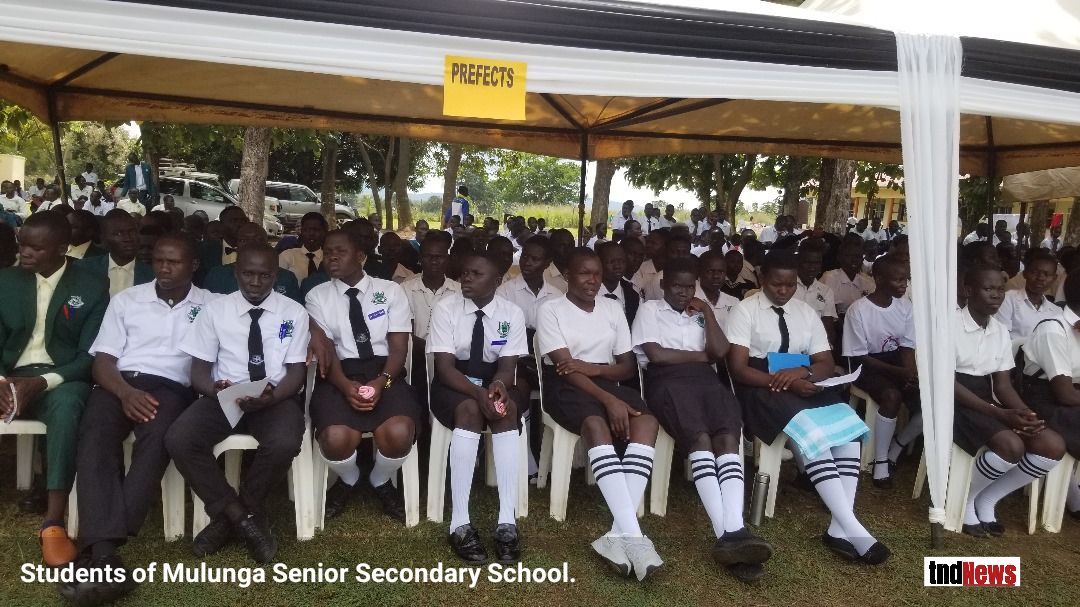
The education department of Adjumani district has successfully enrolled 556 teenage mothers back to school following the government’s re-entry policy, which aims to give adolescent mothers a second chance at education.
According to the Principal Education Officer, Akuku Kayakaya Phillip, the 556 teenage mothers include 287 in secondary schools and 269 in primary schools. At least 4,700 girls dropped out of school after becoming pregnant during the prolonged COVID-19 lockdown from 2020 to 2022.
Akuku revealed that the implementation of the re-entry policy has been one of the key strategies to restore hope and transform the education landscape of the district. He noted that many of the affected girls had lost confidence and faced stigma from both peers and community members, but through continued sensitization and support from implementing partners, progress has been made.
“As a result of the lockdown of 2020 to 2021, Uganda had the longest lockdown for education. Thereafter, we got so many challenges. We have over 4,700 girls who dropped out due to pregnancy or child marriage,” he said.
 Because of those overwhelming numbers in the community, the Ministry of Education and Sports came up with a policy guideline called re-entry to give second chances for dropouts including child mothers and the child fathers.
“So, we took it seriously. We started mobilizing the community for the last three years,” Akuku stated. “We have been moving every January to March. We mobilize our out-of-school adolescents. As I talk now, this year we have mobilized and through partners we were able to bring back 556 child mothers in the various schools.”
The district education officer realised that out of 556, girls impregnated were those who started P7 or after P7. “Now we have given the girls a second chance for them to really attend their school. We have three now in Adjumani Girls Primary School. They are all babysitting, but they are performing well. One of them even got first grade in mock exams,” said Kayakaya.
He further urged parents and guardians to support the government’s efforts by allowing their daughters to return to school instead of forcing them into early marriages or domestic work.
“I want to thank the parents of these girls for allowing them to continue with their education, but we realize it is very minimal in private schools. They don’t value them so much. But in government schools, they are really valued so much and we want to thank the government for those police issues,” he added.
The district, with the help of non-governmental organizations and humanitarian partners, has been conducting community dialogues and awareness campaigns in both host and refugee communities to encourage positive attitudes toward girls returning to school.
Education stakeholders in Adjumani have commended the initiative, noting that the return of the teenage mothers to school is a sign of hope for gender equality and the empowerment of young women.
The district secretary for education Kaijoka Artha Richard, noted that a young girl conceiving doesn’t mean they are ready for marriage but rather it’s a mistake. He urges parents to give a second chance for their children to go to school.
“My daughter got pregnant and produced after two years. I had to enroll her back to school and right now, she’s in third year at Mbarara University of Science and Technology. She’s doing a Bachelor of Medicine and Surgery. If I had to leave this daughter with that man, he was not going to do that. I challenge you, my dear parents, after Coronavirus, the government has come with a policy of re-entry.
“Those people who went and got pregnant, got pregnant because they were not trying, they don’t know what they will give when they give that person the next chance,” Kaijoka emphasized.
Kiden Mary Michael, a South Sudanese refugee mother living in Mungula one Refugee settlement commended the government of Uganda for promoting gender equality that has given opportunity for girls to learn.
“In our country South Sudan, we used to educate boys only but reaching to Uganda, we were trained on issues related to gender that’s why we are now educating our girls and the partners told us when our daughters get pregnant, we shouldn’t marry them off but rather enroll them back to school after producing and that’s what we are doing,” Kiden stated.
Monika Tila, a teenage mother who conceived in 2023 when she was in S.2 class, narrated her story. “I got pregnant when I was in S.2 but my parents have brought me back to school after the district leaders talked to them. Right now, I am in S.3 and I want to become a doctor.”
As the district continues to champion inclusive education, the education department has pledged to strengthen follow-up and provide psychosocial support to ensure that the enrolled teenage mothers complete their studies successfully.
Discover more from tndNews, Uganda
Subscribe to get the latest posts sent to your email.