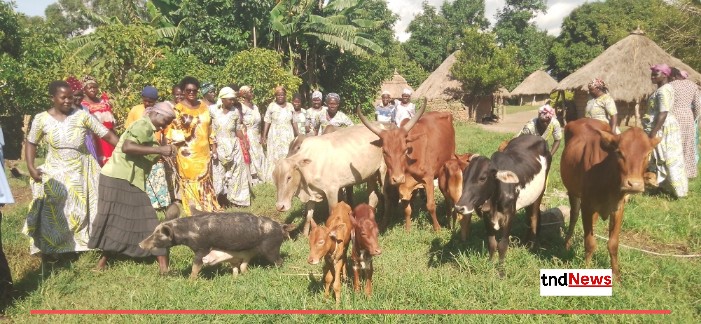
Soroti | The Teso District Local Government Association (TDLGA), in collaboration with the Iteso Cultural Union (ICU) and other stakeholders, has launched a major initiative to combat looming poverty in Teso by revitalising the livestock economy.
The TDLGA and ICU are spearheading this initiative, titled “Ateker Livestock Symposium 2024,” with the theme “Revival of the Livestock Economy in Mother Teso.”
Historical context and present challenges
Teso has long served as a national cattle production hub. During colonial times, the region was specifically zoned for livestock, with a focus on the beef value chain, resulting in the establishment of the Soroti meat packers facility in Soroti.
However, over time, there has been a significant shift in investment focus towards crops such as moringa, aloe vera, malabar spinach, citrus fruits, mangoes, cashew nuts, and, most recently, avocados.
This shift has contributed to a decline in the region’s economy.
Despite these challenges, the Teso sub-region is currently estimated to sell 5,000 cattle per week, or approximately 300,000 cattle per year.
Stephen Ochola, LC5 chairperson of Serere district and leader of the Teso LC5 chairpersons, emphasised the livestock sector’s importance to the Teso economy.
According to Ochola, the Teso district local governments and the cultural union decided to organise the symposium to restore livestock farming in the subregion.
He emphasises that cattle has traditionally served as Teso’s economic foundation, but since the cattle raids in 1986, the region has struggled to reclaim its prosperity.
“Our economy has declined, and although we have explored other economic activities such as orange farming as recommended by the government, these efforts have not brought the anticipated economic revival,” Ochola notes.
The Ateker Livestock Symposium 2024 seeks to address these issues by focusing on the restoration and strengthening of the livestock economy, ensuring long-term economic growth in the Teso subregion.
“But we have realised that we need to get back to our cow economy because that’s how we get our wealth. So that’s why we have arranged, organised and called TESO from different walks of life.”
Dr. Peter Emmanuel Eriaku, a veterinarian and Director of Animal Resources for the Iteso Cultural Union, emphasised the importance of the situation because the economy at the household, village, sub-county, district, and sub-regional levels is collapsing.
According to Eriaku, the purpose of this symposium is to bring together various stakeholders, including political leaders, cultural leaders, religious leaders, civil society, the private sector, and the media, in order to address the challenges facing our economy and strategize on how to revive the livestock economy.
To accomplish this, the emphasis will be on improving livestock breeds to increase milk and meat production.
Investments in a liquid nitrogen plant, a semen bank, and artificial insemination technician training are critical to advancing crossbreeding efforts.
Eriaku adds that a thorough document detailing these tactics was created and distributed to central government officials half a year ago, but thus far, there has been no encouraging answer. “We can’t just sit and lament.”
The decentralisation policy has enabled district local governments to form regional structures for shared projects.
“We hope the central government will support us financially instead of just lamenting about poverty,” Eriaku adds.
Andrew Ochole, Prime Minister of the Iteso Cultural Union (ICU), previously emphasised the Union’s critical role in educating its members about livestock rearing in order to revitalise the cow economy among households.
He says many young people today have limited knowledge of how to rear domestic animals, which poses a significant challenge to livestock development.
“The Union is adopting an educational approach to support the Teso district local governments’ initiative,” Ochole stated.
Dr. Darlington Akabwai, a retired veterinary doctor and African Union consultant on Pastoralism in East Africa, cautions communities about preserving rangelands for livestock development.
He emphasises that rangeland preservation is critical for livestock grazing and combating climate change.
Akabwai further notes that the current use of these lands for rice cultivation, aided by tractors, degrades the land and disrupts water channels, exacerbating climate change impacts,”.
The Ateker Livestock Symposium 2024 aims to address these multifaceted issues by focusing on restoring and strengthening the livestock economy, thereby ensuring long-term economic growth in the Teso subregion.
By Robert Edwomu.
Discover more from tndNews, Uganda
Subscribe to get the latest posts sent to your email.