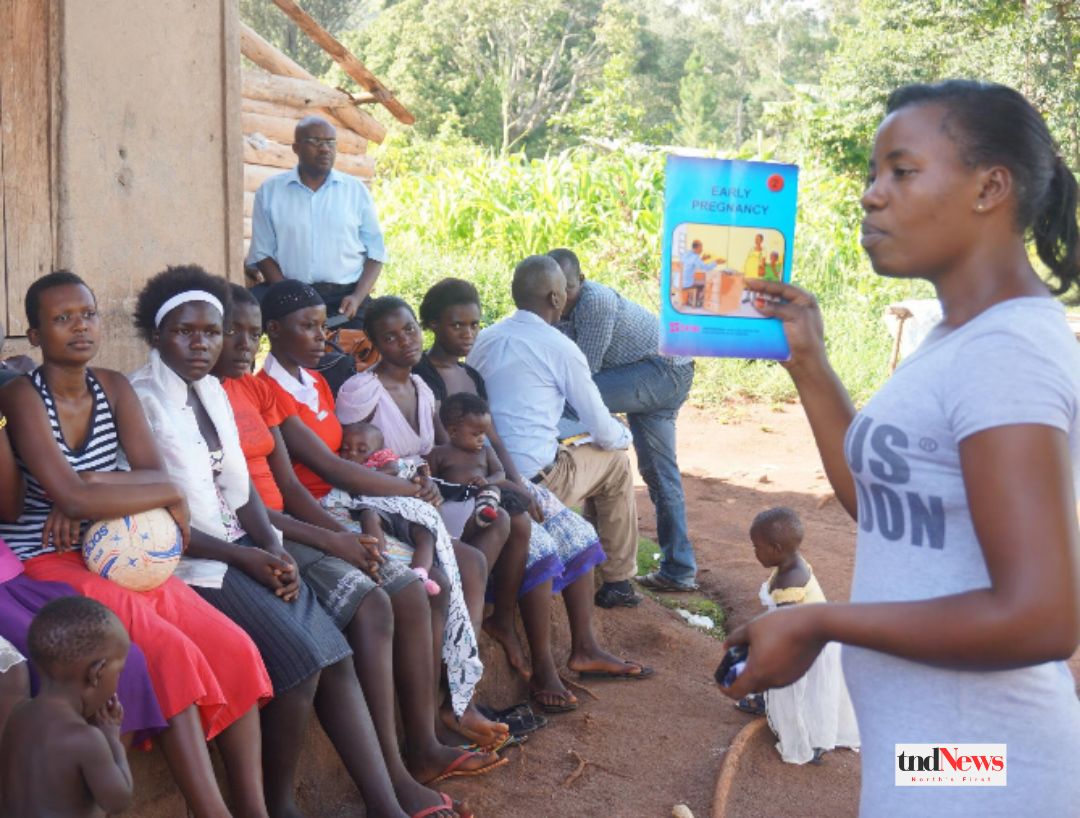
Amuru | On a quiet afternoon in Amuru district of Northern Uganda, Rose Alum, 26, sits under a mango tree with a group of young women from her village of Olinga, in Pogo sub-county to have a discussion.
The topic of discussion is rarely public and almost always taboo-sex, contraception, HIV and rights which are rarely discussed by young girls and women in her village.
“In our rural village here, girls are not expected to speak openly about sex or health. But many of us are already affected by HIV, early pregnancy or sexually abused; so if we do not speak, we suffer,” Alum disclosed.
Alum’s story is part of a wider urgent conversation across Northern Uganda, a region that has experienced the compounded effects of conflict, poverty, HIV and gender inequality for decades.
Though Uganda is working towards achieving the Sustainable Development Goals (SDGs) by 2030, especially SDG-3 (Good health and wellbeing) and SDG-5 (Gender equality) which is a powerful realization; hence, we cannot end HIV without ensuring sexual and reproductive health rights among both adolescent women and young girls.
“We cannot achieve justice without tackling gender inequality and we cannot deliver the SDGs without addressing the interconnected struggles of the most marginalized including women, youth, LGBTQIA+ communities, sex workers and people living with HIV,” Alum noted.
Northern Uganda’s painful legacy of conflict with the Lord’s Resistance Army (LRA) devastated its health systems, displacing millions and leaving a generation of vulnerable people.
According to the Uganda AIDS Commission, continues to record some of the highest infection rates in the country with HIV prevalence particularly among women and adolescent girls remains high compared to other regions.
However, in 2024 alone, Sub-Saharan Africa recorded 800,000 new HIV infections and women and girls accounted for over 63 percent of them; hence in communities like Northern Uganda, adolescent girls are twice as likely to acquire HIV as their male peers, with the reasons being systemic with early marriage, lack of comprehensive sexuality education, sexual violence and gendered power imbalances.
Letlhogonolo Mokgoroane, Head of Strategic Litigation at Our Equity in South Africa revealed that only 40 percent of women in Sub-Saharan Africa have comprehensive knowledge about HIV prevention and in some areas, access to modern contraception is below 50 percent hence these are failures of justice.
“This is not just about a virus, it is about who has access to justice to health care, to information and who does not,” Mokgoroane notes.
Where stigma is stronger than medicine
For many in Northern Uganda, the nearest health center is hours away, often under-resourced and understaffed but even where services exist, stigma and fear keep many away, particularly young people, sex workers and members of the LGBTQIA+ community.
Shobha Shukla, a lead discussant for SDG-3 at the United Nations High Level Political Forum recently warned that progress on health is deeply threatened by rising conservation and funding cuts.
“The right to health cannot be separated from gender equality and human rights; essential services must include safe abortion care, menstrual health, mental health and support for survivors of gender based violence,” Shobha said.
She further added that, “If we are not reaching those most marginalized, then we are failing the SDGs.”
Pam Ntshekula, an advocate with Sex Workers Education and Advocacy Taskforce (SWEAT) in South Africa echoes that in criminalized environments, sex workers are denied access to justice and health care.
“They are forced to work in dangerous conditions and when violated, they cannot report it; decriminalizing sex work is one of the most powerful ways to ensure access to HIV prevention, treatment and dignity,” Ntshekula disclosed.
In Uganda, sex work is illegal and sex workers are frequently subjected to police violence, extortion and abuse with many avoiding clinics because they fear judgement or arrest and some would rather risk their lives than face humiliation.
Transgender communities: Silenced and sidelined
Abhina Aher, Chief Executive of India’s TWEET Foundation and former chairperson Asia Pacific Transgender Network warns against lumping all queer identities together.
In the broader struggle for rights and health, transgender people often face double or triple discrimination and trans communities are virtually invisible in national health planning and when visible they are criminalized.
“Transgender people face unique health and social challenges with many living with HIV or have survived sexual violence or are single parents with policies rarely reflecting these realities,” Abhina said.
Abhina points to the intersectional stigma faced by trans people where one may experience discrimination not just for being trans but for being poor, HIV positive or from a rural area.
“Many have lost jobs, homes and families; and without targeted well-funded interventions, we will continue to leave them behind,” she revealed.
Her words resonate in Uganda where trans and non-binary people especially in places like Gulu and Lira often go underground to survive.
“The law sees me as a criminal; and society sees me as cursed but I am just trying to live, and I have been arrested twice for impersonation,” says Joyce, 27 years old resident of Gulu.
Global Anti-Rights pushes and local impact
Uganda’s HIV and SRHR challenges do not exist in isolation and across the world anti-gender and anti-rights agendas are gaining momentum with these movements often led by well-funded conservative and religious organizations pushing back against decades of progress on women’s and LGBTQIA+ rights.
Dr Angelique Nixon, Director of CAISO; Sex & Gender Justice in Trinidad & Tobago noted that anti-rights actors label gender equality and sexual rights as dangerous or western but it is about control not culture.
“These groups have disrupted access to sexuality education, abortion and queer rights across the Global South and countries like Uganda are increasingly influenced by their language policies,” Dr Angelique said.
In 2023, Uganda passed the Anti-Homosexuality Act which reintroduced harsh penalties for same sex relationships drawing condemnation from global human rights groups but within Uganda the space for dissent has shrunk.
“People are afraid, I work with young men who have sex with men; they are being hunted, not helped,” Ojok (not real name), a peer counselor in Gulu.
Dr. Nixon warns that these laws have public health consequences too and one cannot criminalize identities and expect people to come forward for testing, treatment or support; and this is how epidemics grow in the shadows.
Funding crisis threatens the fight against HIV
According to Eamonn Murphy, UNAIDS Regional Director for Asia Pacific and Central Asia notes that even as challenges mount, global funding for HIV programs is shrinking and recent funding cuts could undo years of progress.
“If funding is not restored, we risk returning to HIV infection and AIDS related death rates we have not seen since the early 2000s,” Eamonn warns.
In Uganda, health officials report shortages in antiretroviral drugs and prevention commodities like PrEP and condoms and even basic testing kits with community health workers often operating with little or no pay.
“International donors are pulling back, and domestic funding is not filling the gap yet the virus is still here and the need is greater than ever,” Ojok explained.
Eamonn adds that key populations like sex workers, LGBTQIA+ people and people who inject drugs account for 79 percent of new infections in some regions and without targeted and fully funded responses we will not reach the 2030 targets.
However, at the heart of it all is a simple truth; health, rights and justice are deeply interconnected and in northern Uganda, as in many parts of the Global South, ignoring this connection means letting people die.
“The SDGs are not just about numbers or indicators, they are about people and every person has a right to live with dignity, access health care and be free from discrimination,” says Letlhogonolo.
In Uganda, progress is possible and community based organizations, youth led initiatives and peer networks continue to fill the gaps where government or international agencies fall short but they need support, protection and political will.
Rose Auma, a resident of Gulu disclosed that if there is a need to build a future where no one is left behind, there is a need to talk about sex and rights.
In Northern Uganda, the path to progress is not paved with slogans and with just five years left to meet the SDGs, the world stands at a crossroads; and as voices from Uganda, South Africa, India and the Caribbean make clear hence there is need to connect the dots between HIV and health, rights and laws, gender and justice so that no one is left behind.
Discover more from tndNews, Uganda
Subscribe to get the latest posts sent to your email.