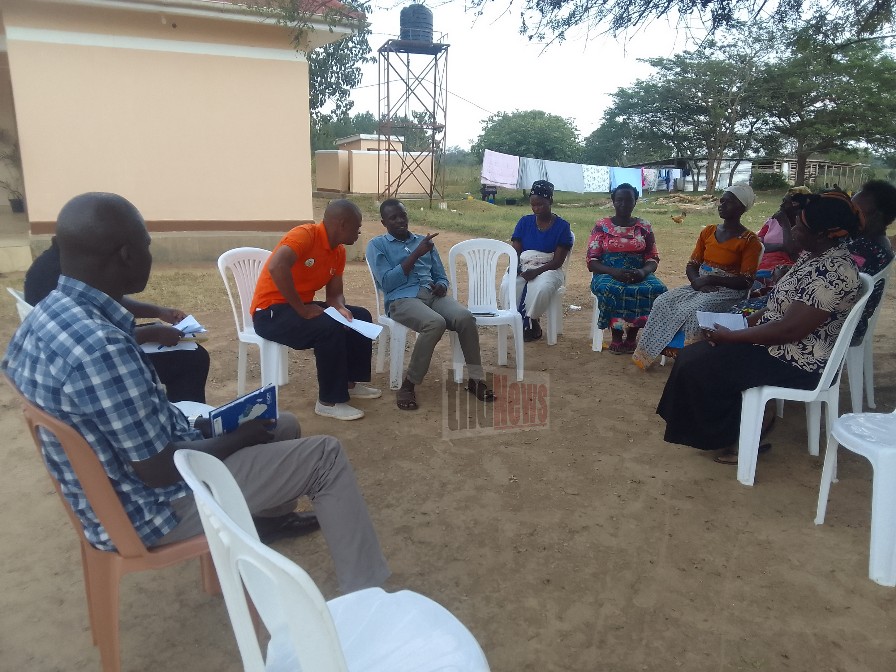
Amolatar | On January 23, 2025, a delegation from the Ministry of Gender, Labour, and Social Development paid several visits to different groups in Amolatar.
The visits were designed to assess the progress of jua kali enterprises in their transition to the formal economy under the “Sente programme.”
The delegation, led by Onzama Apollo, Assistant Commissioner of Industrial Relations at the ministry, expressed heartfelt appreciation to the groups for their dedication and efforts.
He assured them of his continued support as they seek to expand their businesses.
During these visits, beneficiaries (of jua kali support) were able to discuss both the challenges they face as they grow their businesses and the notable accomplishments they have made thus far.
Apollo emphasized the importance of diligence and collaboration in facilitating additional government assistance, reinforcing the commitment to strengthen the jua kali sector through the Sente program.
He urged all stakeholders, particularly jua kali entrepreneurs, to actively participate in this transformative initiative, which is already yielding significant benefits in transitioning the informal sector to a more structured economic framework.
The Sente programme aligns closely with the objectives outlined in the National Development Plan (NDP III) which aims to elevate the proportion of decent employment from 34.5% to 55% by formalizing the informal sector.
Furthermore, it supports the goals articulated in the NRM Manifesto for 2021-2026, particularly focusing on economic objective 2.1c that seeks to transition from informal and subsistence economies into a monetized and formal economy.
Agness Atim Apea (PhD), woman Member of Parliament of Amolatar has been pivotal in assisting local groups to leverage the benefits of the jua kali Programme.
She highlighted that specific projects target vulnerable demographics such as school dropouts and young mothers.
These initiatives not only aim to enhance their livelihoods but also address the pressing issue of educational attrition, she said.
The MP noted the emergence of additional groups, including welding collectives, which are currently facing challenges in acquiring necessary equipment, advocating for comprehensive support tailored to meet their needs.
Resident District Commissioner of Amolatar, Francis Okello Rwotlonyo underscored the urgent need for support in the district, recognizing the area as having the highest number of school dropouts and young mothers.
He reaffirmed the office of the RDC’s commitment to assisting these groups in achieving sustainable livelihoods through targeted jua kali projects.
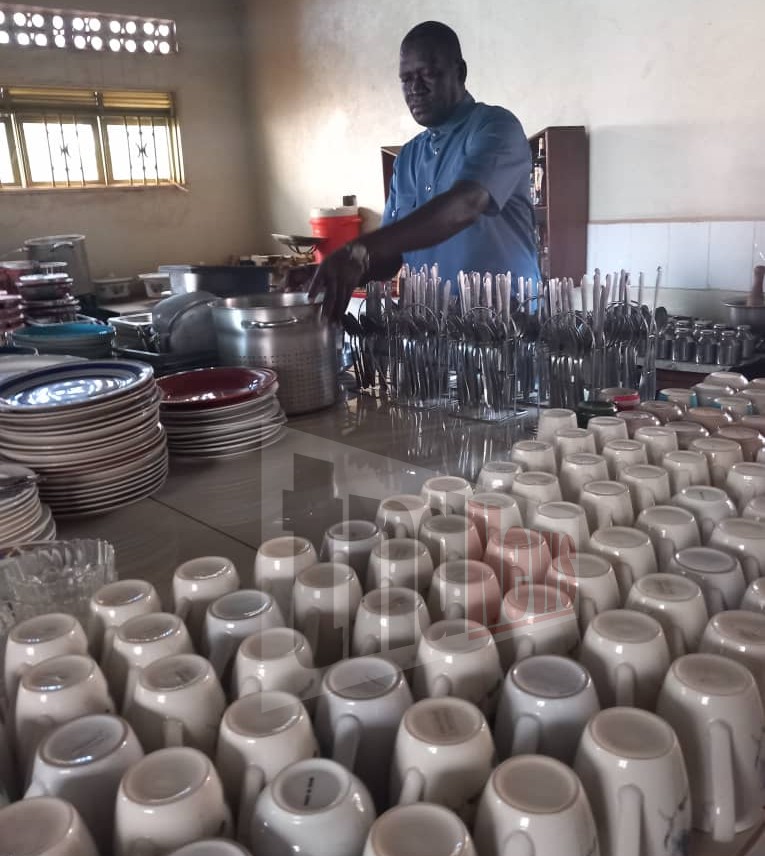
Among the visited groups were the Amolatar catering groups—previously known as Can Oryem—alongside Agoga Youth tailoring.
Aleblee tailoring groups, and the Onote-Uno tailoring group were also visited.

Reports indicate that the Sente programme has successfully extended support to a total of 781 groups, encompassing 23,891 members (10,519 males and 13,372 females) across 93 districts nationwide.
The inception of the programme in the 2016/17 cohort established a robust foundation with 87 groups and 2,618 members.
Subsequent cohorts have witnessed remarkable growth, particularly in the 8th and 9th cohorts (2022/23 and 2023/24), which collectively supported 399 groups with 14,188 members.
Impressively, female participation has surged in recent cohorts, with 9,457 women supported compared to 5,952 men, indicating a promising trend towards greater gender inclusivity.
Geographically, the Eastern region has received the most robust support, accounting for 263 groups (37%), followed by the Central region with 234 groups (33%).
The Western region benefited from assistance for 143 groups (16%), while the Northern region saw 141 groups supported (14%).
In terms of sectoral distribution, the Sente programme has focused its efforts across various industries, with the art design, leatherworks, textile, and tailoring sector leading with 283 groups.
Additional sectors include creative arts (93 groups), cosmetology (149 groups), automotive maintenance and repairs (59 groups); mechanical and metal fabrication (68 groups), agro-processing (36 groups).
Information technology (9 groups), plumbing & construction (7 groups), videography (1 group), transportation (38 groups), food processing (17 groups), and woodworking and carpentry (21 groups).
The Sente programme, which is entirely funded by the Ugandan government, is designed to stimulate job creation, increase labor productivity, and facilitate the transition of the informal sector into the formal economy, ensuring a brighter future for Amolatar’s entrepreneurs and beyond.
Discover more from tndNews, Uganda
Subscribe to get the latest posts sent to your email.